
When the temperature drops, a lot of dogs quietly slide into "couch ornament" status, hanging on their tree stump owner. Shorter walks. Fewer outings. More energy with nowhere to go with it. That mix is a recipe for unwanted behaviors as that energy has to go somewhere… and it can build up internally until spring comes and your dog goes nuclear.
The most surprising part of this is that owners are blinded by their furry, ticking time bomb, and then act like their dog is the only one to blame once it blows up in their face.
If this seems familiar, go to Home Depot after reading this. They have mirrors in aisle 11. Practice your verbal commands in front of them and reflect on who is the pack leader in the house. 😉
Winter is when structure, exercise, and training matter most. Throughout the winter months, your dog is spending upwards of 95% of their time within the walls of your home. Dogs still continue to need physical outlets and mental work if you want calm, easy behavior inside the house. They need to release their energy one way or another so it's preferred to spend the energy continuing to progress in their training. The good news is that you do not need a heated indoor dog park or perfect sidewalks to accomplish this. You just need a plan.
Why Winter Couch Potatoes Turn Into Spring Headaches
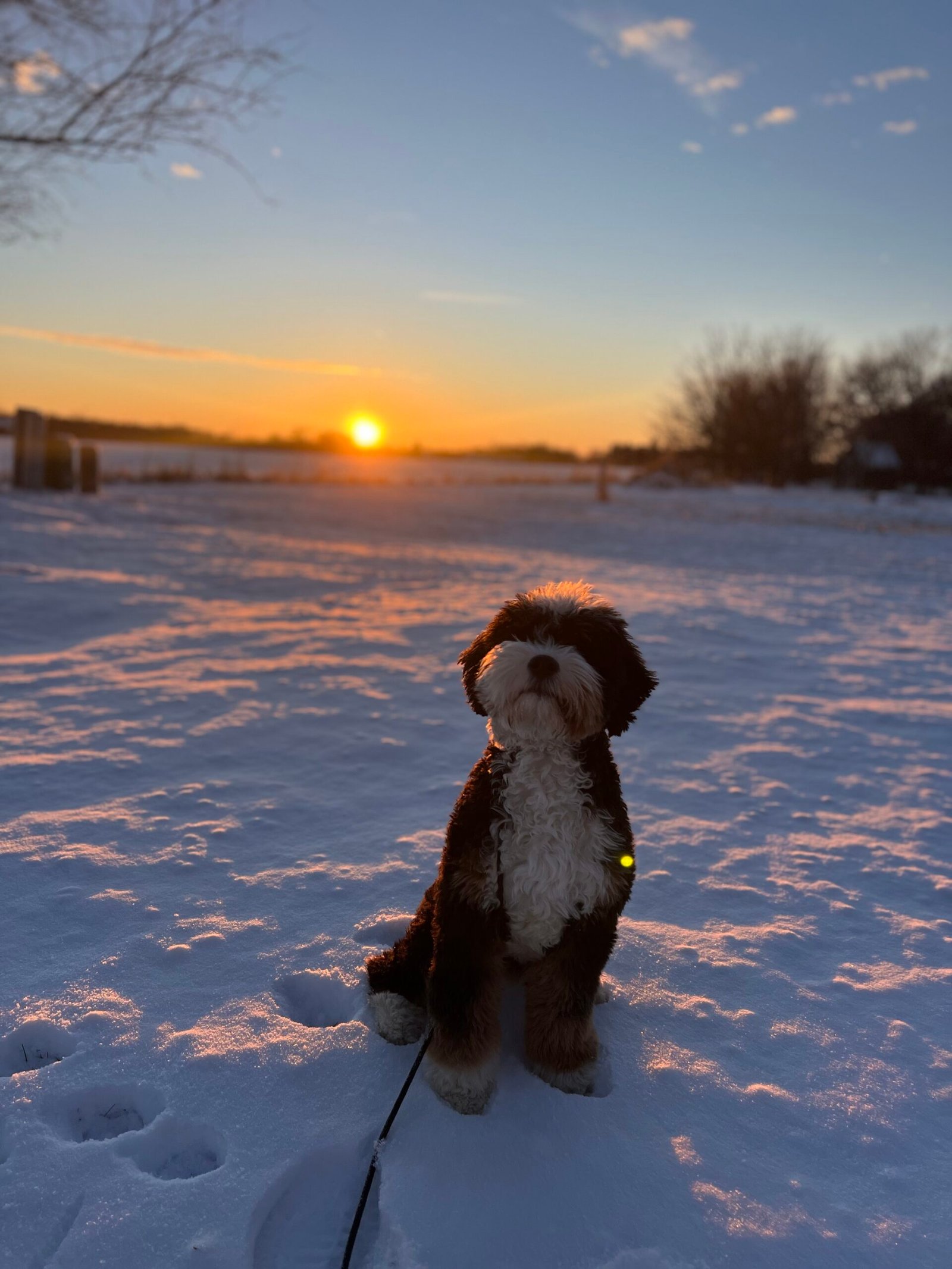
When exercise and enrichment disappear for a few months, most dogs do not just "rest." They store energy, stress, and frustration. That often shows up as barking at every noise, pestering the kids, chewing, zoomies, and general mischief, or reactivity and overexcitement in public once spring hits.
From a training perspective, you are removing structure and fulfillment, then expecting the same level of obedience and self-control. That is not how a dog's brain works.
Dogs do best when their world is predictable, they get clear communication, and they have regular mental and physical outlets. Without that, anxiety and stress creep in and behavior starts to slide. So winter is not the "off season." It is the maintenance season. Can you imagine if an NFL player were to take the off season to sit inside and catch up on Vanderpump for three months? He would pull up to training camp out of shape and mentally unprepared to deal with the butt kicking he'd receive from his head coach and teammates.
How Much Exercise Does A Dog Need In Cold Weather?
Every dog is different, but as a general rule most adult dogs need meaningful movement every day—not just a quick potty break. Mental exercise is just as important as physical exercise, and puppies and young dogs usually need several shorter sessions instead of one big one.
Even in winter, most healthy dogs benefit from:
30 to 60 minutes of physical exercise total per day, broken into chunks, plus multiple short training or enrichment sessions to work the brain. You may not be able to do your usual neighborhood loop in January, but you can replace some outdoor miles with indoor movement and training, plus strategic store trips.
Indoor Field Trips: Dog-Friendly Stores You Can Walk In
On the coldest days, "mall walking" for dogs is one of the easiest ways to keep them moving and working around distractions. Important reality check first: grocery stores and big box food retailers like Walmart and Target only allow trained service dogs, not pets, because of health regulations.
Outside of that, many national chains either welcome dogs at most locations or leave it up to the store manager. Policies can change, and some local stores are stricter than others, so always call ahead and keep it respectful, but once you know your spots, most will welcome you.
Commonly Dog-Friendly Chains
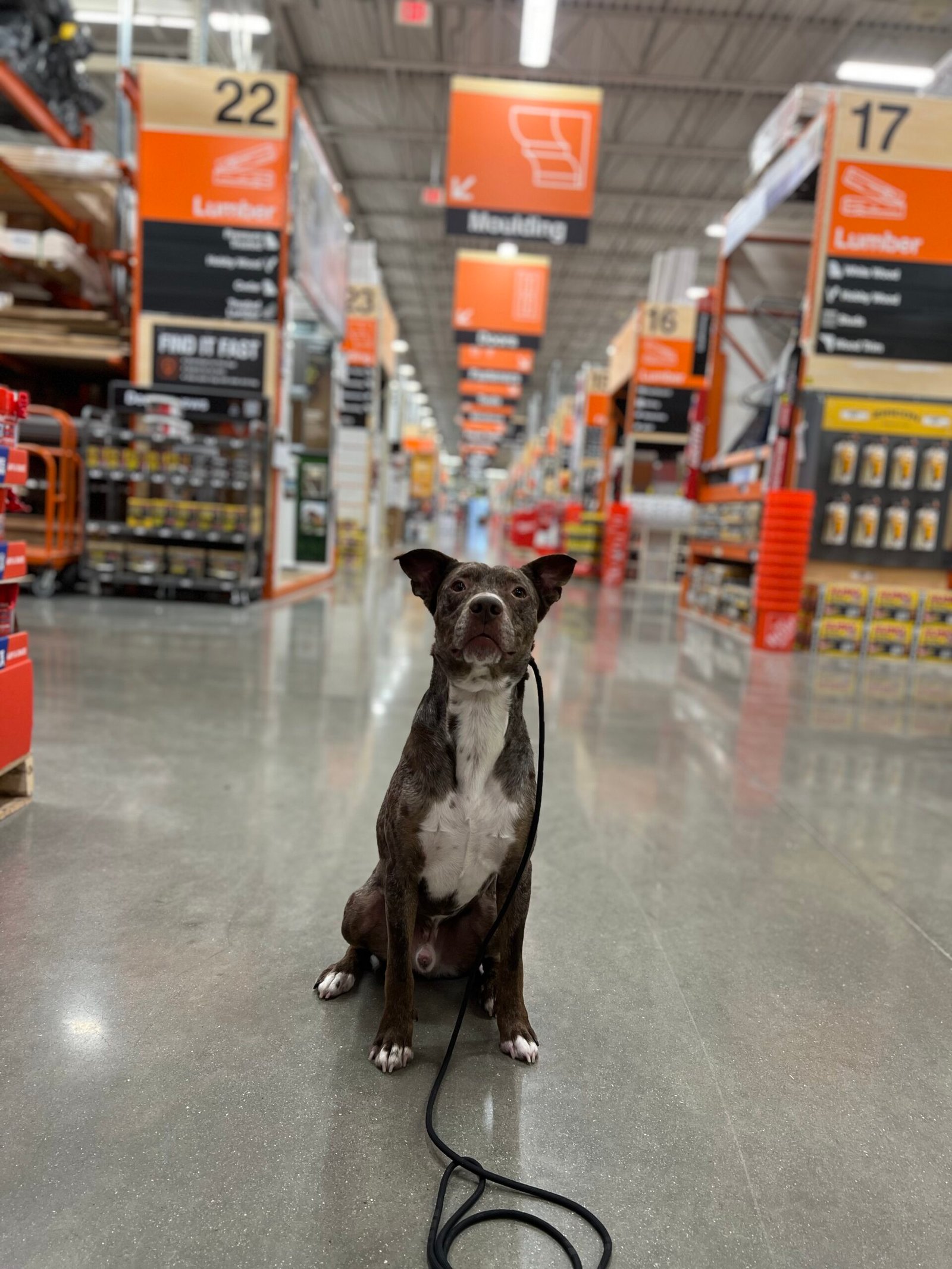
Home Depot
Many locations allow leashed dogs and have wide aisles that are perfect for loose-leash practice.
Lowe's
Frequently pet-friendly; again, check your specific store.
Bass Pro Shops & Cabela's
Officially dog friendly at most locations, except where restricted by local law.
Tractor Supply Co.
Often allows pets and is a solid option for dogs who do well around farm supplies and smells.
T.J.Maxx, Marshalls, HomeGoods
These sister stores are generally pet-friendly at many locations.
Orvis, L.L. Bean & Similar Outdoor Retailers
Many locations welcome dogs, especially in non-food areas.
Plus, a lot of local garden centers, boutiques, and hardware stores in the Chicagoland suburbs quietly allow well-behaved dogs. Always call ahead and confirm, keep your dog leashed and under control, and respect store staff and other shoppers. If your dog is stressed or over the top, that is your cue to step out and regroup.
Turning Store Trips Into Training Sessions
A store walk should be more than just "laps." This is a perfect environment to practice skills that matter at home and in public.
Loose Leash Laps
Pick a quiet aisle, walk slowly, reward your dog every time the leash stays loose and they check in with you. You are building focus under distraction, not just mileage.
Sit, Wait, Walk
At the end of each aisle, ask for a sit, pause for a second or two, release and continue walking. You are reinforcing impulse control and consistency in your cues, which helps dogs understand their "job" in busy spaces.
Ignore The World Game
When your dog notices another person, cart, or display, mark and reward them for staying next to you and not diving toward the distraction. That is desensitization and counterconditioning in real life. You are pairing "weird things" with good stuff and teaching calm… not panic or overexcitement.
Settle Practice
If the store has a quiet corner, practice a brief "down" or "place" and reward your dog for relaxing on a mat or between your feet. This translates directly to coffee shops, kids' events, and family gatherings.
Keep sessions short. Ten to twenty minutes of focused work in a store will drain most dogs more than an unfocused hour of wandering.
Indoor Physical Exercise When You're Snowed In
When it is truly too brutal to drive anywhere, you can still meet your dog's physical needs inside.
Hallway Fetch or "Sprint" Sessions
Use a long hallway or open room. Toss a toy, call your dog back, ask for a sit, then send them again. Layering obedience into movement gives you both exercise and training.
Stair Intervals
For healthy adult dogs with no joint issues, short, controlled stair reps can be intense. Send your dog up a few steps, call them back, reward, and repeat. Avoid letting them charge up and down at full speed.
Place-To-Place Recalls
Set up two "place" spots in different rooms. Send your dog to one, release, call them to you, then send them to the other. You are reinforcing recall, impulse control, and focus while they move their body.
Structured Tug
Tug can be great exercise if you have rules: dog sits before the game starts, lets go on cue, and calms down when you say so. That keeps arousal in a healthy range and reinforces your leadership.
Mental Exercise & Enrichment Games For Winter
Physical movement is only half the equation. Mental fulfillment is a huge part of behavior, especially for dogs stuck inside.
Scent Games ("Find It")
Start easy. Let your dog watch you place a treat under one cup, then release them to find it. Progress to hiding treats or toys behind furniture, in another room, or on different surfaces. Scent work is low-impact, high-tiredness.
Scatter Feeding & Snuffle Mats
Hide part of their meal in a snuffle mat, cardboard box, or around a room. This taps into natural foraging behavior and keeps the brain engaged.
Puzzle Toys & DIY Food Puzzles
Commercial puzzle feeders are great, but so is stuffing kibble in toilet paper rolls, muffin tins, or boxes. Just supervise and adjust difficulty to your dog.
Training New Tricks
Roll over, spin, "go to bed," hand targets, or toy names. Short, positive sessions build your communication and your dog's confidence. Positive reinforcement and clear timing make learning faster and more fun.
Calm Pattern Games
For dogs that run hot, work on simple patterns like “sit, touch (my hand), go to place, lay, reward.” Repeating predictable patterns helps nervous or excitable dogs settle.
Winter Training Goals That Pay Off All Year
Winter is actually the best time to tighten up the skills that make daily life easier.
Structured winter training falls right in line with good "winter training" practice, where you adapt to cold, focus on indoor games, and keep dogs physically and mentally engaged. Short, consistent sessions beat occasional marathons every time. If you need help building a training plan, our behavioral consultations can get you started on the right foot.
Safety & Behavior Tips For Winter Outings
Before you turn your dog into a regular at Home Depot or the local farm store, a few non-negotiables.
Know Your Dog's Threshold
If your dog is fearful or reactive, jumping straight into a busy store can be flooding, which usually backfires. Start farther away, at lower intensity, and pair each small exposure with something your dog loves.
Keep Interactions Managed
Not every stranger needs to pet your dog. For service dogs in training or dogs who get overexcited with people, human management is part of the job.
Watch Their Body Language
Lip licking, yawning, pinned ears, tucked tail, or full body tension all tell you your dog is hitting their limit. That is your sign to step out and reset, not push harder.
Protect Paws & Joints
Salt, ice, and cold can be brutal. Rinse paws after outings, use balm or boots if needed, and respect physical limits—especially for puppies and seniors.
Obey Store Rules & Laws
Keep your dog leashed, pick up after them, and be courteous. A few careless owners can ruin dog-friendly policies for everyone.
When You Need A Plan, Not Just Ideas
If winter has already turned your dog into a barking, pacing, stir-crazy roommate, you do not just have an "exercise" problem. You have a structure and communication problem.
That is some of what we break down in our behavioral consultations at Training That Lasts: structure and boundaries that still work in real life, verbal and non-verbal communication that your dog actually understands, the right mix of mental and physical fulfillment for your individual dog, and leash skills and real-world practice inside and outside the home.
Our goal is not just to wear your dog out for the day. It is to help you build habits that last long after the snow melts.
Ready To Build A Winter Training Plan?
Book a behavioral consultation and let's create structure, communication, and fulfillment that works for your dog—rain, shine, or snowstorm.
Schedule A Consultation
One Response