In-Home Dog Training
Behavioral Consultation + One-on-One Training Built Around You, Your Dog, and Your Daily Life
Your dog’s behavior does not happen in a training facility. It happens when someone knocks on the front door, when the leash comes out, when another dog appears on a walk, when food is left on the counter, when guests come over, or when your dog becomes too excited to listen.
That is why Training That Lasts brings the training to you. In-home dog training gives us the opportunity to understand your dog inside the environment where your routines, communication, boundaries, habits, and challenges already exist.
For most families, the process begins with our 2-hour in-home Behavioral Consultation. We help you understand what is happening, clean up the communication between you and your dog, introduce better structure, and begin making changes together. When continued training is needed, our 90-minute One-on-One Training sessions build on that foundation with hands-on coaching for you and your dog.
In-Home Training Is Not About Teaching a Dog to Behave in the Living Room
A dog can know Sit, Down, Place, and Come and still make daily life incredibly difficult. They may pull the entire walk, bark at every dog they see, jump on guests, ignore boundaries, become frantic when someone comes to the door, or completely disconnect from you when the environment becomes more exciting.
That does not necessarily mean your dog needs more commands. It often means there is a gap somewhere between what the dog knows and what they understand is expected of them when life changes.
In-home training gives us the opportunity to see that gap. We can look at how you communicate, how the dog responds, what happens before the unwanted behavior, how the leash is being handled, what boundaries exist in the home, how much freedom the dog has, and which patterns may be unintentionally reinforcing the very behavior you are trying to stop.
The goal is not simply better obedience during a training session. The goal is to make everyday life with your dog clearer, calmer, and easier to manage.
Before We Add More Training, We Need to Understand What Is Happening
Most families come to us because something is not working. Sometimes it is obvious, such as leash reactivity, aggression, jumping, barking, anxiety, pulling, or destructive behavior. Other times the frustration is harder to explain: the dog knows the commands but does not listen consistently, the house feels chaotic, walks have become exhausting, or the owner simply feels like they are constantly correcting the dog.
Our Behavioral Consultation gives us the time to slow everything down and look at the full picture. This is a 2-hour working session in your home, not a quick evaluation where we label your dog and tell you which training package to buy.
We want you to understand why the behavior is happening, what your dog is communicating, what you may be communicating back without realizing it, and which changes can begin creating a different pattern.
During the Behavioral Consultation, We Work Through:
- Structure and boundaries in the home
- Verbal and non-verbal communication
- Canine body language and behavior
- Proper leash handling
- Timing and follow-through
- Mental and physical fulfillment
- Excitement and impulse control
- Household routines
- Engagement and connection
- The behaviors creating problems right now
This is hands-on. We demonstrate, coach, answer questions, work with your dog, and have you practice what we are teaching so the information does not disappear when we walk out the door.
What Are You Struggling With?
Leash Pulling
If your dog starts pulling before you make it out of the driveway, the walk itself may already be reinforcing the behavior. We look at leash handling, pace, movement, engagement, excitement, and what your dog has learned happens when they put tension on the leash.
The goal is not to spend an entire walk correcting your dog. We want to build clearer communication so you and your dog can move together without the leash becoming a constant argument.
Jumping and Overexcitement
Waiting until a dog is already jumping on someone is waiting until the excitement has reached its loudest point. We create expectations earlier and teach your dog what to do before greetings, doorways, visitors, and exciting situations become chaotic.
Calm behavior needs to be practiced just like any other skill. Your dog needs enough repetition to understand how to handle excitement instead of simply hearing “off” after they are already airborne.
Puppies and Adolescent Dogs
Puppies are learning constantly, whether anyone is deliberately training them or not. Potty routines, biting, chewing, stealing, jumping, leash behavior, crate habits, social development, handling, and household boundaries are all being shaped through repetition.
Starting early gives us an opportunity to build useful patterns before unwanted behavior has months or years of practice behind it. The same communication, trust, connection, and structure that help adult dogs begin with the puppy from day one.
Reactivity
The bark or lunge is usually the most obvious part of reactivity, but it is rarely the first thing that happened. Your dog may have already changed posture, shifted attention, increased tension, stopped responding to you, or become increasingly fixated on what they noticed.
We teach you to recognize those earlier changes and respond while your dog is still capable of processing information. Distance, movement, leash handling, communication, and thoughtful exposure all become part of the process.
Household Boundaries
Dogs learn from what happens every day, including the things nobody intentionally taught them. Counter-surfing, rushing doors, stealing objects, ignoring cues, demanding attention, and pushing through people can all become stronger when the dog repeatedly gets an opportunity to practice them.
Structure is not about controlling every movement your dog makes. It gives the dog clearer expectations and limits the number of unwanted behaviors they get to rehearse while better habits are being built.
Fear and Anxiety
Fearful dogs do not become confident because someone forces them to endure more than they can handle. We pay attention to body language, recovery, distance, environmental pressure, communication, and the dog’s ability to remain engaged with the handler.
Progress happens by creating successful experiences and gradually increasing difficulty. The purpose is to help the dog become more capable, not simply quieter.
We Train Both Ends of the Leash
You are not going to stand in the corner while Tyler trains your dog and then have the leash handed back to you at the end. The person living with the dog needs to understand the work. We teach you how to handle the leash, recognize changes in behavior, give clearer direction, reinforce better decisions, establish boundaries, and follow through without becoming emotional or turning every interaction into a confrontation.
Your dog is with the trainer for a limited amount of time. They are with you for every doorway, meal, visitor, walk, car ride, evening on the couch, and decision that happens between appointments. That is why owner education is not an extra part of Training That Lasts. It is one of the most important parts.
Table of Contents
Lets Work Together!
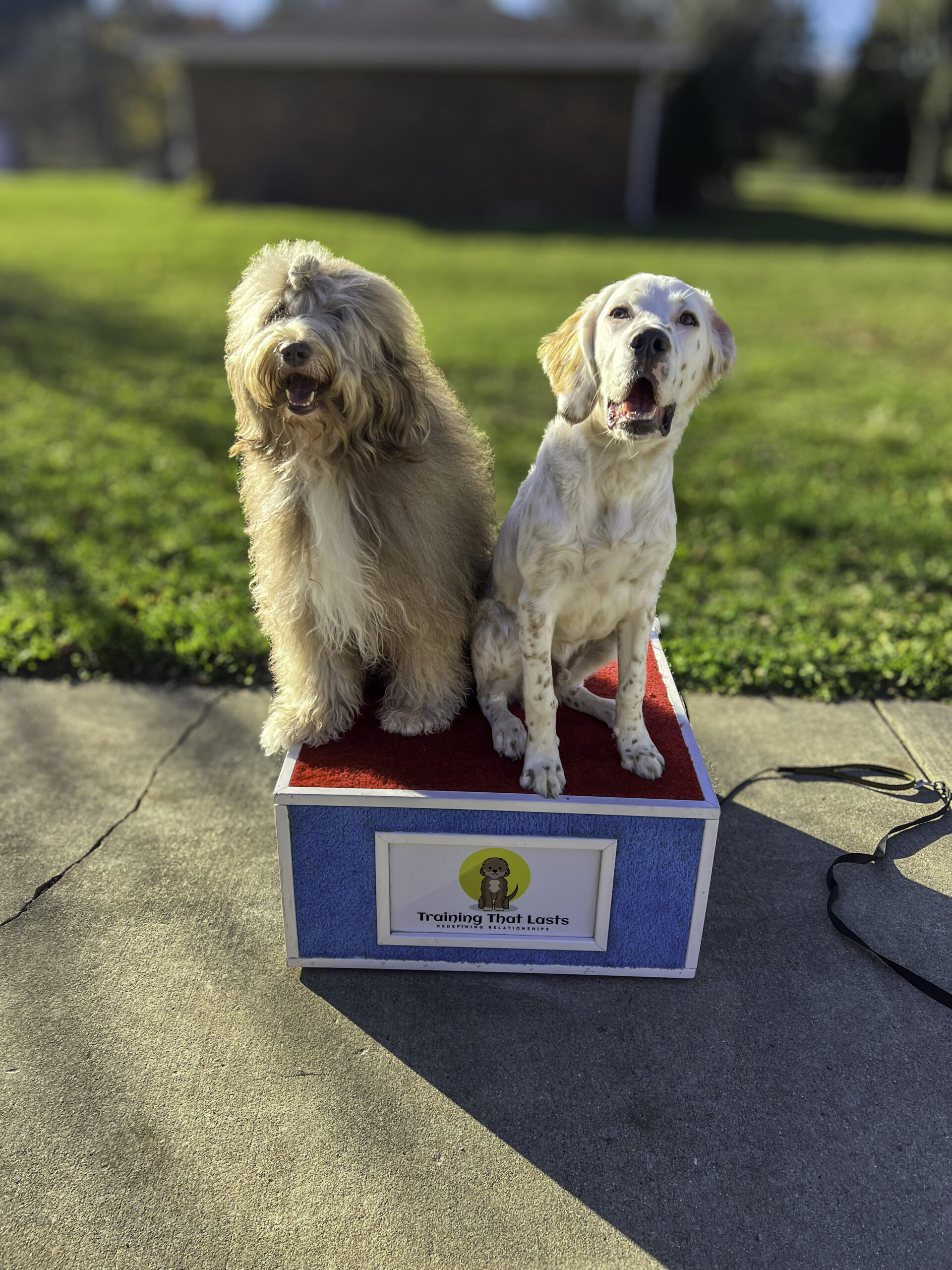
Our Consultation Assessment form is the perfect starting point for us to help you and your pet. We understand how difficult it can be to manage your dog’s behavior, especially if you’re away on vacation or busy with work. Our team of experienced trainers will evaluate your dog’s needs and develop an individualized training plan to get them back on the right track. With our assistance, you can rest assured that your pet will receive the best care possible.
Share Training That Lasts With Your Friends On Social Media
By sharing Training That Lasts, you’re not just promoting dog training, you’re promoting happier homes, stronger friendships, and a richer understanding between humans and their canine companions. Help us Redefine Relationships!
Learn More About the Behaviors You Are Seeing
Training works better when you understand why you are doing it. The Training That Lasts Knowledge Center gives dog owners a deeper look at behavior, psychology, communication, training, consistency, leash handling, socialization, and the patterns that shape everyday behavior.
If you are working through some of the same problems discussed on this page, these are good places to continue learning.
How to Stop a Dog From Pulling on the Leash
Learn why pulling becomes self-reinforcing, how leash tension changes the walk, and why consistent handling matters more than simply buying another piece of equipment.
Read About Leash PullingYour Dog Isn't Blowing You Off: They're Reading You
Dogs pay attention to far more than the words we use. See how body language, mixed messages, timing, and follow-through can become stronger than the command coming out of your mouth.
Read About CommunicationThe Importance of Consistency in Dog Training
Understand why changing rules, cues, routines, and expectations can leave your dog guessing and why predictable communication helps create clearer, more dependable behavior.
Read About ConsistencyBehavior Makes More Sense When You Know What to Look For
Explore the full Knowledge Center for more on dog behavior, psychology, leash handling, puppies, communication, socialization, training, and building a stronger relationship with your dog.