The "Sometimes" Dog: How Inconsistent Rules Create Anxious Dogs
Your dog isn't stubborn or selective. They're confused. Here's how inconsistent rules quietly create anxiety, and what to do about it starting today.
Most owners describe their dog as "stubborn" or "selective" when what they really have is a confused dog. One day jumping is allowed because the owner missed it. The next day the dog gets scolded for the exact same behavior. Sometimes "sit" means "sit until released," and sometimes it means "sit until you get bored." The dog does not see a pattern. They see randomness.
A dog living under random rules does not become relaxed and easygoing. They become hyper-vigilant. They are constantly scanning: Is this one of the times where pulling is okay? Is this one of the times where bolting to the door gets me attention? Is this one of the times where ignoring "come" works out for me? That mental load alone keeps a dog in a mildly stressed, wired state even when the house looks completely normal from the outside.
The goal at Training That Lasts is not a dog who complies out of fear, but a dog who understands their job, trusts their person, and can stay calm in real-world situations. That clarity starts with the humans being more consistent than the environment.
The Real Cost of "Sometimes" Rules
Inconsistent patterns show up in small, familiar moments long before anyone calls a trainer. Here are the scenarios most owners recognize immediately:
Sometimes the dog is allowed to explode forward and greet guests with paws on chests. On holidays it is "cute." On a random Tuesday when someone is in nice clothes it becomes "bad manners." From the dog's point of view, the behavior is identical. The human reaction is not.
The dog drags to the end of the leash for most of the walk, then gets corrected only when the owner's shoulder starts to hurt. The message the dog receives: pulling is the strategy that works, until you randomly get corrected. There is no clear picture of what a good walk looks or feels like.
The dog is allowed on the couch until company comes, allowed to counter-surf until something gets knocked over, allowed to bark at the window until the owner gets annoyed. The dog has no way to know in advance which version of the rules is active today.
"Come" sometimes means drop everything immediately and sometimes means you can finish sniffing for another 30 seconds. "Down" sometimes means stay until released and sometimes means stand back up once the owner walks away. Every command becomes a negotiation instead of a clear expectation.
Over time these "sometimes" patterns create dogs that look pushy, frantic, or shut down. Underneath, they are just unsure. Structure is not about controlling every move. It is about making life predictable enough that the dog can finally relax.
"A calm, collected, confident dog is almost always a dog who knows exactly what happens at the door, on the walk, around food, and during downtime."
Step One: Decide on Non-Negotiables
The first fix is not a new command or a fancier leash. It is a decision. Pick a small set of non-negotiable rules and commit to enforcing them calmly, every single time, for at least a few weeks. Four strong starter rules that cover the big safety and sanity issues in an average home:
No blasting through doors. Every door, every person, every time. The dog waits for a release cue before crossing the threshold, whether it is the Amazon driver, the kids coming home, or a quick trip to the backyard.
No dragging on leash. Tight leash means the walk pauses or changes direction. A loose leash earns forward motion. The rule applies on Monday morning and Sunday afternoon, regardless of how much time you have.
No mugging people for attention. Paws stay on the floor. Guests do not pet the dog until all four feet are down. Everyone in the household holds the same line, including visitors you have to coach at the door.
No counter-surfing. The dog is redirected before they get close, not after they have already stolen something. Consistency here is 100% about management and follow-through before the behavior lands.
The whole household needs to agree on the same expectations, words, and follow-through. When rules are held by everyone, the dog's nervous system can finally relax because the picture does not change depending on mood, schedule, or who is home.
Step Two: Turn the Leash into a Calm Conversation
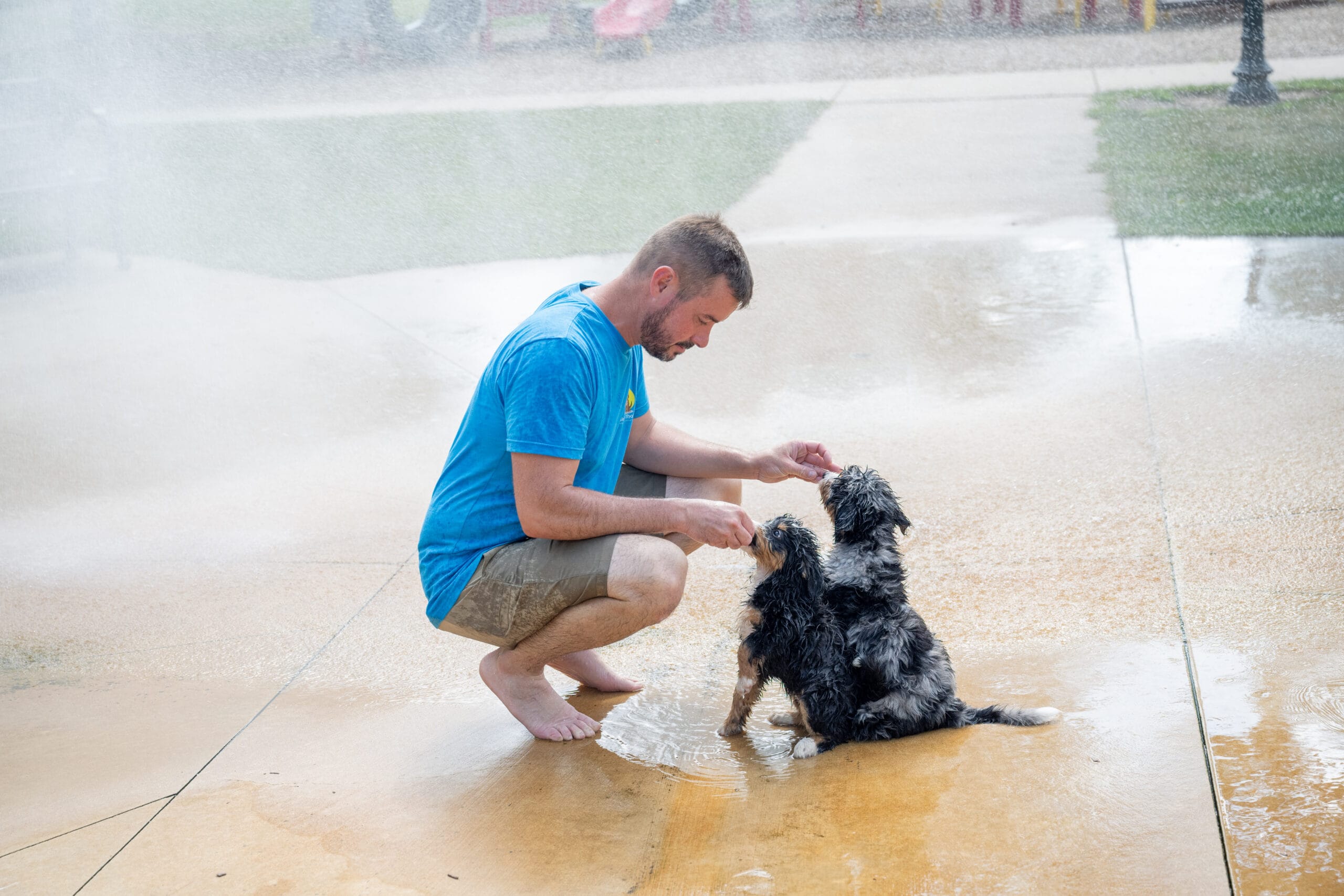
Leash work as a language, not a win-or-lose contest.
For many dogs, the leash is where the relationship plays out the loudest. Structured leash work teaches a dog to tune in and walk with their person instead of dragging them down the street. The leash becomes a line of communication, not a win-or-lose contest.
Start in low-distraction areas like the driveway or living room. Give the dog a clear walking position, usually slightly behind or beside your leg, and keep the rule simple: tension on the leash means the walk pauses or changes direction, loose leash earns forward motion and quiet praise. No endless nagging, no "heel, heel, heel" soundtrack. Keep your body language calm and your corrections matter-of-fact.
Over a week or two of short, structured sessions, most dogs begin checking in more often and pulling less because the pattern finally makes sense. The walk stops feeling like a tug-of-war and starts feeling like a shared job. This is how dogs become genuinely calm and collected in public instead of just muscling through the walk on adrenaline. It is also exactly what Tyler addresses in one-on-one sessions, working through your specific neighborhood and your specific dog.
Step Three: Make Routine Your Strongest Training Tool
Dogs are experts at spotting routines. Instead of fighting that, lean into it. Turn regular life: morning potty breaks, meals, couch time, crate time into predictable patterns that reinforce calm behavior and make impulse control easier throughout the day.
- Crate door: Quick sit and eye contact before the dog is released every single morning. The routine itself becomes the cue.
- Meal time: Dog goes to their place bed while the family eats and is calmly released afterward. Repeated daily, this builds rock-solid impulse control without a formal training session.
- Threshold: Every door, every time. Thirty seconds of patience at the door practiced twice a day compounds into a dog who waits calmly for guests within a few weeks.
- Leash up: Dog must be standing or sitting calmly before the leash clips on. Do not clip into chaos. Ever.
For nervous or pushy dogs, these predictable rituals are genuine confidence builders. They rack up a long list of "I know what to do here" reps throughout the day. Each clear success chips away at anxiety and reactivity far more effectively than the occasional marathon obedience training session.
Step Four: Match Your Energy to the Dog You Want
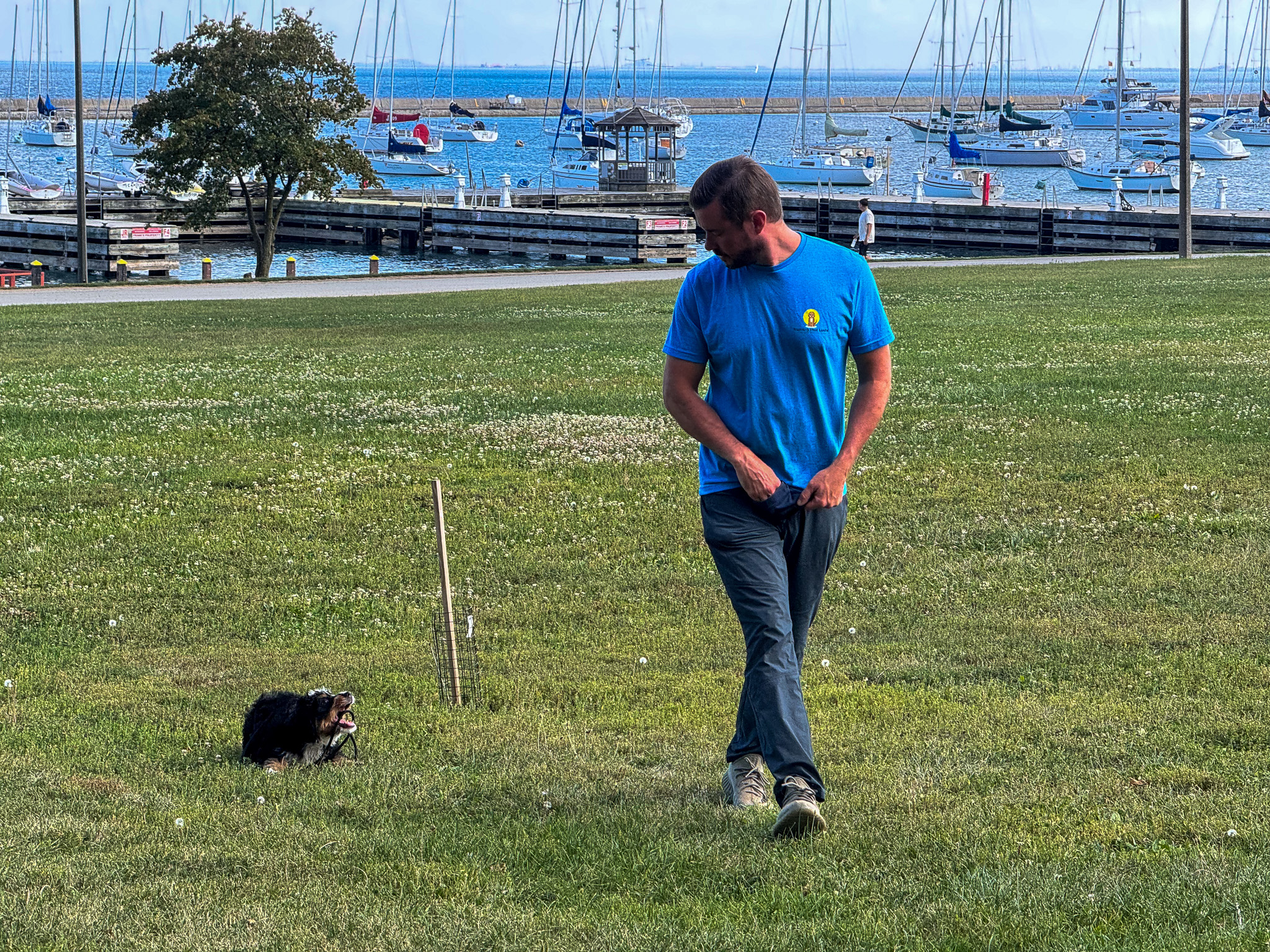
Calm, collected, confident dogs do not come from owners who are constantly yelling, over-explaining, or emotionally charging every small mistake. Dogs read tone, posture, and timing far better than they understand words. The more neutral and steady the human, the easier it is for the dog to settle.
That does not mean being cold or robotic. It means saving big reactions for truly big deals like safety issues or explosive behavior and handling most day-to-day slip-ups like a referee calling a foul, not a person taking it personally. A quiet leash reset, walking a dog back to their place bed, or calmly re-asking for a sit communicates: "This is the rule. It has always been the rule. Try again."
A dog trained through genuine connection is a dog who chooses to work with their person. That kind of relationship is impossible to build if the human is unpredictable, volatile, or only "on" during formal training sessions.
This is where genuine connection matters most. The relationship you build through consistent, calm follow-through is the foundation everything else rests on. Commands are just words without it.
Step Five: Follow Through When It Is Inconvenient
The real test of consistency is not on a quiet Sunday with nothing else going on. It is when you are juggling groceries, kids, and a ringing phone and the dog decides to test the rule about bolting out the front door.
Following through does not mean being harsh. It means being willing to pause a conversation, set down a bag, or walk back a few steps to reset the behavior instead of shrugging and letting it slide "just this once." Every time a rule is enforced gently but firmly under pressure, the dog's belief that "this is how life works" gets stronger. Every time it is skipped, the dog files away that the rules are negotiable under the right conditions.
When owners commit to that level of follow-through for even a couple of weeks, most households see significant changes in calmness, listening, and overall cooperation. The dog is not suddenly "perfect." They are simply no longer living in a world where the rules change under their feet.
When to Bring in a Trainer
Some dogs are easy once the humans tighten up consistency. Others come with a history of reactivity, anxiety, or pushy behavior that makes change feel overwhelming from the inside. That is where structured, real-world training support is worth its weight in gold.
Good training for this kind of "sometimes" dog should include clear education for the owner on leash handling, house structure, and real-life follow-through, not just in-facility obedience. It should help the dog get a fresh, consistent experience of what is expected, and then show the humans exactly how to maintain that at home. That is the entire model behind board and train programs, where the dog gets a clean, consistent reset and the owner learns how to carry it forward.
For owners near Bristol, Illinois and the surrounding Chicagoland area, Training That Lasts is built around this real-world, relationship-first approach. Whether that is in-home training to work on the specific patterns happening in your house, group classes to build calm social skills alongside other dogs, or a free behavioral assessment to figure out where to start, the goal is always the same: not a robot dog, but the calm, connected teammate most people hoped for when they first brought their dog home.

Keep Reading
Stop the "Sometimes." Start the Structure.
Tyler works with dogs and owners across Yorkville, Oswego, Bristol, Naperville, and the greater Chicagoland area. If your dog listens sometimes but not always, let's find out why and fix it. Start with a free behavioral assessment.
Book Your Free Assessment