Our Methodology
Training That Lasts helps people create clearer communication, steadier structure, and a stronger relationship with their dog in everyday life.
Training for Everyday Life
Dog training is often reduced to commands, corrections, or getting a dog to perform for the trainer. That is not what Training That Lasts is built around.
We work on the relationship between the dog and the person living with them. That means clearer communication, consistent expectations, positive reinforcement, practical structure, calm leadership, and follow-through that makes sense at home and in public.
This is not about creating robotic obedience or teaching commands that only work inside the house. It is about helping your dog understand what is expected, trust your guidance, and make better decisions during walks, around visitors, in public, and throughout everyday life.
Communication. Trust. Connection.
That is the foundation of calm, collected, confident behavior and the way we redefine relationships.
Behavior Does Not Change in Isolation
Pulling, jumping, barking, lunging, guarding, overexcitement, fear, and poor household manners are not solved by one command or one correction. They are shaped by repetition, routines, expectations, environment, fulfillment, handling, and the relationship between the dog and owner.
We help families change the patterns surrounding the behavior. That may include how the walk begins, what access the dog earns, how cues are delivered, how boundaries are held, and what happens after the dog makes a good or poor choice.
This is practical work. Owners do not need to predict every reaction or become experts in subtle canine body language. They need clear guidance they can understand, repeat, and use consistently.
We Look at the Full Picture
We do not label a dog as bad, stubborn, dominant, or intentionally disobedient. We look at what the dog has learned, what the household has practiced, what the owner is communicating, and where structure or consistency may be missing.
Tyler may point out body language or behavior in the moment when it helps explain what is happening, but that is one piece of the conversation, not the center of the methodology.
The Method Behind the Work
Training That Lasts is built around three connected principles. These are not words added to make the methodology sound good. They are the structure underneath everything we teach.
Communication
Dogs cannot reliably meet expectations they do not understand. Clear communication includes spoken cues, body position, movement, leash handling, timing, reinforcement, boundaries, and consistent follow-through.
A cue repeated without follow-through eventually becomes background noise. We help owners make their words, movement, leash handling, reinforcement, and boundaries more consistent so the dog receives a clearer message.
Trust
Trust is created through consistency, fairness, and predictability. Your dog learns that you will provide direction, recognize good decisions, hold reasonable boundaries, and help them through situations they are not ready to manage alone.
Trust does not mean allowing everything or avoiding every uncomfortable moment. It means becoming someone your dog can depend on when the answer is yes, when the answer is no, and when the world feels uncertain.
Connection
Connection is more than affection, cuddling, or being physically close to your dog. It is your dog remaining aware of you when another person, dog, sound, smell, or movement is competing for their attention.
We build connection through engagement, movement, fulfillment, training, and shared experiences. The goal is communication strong enough to hold up when it matters.
We Train the Handler Too
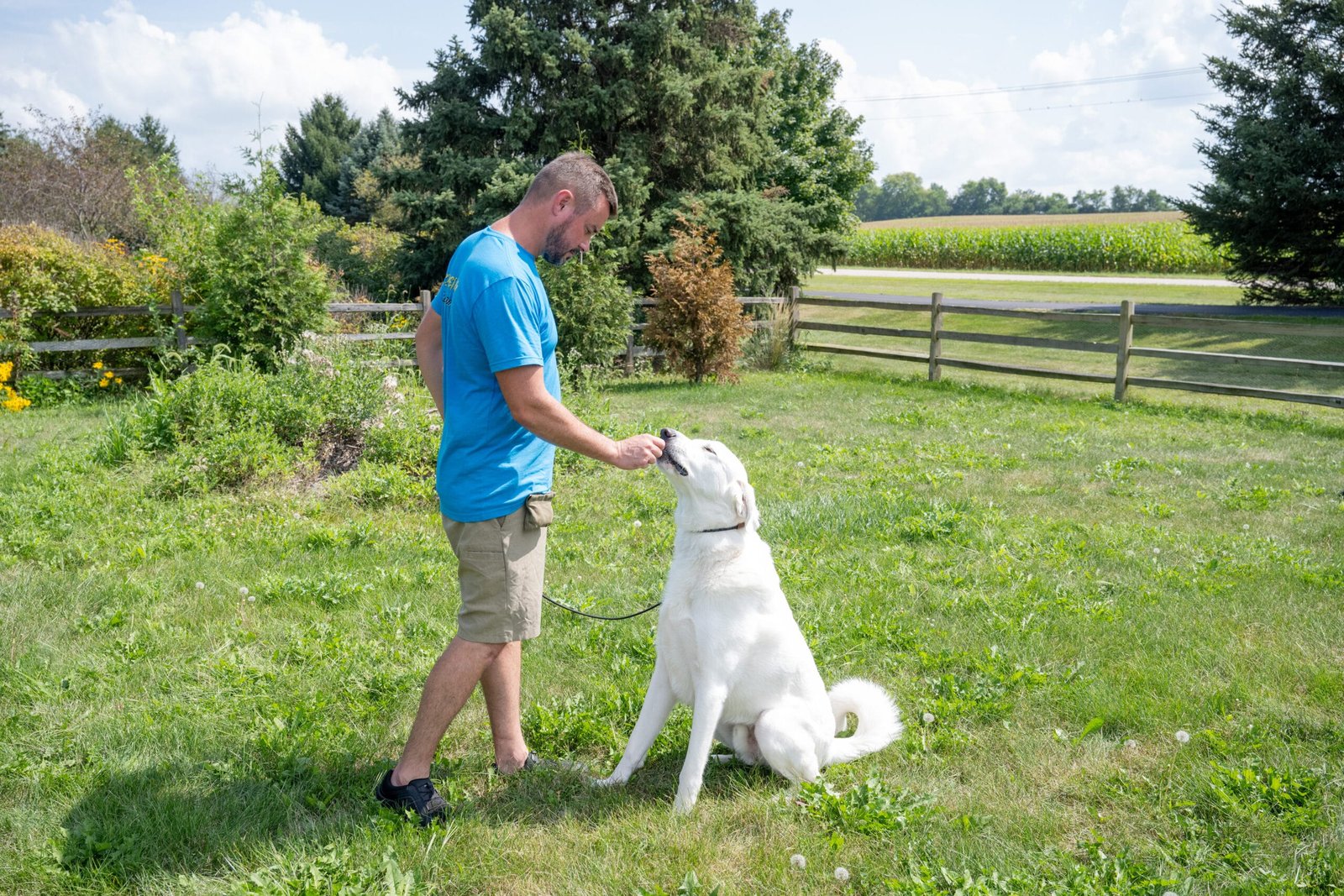
You will not stand on the sidelines while a trainer works with your dog and then be handed a list of commands at the end. Lasting progress requires the person holding the leash to understand what is happening and know how to respond.
We teach clear verbal and non-verbal communication, leash handling, timing, reinforcement, boundaries, and follow-through. Tyler may explain behavior or body language in real time when it helps, but clients are not expected to become canine behavior analysts or predict what happens next.
A trainer may influence your dog during an appointment, but you shape what happens during every doorway, walk, meal, visitor, car ride, and quiet evening that follows. Training That Lasts is designed to make the handler capable, not to make the dog dependent on the trainer.
The Principles Stay Consistent.
Training That Lasts does not invent a different philosophy for every dog. The foundation remains communication, trust, connection, calm leadership, positive reinforcement, structure, and consistent follow-through.
The pace, examples, and environment may change based on the dog and handler, but the ideals do not. We coach the person who will be living with the dog so the work makes sense outside the appointment.
We do not use e-collars, prong collars, pain, fear, or intimidation. Leashes, long lines, flat collars, slip leads, crates, place cots, food, praise, play, and everyday access may support the work, but no tool replaces communication and consistency.
Training Is Built From Connected Skills
Our training is not built around one exercise, tool, or command. We use the same connected skills across our work, with the pace and examples adjusted so the handler can apply them consistently.
Verbal and Non-Verbal Communication
Dogs learn from more than words. Tone, movement, leash handling, body position, timing, reinforcement, boundaries, and follow-through all shape what a cue means.
We help owners become clearer and more consistent so the dog is not receiving one message from the cue and another from everything happening around it.
Structure Before Freedom
Dogs learn through repetition, including the repetitions nobody intended to give them. Every frantic greeting, uncontrolled dash through a doorway, stolen item, dragging walk, or ignored cue gives that behavior another opportunity to become familiar.
Structure limits the chance to keep practicing unwanted habits while better habits are being taught. Freedom is not removed forever. It grows as better decisions become more reliable.
Building Calm, Not Just Compliance
A dog may know Sit, Down, Place, or Stay and still struggle when excitement, frustration, or distraction takes over. Commands alone do not create a calm relationship.
We build calm through repetition, predictable routines, clear expectations, engagement, and an owner who can remain collected instead of adding more chaos to the moment.
Positive Reinforcement With Structure
We use positive reinforcement to recognize and strengthen the decisions we want repeated. Depending on the dog and situation, reinforcement may include food, praise, movement, play, access, space, affection, freedom, or another outcome the dog values.
Dogs also need to understand when another choice is required, which is where calm redirection, structure, boundaries, and follow-through become important. Clear does not have to mean harsh, and kind does not have to mean unclear.
Desensitization Without Overwhelming the Dog
Avoiding every challenging situation does not prepare a dog for everyday life, but overwhelming a dog does not build confidence either. Dogs learn best when the difficulty is high enough to create progress but manageable enough for them to remain present and responsive.
For dogs experiencing fear, anxiety, reactivity, or sensitivity, we may create more distance, shorten the exposure, reduce environmental pressure, or return to a familiar skill. Confidence is built through successful experiences, not forced confrontation.
Troubleshooting the Moment
Training rarely unfolds exactly as planned. A dog may become distracted, the leash may tighten, the owner may hesitate, or the environment may change.
Tyler coaches those moments as they happen so the owner understands what to adjust. The value is not predicting the future. It is learning how to respond calmly and clearly when real life gets messy.
Social Neutrality
Socialization is not a meet-and-greet marathon. Your dog does not need to play with every dog, greet every stranger, or investigate everything they notice.
We teach dogs how to remain composed around people, animals, sounds, movement, and unfamiliar environments without becoming fixated, fearful, or overexcited. Calm neutrality is often far more useful than constant interaction.
Practice Beyond the Training Session
Behavior that only works in the living room is not enough. Dogs do not automatically understand that a skill learned at home also applies in the driveway, neighborhood, park, store, patio, parking lot, or crowded sidewalk.
We begin where your dog can succeed, then deliberately increase distraction, distance, duration, and environmental pressure. The purpose is not to overwhelm your dog. It is to make their skills reliable in the places where you will actually need them.
Calm Leadership Without the Theater
Leadership has become a loud and often misunderstood word in dog training. For us, it is much simpler and far less dramatic.
Calm leadership means giving direction before the situation falls apart, holding a boundary without becoming emotional, and following through without repeating yourself endlessly. It means making decisions your dog is not ready to make alone while giving them the opportunity to become more capable over time.
It is not about overpowering your dog, proving who is in charge, or controlling every movement. It is about becoming steady enough that your dog does not feel responsible for managing the entire environment.
Structure creates clarity, and clarity reduces conflict. When your dog understands the expectations and trusts the person providing them, calm becomes easier to find.
Skills Have to Hold Up in Real Life
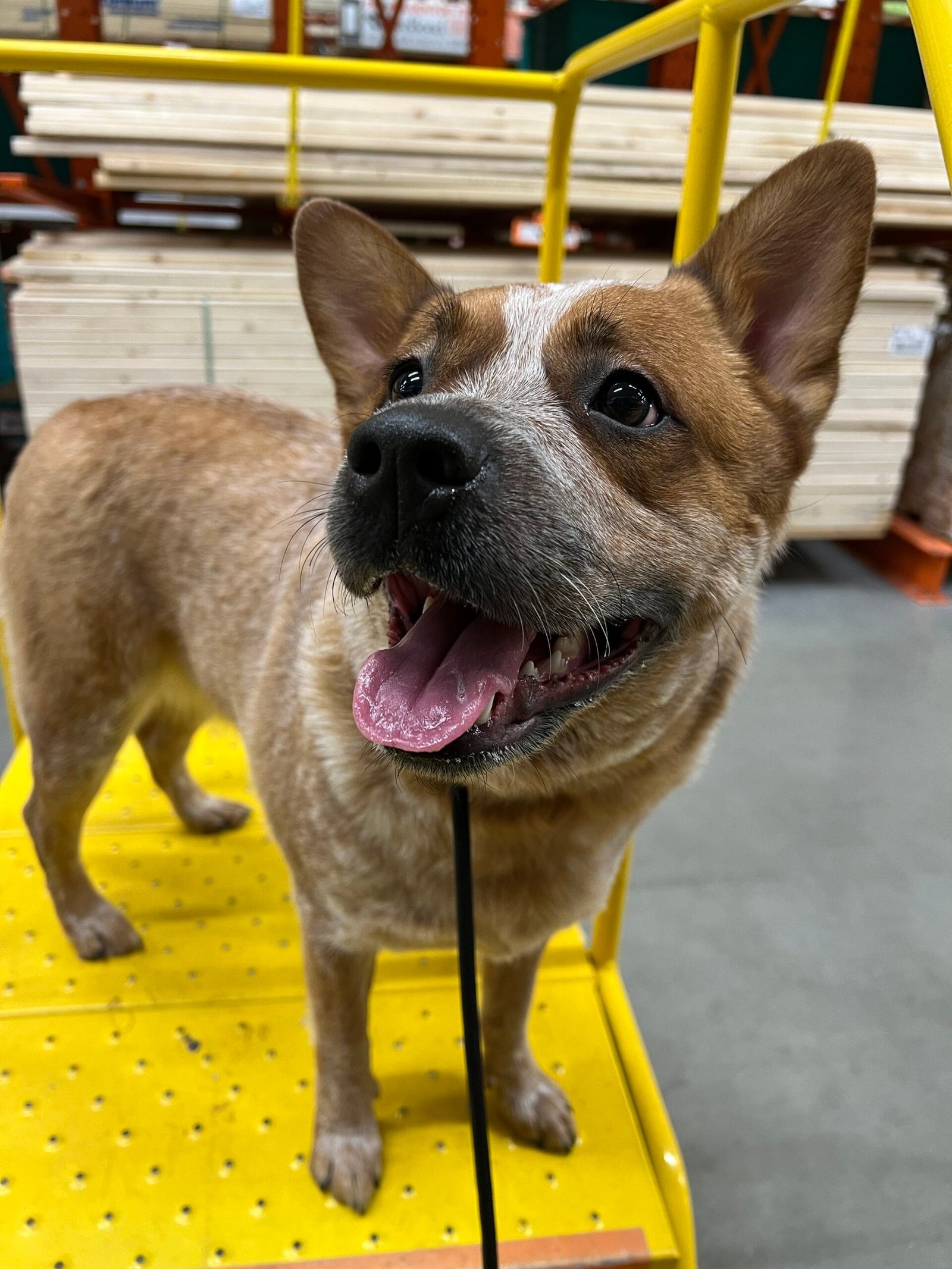
A dog may understand a skill at home and lose it the moment the environment changes. That is why we practice around movement, unfamiliar sounds, people, dogs, parking lots, stores, patios, and the places where everyday behavior actually matters.
We increase difficulty with purpose. The goal is not to flood the dog with pressure. It is to help both dog and handler stay connected as the world becomes more distracting.
What Relationship-Based Training Looks Like
The methodology becomes real through ordinary routines. Walks, doorways, visitors, public spaces, play, rest, and household boundaries all shape the relationship.
Leash Reactivity
We work on leash handling, engagement, movement, distance, and calm repetition around distractions. The owner learns how to guide the dog without tightening up, panicking, or turning the walk into a fight.
The goal is not to force the dog closer to a trigger. It is to create more control, clearer communication, and better recovery over time.
Doorway Excitement
Instead of correcting your dog after they charge through the door or jump on a guest, we establish the expectation before the door opens. Your dog learns where to go, what behavior is expected, and how calm decisions create access.
Over time, the doorway becomes a familiar routine rather than an unpredictable explosion. The dog does not have to guess, and the handler does not have to scramble.
Pulling on Walks
Instead of spending the entire walk correcting leash tension, we create structure from the beginning. Direction, pace, position, engagement, and access to the environment are used to teach your dog how to move with you.
A structured walk is not about forcing the dog into one exact position for every second. It is about creating communication and preventing the leash from becoming a constant argument.
Public Environments
Instead of entering the busiest possible location and hoping your dog adjusts, we choose an environment that matches their current ability. We build success gradually as the dog develops stronger coping skills and greater confidence.
A quiet parking lot may be more valuable than a crowded festival during the early stages of training. Progress comes from choosing the right challenge, not the loudest one.
Household Boundaries
Instead of introducing rules only when your dog is excited or already making a poor decision, we teach expectations during calmer moments. Doorways, furniture access, greetings, mealtimes, visitor routines, and movement through the home all become opportunities to create clarity.
Boundaries are not punishments. They give the dog a predictable framework and reduce the need for constant correction.
Mental and Physical Fulfillment
Instead of waiting for restless energy to become chewing, barking, pacing, digging, or destructive behavior, we build purposeful activity into the dog’s routine. Training, sniffing, walking, movement, play, problem-solving, and calm engagement all meet different needs.
More activity is not always the answer, especially when the activity creates greater arousal. Fulfillment should help the dog become more balanced, not simply more exhausted.
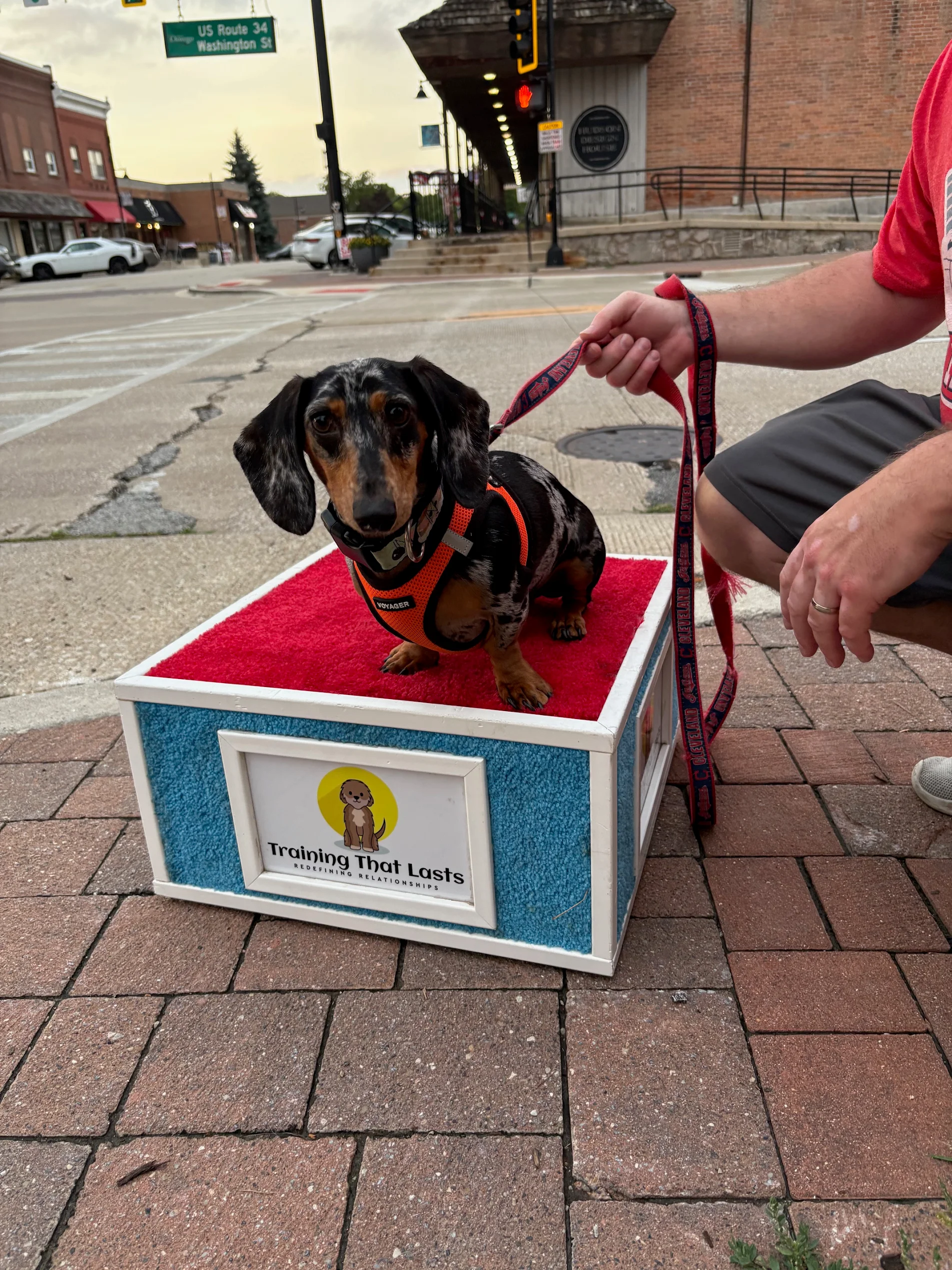
Crate or Connection
Our puppy methodology begins with a simple rule: Crate or Connection. A young puppy should be safely resting or purposefully engaged with their owner through potty breaks, training, structured play, handling, walks, or calm time together.
Unsupervised wandering gives puppies endless opportunities to rehearse accidents, chewing, stealing, chasing, and other habits that become harder to change with repetition. Crate or Connection creates a deliberate rhythm of rest, engagement, learning, and supervision.
This does not mean keeping a puppy confined all day or controlling every second of their life. As the puppy becomes more reliable and develops better decision-making skills, they earn greater freedom. Starting with structure gives the puppy fewer unwanted patterns to unlearn later.
What Progress Actually Looks Like
Progress is not a dog performing perfectly for a trainer while the owner watches. It is the dog and handler becoming more capable together and carrying those skills into normal life.
For Your Dog
Your dog begins to settle sooner, recover more easily, and check in before reacting. They understand household boundaries, move with greater purpose on the leash, and handle distractions without being pulled into every sight, sound, person, or dog around them.
The goal is not a dog who never makes a mistake. It is a dog who understands how to make better decisions and knows where to look when a situation becomes difficult.
For You
You become calmer and more deliberate. Your cues, timing, leash handling, boundaries, reinforcement, and follow-through become more consistent.
Instead of leaving with a list of commands, you understand what to practice, how to respond when things go sideways, and how to keep the relationship moving forward after the trainer leaves.
Simple. Structured. Repeatable.
Understand the Full Picture
Training begins with an in-home Behavioral Consultation so we can observe your dog in the environment where many of the challenges occur. We look at routines, relationships, triggers, handling, communication, boundaries, fulfillment, and the patterns influencing the behavior.
We do not begin by labeling your dog or making assumptions from a short description. We begin by listening, observing, and understanding what daily life actually looks like.
Identify What Is Driving the Behavior
We look beyond the visible symptom to understand what may be contributing to it. Fear, frustration, overexcitement, unclear communication, inconsistent boundaries, environmental pressure, past experiences, and missing coping skills can all produce similar outward behaviors.
Understanding the cause allows us to choose a more appropriate response. The same bark can mean very different things depending on the dog and the situation.
Set Clear Priorities
We identify the routines, communication gaps, handling problems, boundaries, and training skills that need attention first. The same core methodology stays in place while the coaching focuses on the problems affecting daily life.
A plan that only works while the trainer is present is not useful. The owner needs clear priorities they can understand and continue using during ordinary life.
Teach the Handler
You will practice the skills with guidance rather than watching from the sidelines. We explain what to do, why it matters, what to look for, and how to adjust when the situation changes.
Handler education is central to everything we do. The clearer and more capable you become, the more consistent the experience becomes for your dog.
Practice Where the Behavior Matters
Once the foundation is clear, we practice in the environments where you need the behavior to hold. Challenges are introduced thoughtfully so your dog can develop genuine reliability rather than simply surviving the experience.
Training becomes stronger as it moves beyond one room or one routine. Every successful repetition teaches the dog that the same expectations apply in new places.
Create Lasting Patterns
Lasting change comes from repetition, consistency, and follow-through. Our goal is to help you create habits that remain useful long after the training session ends.
Dogs are always learning from what happens around them. The question is whether we are teaching on purpose or allowing repetition to do the teaching for us.
Calm. Collected. Confident.
These words describe the outcome we want for both ends of the leash. We want your dog to become calmer around distractions, more collected when challenges arise, and more confident in your guidance.
We also want you to feel capable of guiding your dog through difficult moments with clear communication, calm structure, and confidence in what to do next.
Start With a Behavioral Consultation
Most families begin with our two-hour, in-home Behavioral Consultation. This gives us the opportunity to see your dog in their normal environment, understand the patterns creating stress, and show you where meaningful changes can begin.
Training That Lasts serves dog owners throughout Yorkville, Oswego, Naperville, Plainfield, Kendall County, and nearby Chicagoland communities. Start building clearer communication, stronger trust, and a connection that holds up in real life.
Frequently Asked Questions
What kind of dog training method does Training That Lasts use?
We use a relationship-based, structured approach centered on communication, trust, and connection. The work includes positive reinforcement, clear expectations, calm leadership, appropriate boundaries, leash handling, owner education, social neutrality, and practice in real environments.
The exact application depends on the dog, handler, behavior, household, and environment. We do not believe one rigid method can address every dog or every family.
Do I need to know canine body language?
No. Tyler may point out behavior or body language in real time when it helps explain what is happening, but owners are not expected to predict every reaction or become experts in subtle canine signals.
The focus is practical: clear communication, leash handling, structure, reinforcement, boundaries, consistency, and knowing how to respond when everyday situations become difficult.
Is this positive reinforcement training?
Positive reinforcement is an important part of our methodology. We reward the decisions we want repeated and use reinforcement to build engagement, confidence, understanding, and reliability.
Dogs also need clear direction, appropriate boundaries, and consistent follow-through. Positive does not have to mean passive, and structure does not have to mean harsh.
Can this approach help reactive, fearful, or anxious dogs?
Yes, although the pace and setup depend on the dog and the behavior involved. These dogs often need more distance, calmer repetition, clearer handling, and an environment where they can practice without being forced into confrontation.
We focus on safety, communication, structure, manageable exposure, reinforcement, and recovery. Progress is built carefully rather than pushed for the sake of a dramatic moment.
Do you use e-collars or prong collars?
No. Training That Lasts does not use e-collars, prong collars, pain, fear, or intimidation as the foundation of training.
Leashes, long lines, flat collars, slip leads, crates, place cots, food, praise, play, and everyday access may support the work, but the tool is never the methodology. Communication, consistency, and the relationship do the heavy lifting.
Why is the owner so involved?
Your dog lives with you, not the trainer. Lasting progress depends on what happens during normal routines and in the days between training sessions.
We teach you how to understand, communicate with, and guide your dog so the training can continue long after the appointment ends. The stronger your skills become, the less dependent you are on having a trainer beside you.
Where should we begin?
The in-home Behavioral Consultation is the recommended first step for most behavioral concerns. It gives us the opportunity to understand your dog, household, routines, communication, and specific challenges before recommending the next step.
This prevents families from investing in the wrong service or starting with a plan that does not fit the problem. We begin by understanding the full picture, then build from there.