Dog Training in Aurora, IL
Training That Lasts provides in-home behavioral consultations and personalized dog training for Aurora families dealing with leash pulling, reactivity, barking, jumping, puppy chaos, poor boundaries, overexcitement, and dogs that seem to forget everything the second life gets busy.
We start by understanding your dog, your household, and the situations where things begin to unravel. Then we help you build clearer communication, better structure, stronger handling, and a training plan you can actually continue after we leave.

Your Dog Does Not Have the Same Problem Everywhere.
A dog may settle beautifully in the living room and lose every ounce of focus once the leash comes out. Another may walk well on a quiet street but become overwhelmed when a dog appears across the sidewalk, while a puppy who seems easy all afternoon can turn the front door into complete chaos when guests arrive.
That is why we do not treat dog training like a collection of commands practiced in isolation. Training That Lasts looks at the situations surrounding the behavior, including your timing, leash handling, routines, boundaries, communication, environment, and the patterns your dog has been practicing every day.
The goal is not a dog that looks impressive for a trainer. The goal is a dog and owner who understand one another better and can handle daily life with more clarity, connection, and confidence.
Aurora Gives Dogs a Lot to Process
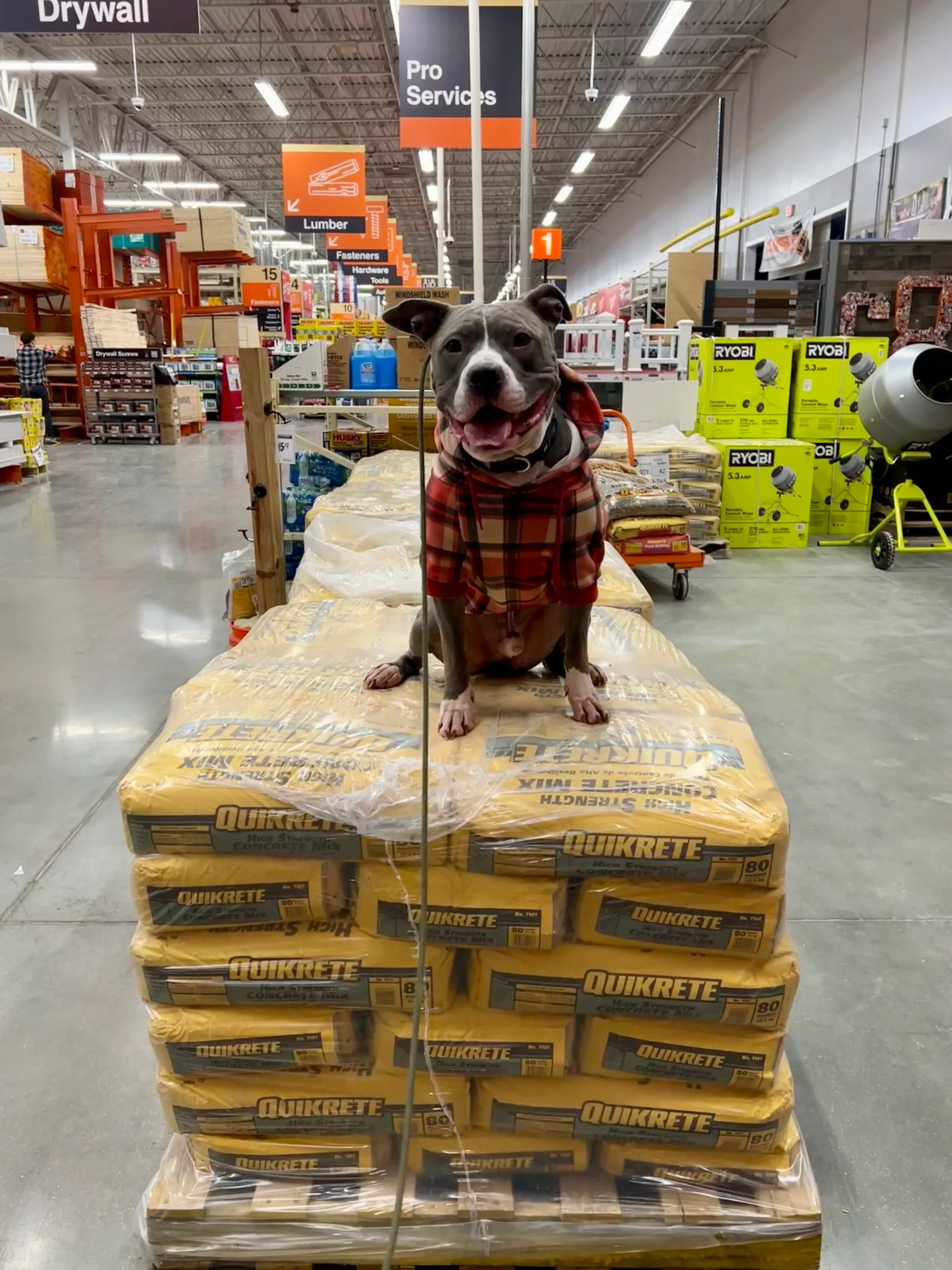
Aurora is not one uniform environment. Downtown brings tighter sidewalks, bridges, traffic, apartment entrances, pedestrians, sounds, and movement, while many east- and west-side neighborhoods give dogs more space, quieter streets, yards, and completely different walking patterns.
That variation matters. A dog that handles one setting well may struggle badly in another, so we build skills progressively instead of assuming success in one location automatically carries everywhere else.

Fox River Corridor
Movement from walkers, bikes, dogs, traffic, bridges, and changing sightlines creates a different training picture than a quiet residential street. We choose the level of difficulty based on what your dog can process productively.
Neighborhood Walks
This is where many Aurora owners feel the frustration most. Pulling, scanning, barking, rushing fences, reacting to dogs, and losing connection can turn a normal walk into something everyone begins to dread.
Home & Front Door
Jumping, barking, counter-surfing, rushing doors, pacing, and difficulty settling usually need more than another obedience command. We look at the routines and expectations surrounding the behavior so the household becomes clearer for everyone.
Public Settings
When your dog has the foundation to handle more activity, training can progress into suitable public environments. Difficulty is increased deliberately so your dog learns without being thrown into more stimulation than they can manage.
When Daily Life With Your Dog Starts Feeling Harder Than It Should
Behavior problems rarely exist as isolated events. We help Aurora dog owners understand what is feeding the pattern, clean up the communication around it, and create more useful repetitions instead of constantly reacting to the latest problem.
Leash Pulling & Frantic Walks
If the leash tightens before you make it down the block, we work on movement, engagement, handling, pace, and clearer walking routines. The leash should become a line of communication, not a daily argument.
Reactivity Around Dogs or People
Barking and lunging are usually the loudest part of a larger pattern. We help you recognize the earlier changes, understand distance and threshold, and respond before your dog becomes too overwhelmed to listen.
Jumping & Doorway Chaos
Guests should not require a wrestling match at the front door. We create clearer expectations before the excitement peaks and help your dog practice calmer patterns around arrivals, deliveries, and movement through the home.
Puppy Biting & Household Mayhem
Puppies need guidance before unwanted habits become rehearsed routines. We help with crate structure, potty habits, biting, leash foundations, appropriate freedom, social development, and communication from the beginning.
Fear, Anxiety & Low Confidence
Pushing a worried dog harder is not the same thing as building confidence. We work at a manageable level, watch body language carefully, and increase the challenge as the dog becomes capable of handling more.
Weak Boundaries & Inconsistent Listening
Dogs notice inconsistency quickly, especially when different people respond differently to the same behavior. We help the household create expectations that are understandable, repeatable, and fair.

The Reaction Is Usually Not Where It Started.
The barking, lunging, jumping, pulling, or frantic burst of energy is often the end of the sequence. Before that point, attention shifts, muscles tighten, excitement builds, the leash changes, and your dog begins disconnecting from you.
Our approach begins in that earlier window. We teach you how to notice what your dog is telling you and provide direction while they can still process information, which gives both of you a much better opportunity to make a different choice.
Explore Our MethodologyCommunication. Trust. Connection.
These are not three words we stick underneath the logo because they sound good. They shape how we train the dog, how we coach the owner, and how we build behavior that makes sense outside of a single appointment.
Communication
Dogs cannot reliably meet expectations they do not understand. We improve cues, leash handling, movement, timing, boundaries, reinforcement, and follow-through so your direction becomes clearer and more consistent.
Trust
Trust grows when your dog can predict how you will respond and depend on you for guidance. Clear expectations, fair boundaries, consistency, and calm follow-through remove much of the guessing from the relationship.
Connection
Connection is your dog remaining aware of you when the environment gives them plenty of reasons not to be. We build engagement without expecting your dog to ignore the world or stare at you for every second of the day.
Start With the Right Level of Support
Most behavior concerns begin with the in-home Behavioral Consultation so we can understand the full picture before recommending more training. From there, the next step depends on your dog, your goals, the behavior involved, and how much coaching your household needs.
In-Home Behavioral Consultation
This two-hour session gives us time to see your dog in their normal environment and work directly with the routines creating problems. You leave with a clearer understanding of the behavior and practical direction for what needs to change next.
- Structure and household boundaries
- Verbal and non-verbal communication
- Leash handling and troubleshooting
- Body language and behavior patterns
- Mental and physical fulfillment
- Clear recommendations moving forward
One-on-One Training
Private 90-minute sessions allow us to keep building the skills introduced during your consultation. We coach both ends of the leash so you understand what to do, why it matters, and how to make adjustments when the situation changes.
- Leash handling and walking skills
- Obedience and engagement
- Household behavior
- Confidence and focus
- Training around appropriate distractions
- Hands-on owner education
Group Training
Aurora clients can continue building focus and handling skills through Training That Lasts group opportunities in nearby Yorkville and Oswego. These sessions give owners structured practice around other dogs, people, movement, and everyday distractions.
- Focus around dogs and people
- Leash manners
- Calmer social behavior
- Owner handling practice
- Controlled exposure
- Continued repetition after private work
Board & Train
Some dogs benefit from a more concentrated training period with daily professional work. Board and Train builds skills through repeated structure and training, then transitions the work back to the owner so progress can continue at home.
- Daily professional training
- Leash skills and obedience
- Impulse control
- Household structure
- Exposure based on readiness
- Owner transition and follow-through
A Clearer Process From the First Appointment Forward
We are not interested in handing you ten unrelated tips and hoping one of them sticks. We begin by understanding the pattern, make the first changes together, then build the level of difficulty as you and your dog become more capable.
Assess
We look at the dog, household, routines, triggers, handling, boundaries, communication, and the situations where behavior begins changing.
Clarify
We clean up mixed messages and show you how clearer expectations, timing, movement, structure, and follow-through can change the interaction.
Practice
Better patterns are built through repetition. We begin where the dog can succeed, then practice those skills in the places and situations where you need them.
Build
As communication improves, we increase distraction and difficulty thoughtfully. Greater freedom and reliability come from skills your dog has actually learned to handle.
We Are Not Just Training Your Dog.
You live with your dog. You open the front door, hold the leash, handle visitors, set the household routine, and make hundreds of small decisions that shape what your dog practices every week.
That is why owner education is central to Training That Lasts. We teach you how to recognize body language, handle the leash, communicate earlier, reinforce better decisions, create structure, and follow through without turning every difficult moment into a fight.
The trainer should not be the only person your dog understands. Our job is to make you more capable so the work continues long after the appointment ends.
Training Can Grow Beyond Your Living Room
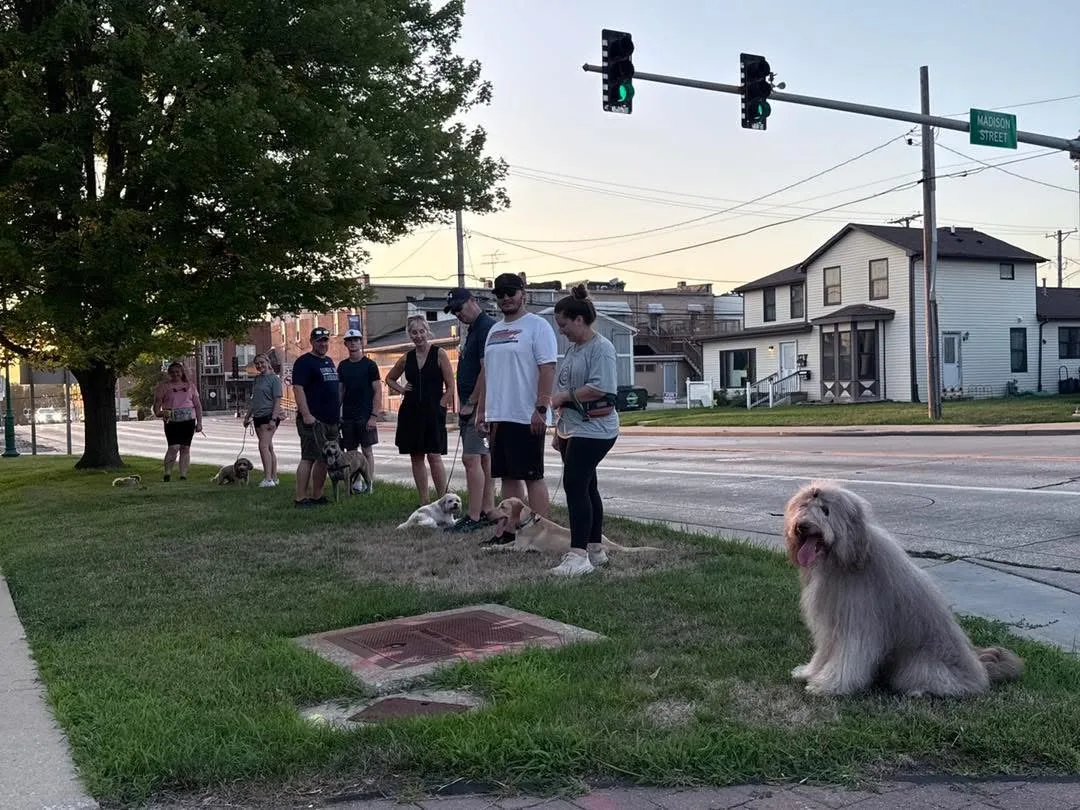
The home gives us a controlled place to establish communication and begin changing patterns, but dogs need practice when the environment changes too. Once your dog is ready, training can expand into neighborhood walks and suitable public settings where movement, sounds, people, dogs, traffic, and unfamiliar surroundings add another layer of difficulty.
Aurora gives us plenty of different environments to work around. Downtown and the Fox River corridor feel completely different from quieter residential areas, which means the training can progress without jumping straight from a calm living room into the hardest situation your dog can possibly face.
Aurora Clients Are Close to Our Group Training Community
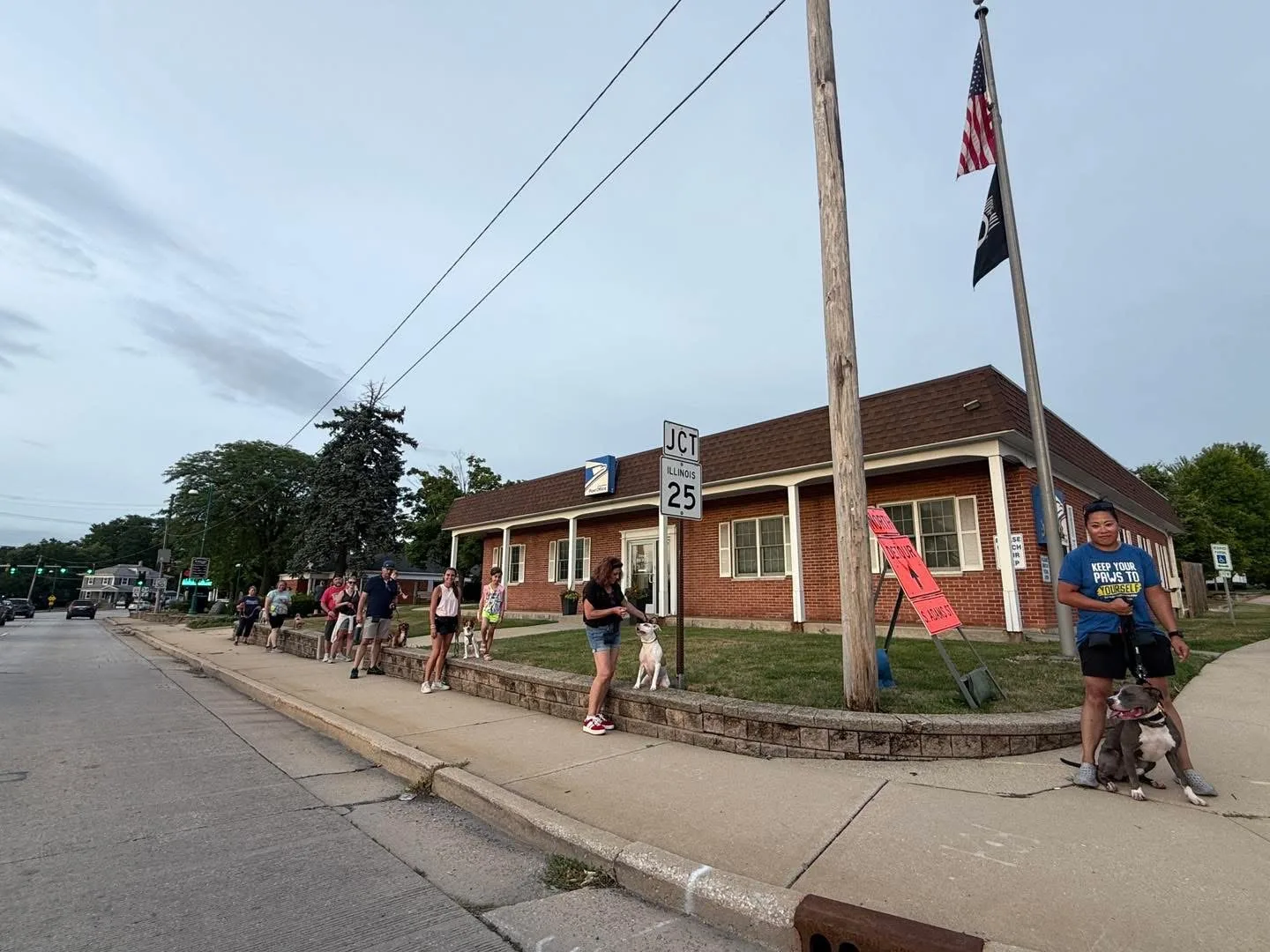
Private training gives us room to concentrate on your individual dog and handling skills, while structured group sessions give you another place to practice those skills around people and dogs. The two can work together when your dog is ready for that next level of distraction.
Training That Lasts currently hosts group opportunities in nearby Yorkville and Oswego. Aurora clients can use these sessions to continue working on leash control, engagement, calm behavior, social neutrality, and clearer communication with professional guidance.
Before You Get Started
These are some of the questions Aurora dog owners commonly have before beginning training. The consultation gives us the opportunity to answer the more important question, which is what your individual dog and household actually need.
Do You Offer In-Home Dog Training in Aurora, IL?
Yes. Training That Lasts works with dog owners in Aurora and surrounding western Chicago suburbs. In-home training lets us see your dog’s normal routine, home environment, leash habits, household boundaries, and the situations that are actually creating problems.
Do I Need to Start With a Behavioral Consultation?
For most behavior concerns, yes. The two-hour in-home Behavioral Consultation gives us the full picture before we recommend ongoing training, which helps prevent you from spending time and money on a program that does not fit the problem.
Can You Help With Reactive Dogs in Aurora?
Yes. Reactivity work begins with understanding triggers, body language, distance, threshold, handling, and what happens before the outward reaction. We work at a level the dog can process, then increase difficulty as communication and recovery improve.
Do You Work With Puppies?
Yes. Puppy work can include crate routines, potty training, biting, leash foundations, household structure, social development, confidence, handling, and early communication. Starting proactively can prevent a lot of frustrating habits from becoming deeply rehearsed later.
Where Can Training Sessions Take Place?
Training usually begins in or around your Aurora home, where we can build the foundation without unnecessary pressure. As your dog becomes ready, sessions may progress to neighborhood walks and suitable public environments where we can add distractions gradually.
Can Aurora Clients Attend Yorkville and Oswego Group Training?
Yes. Training That Lasts group opportunities are open to clients from surrounding communities, including Aurora. Group work can be especially useful once you and your dog have enough foundation to practice focus and handling around other dogs, people, and movement.
What Behavior Problems Do You Help With?
Common concerns include leash pulling, jumping, barking, reactivity, fear, anxiety, overexcitement, difficulty settling, weak household boundaries, puppy biting, counter-surfing, inconsistent listening, and other behavior patterns creating stress in daily life.
Build a Calmer, More Connected Dog in Aurora
Start with the in-home Behavioral Consultation and get a clearer understanding of what your dog is doing, what is contributing to it, and what needs to change. We will help you build a plan around your dog, your household, and the life you actually live together.