35,000 Years of Connection: Why Meat Matters in Dog Training
When I talk to people about the food I use during dog training, I like to take them back about 35,000 years. Long before packaged kibble, pet stores, training treats, and all the other products we associate with dogs today, humans were hunting, gathering, and living off the land. We were feeding our families with the animals we hunted, preserving what was valuable, and using what we could to survive.
That period in our history also helps us understand the beginning of the relationship between humans and the ancestors of the dogs living in our homes today. Around those early human settlements, food created an opportunity for two species to begin interacting in a completely different way. When I think about the role food still plays in our relationship with dogs, I think that history is worth understanding.
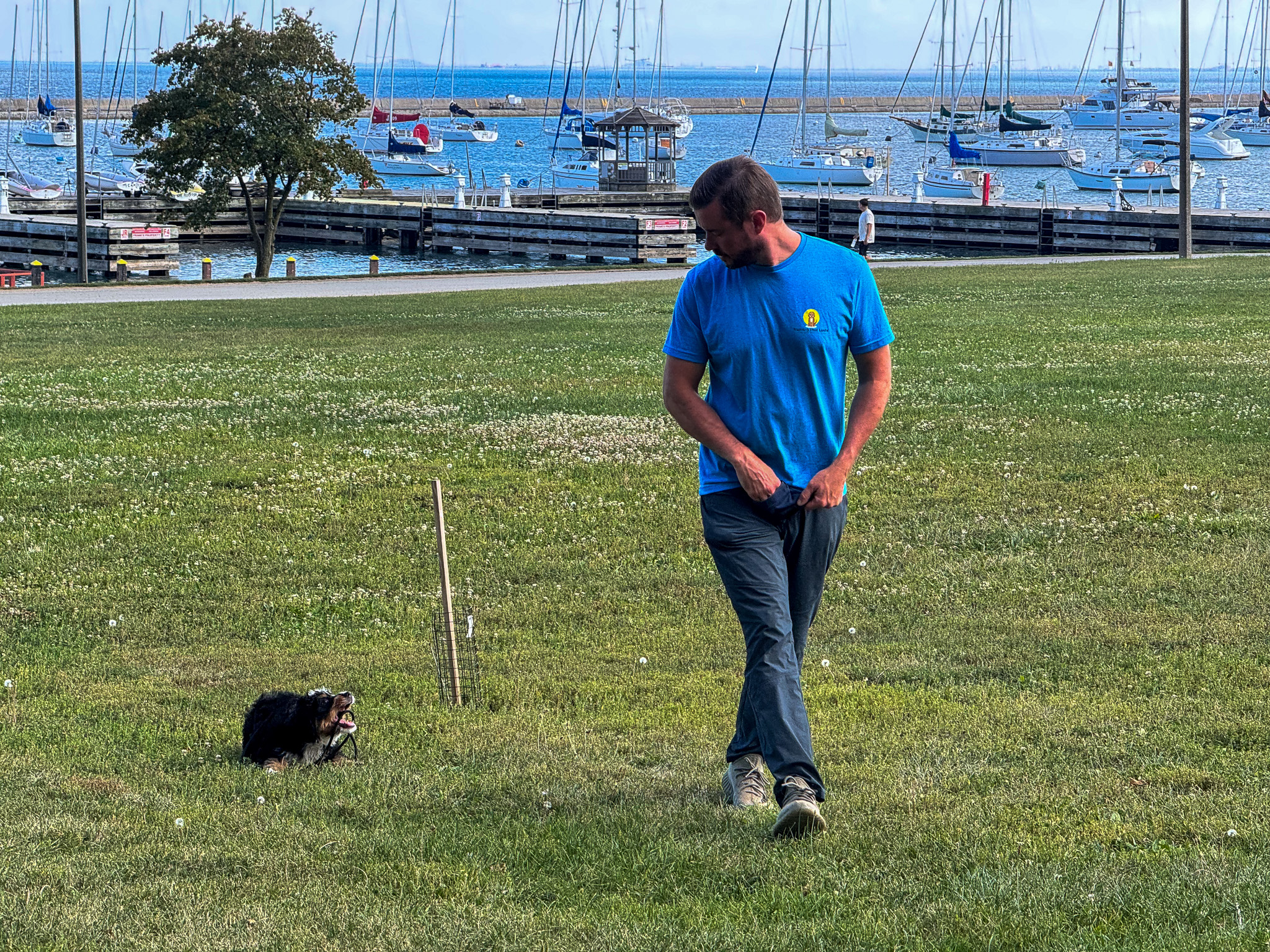
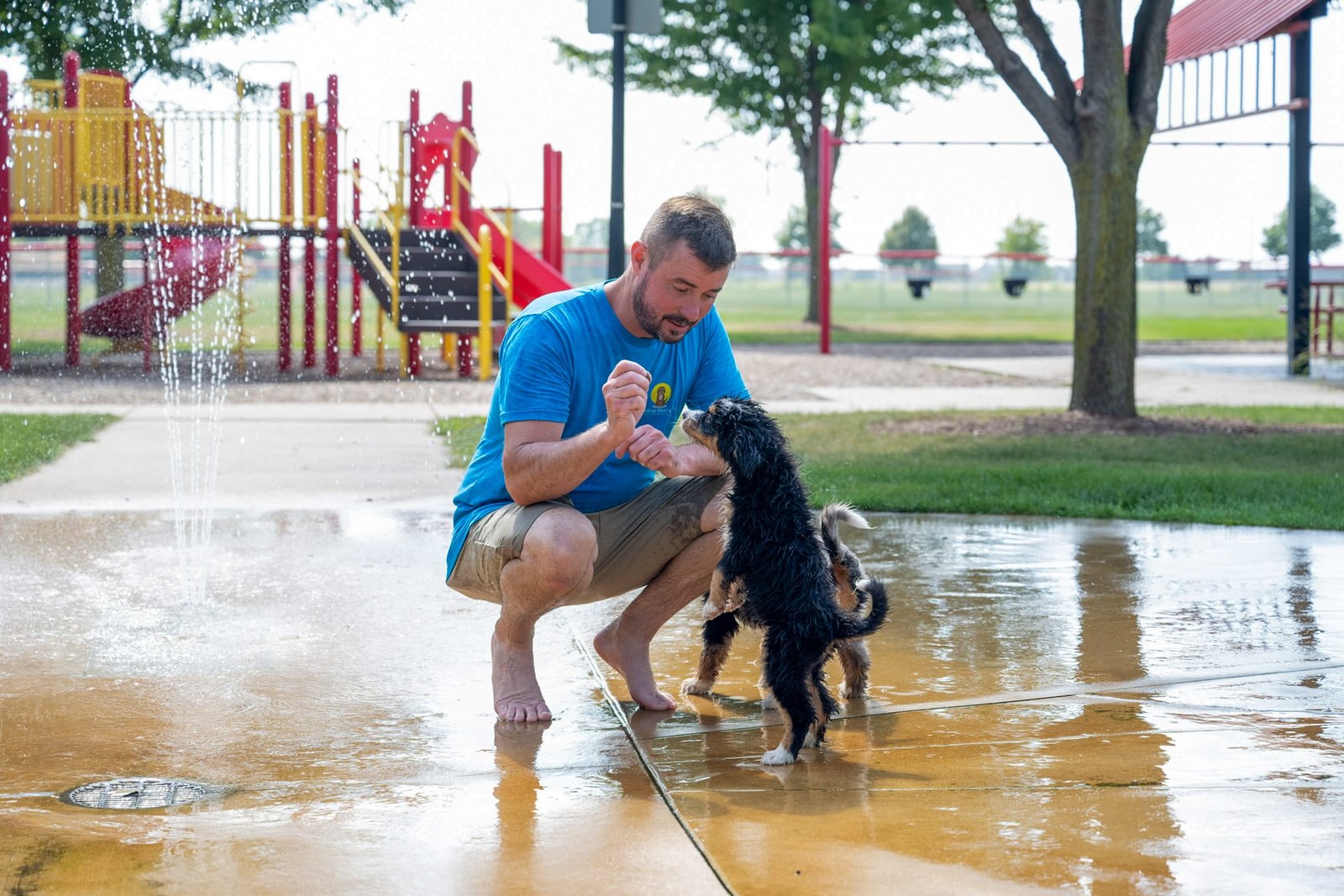
Picture What That Relationship Looked Like
Imagine an early group of humans returning from a successful hunt. They process the animal and use what they need. There is muscle meat, connective tissue, organs, bone, hide, and fat. Unlike the livestock we raise today, wild game wasn't being raised on modern feedlot rations designed to increase weight and marbling. These were active animals living off the land, and the meat available to early humans would have looked very different from much of what we see in a grocery store today.
Fat was especially valuable because it provided a concentrated source of energy and could help people survive when food became scarce. Depending on the animal, the season, and the success of the hunt, there could also be more lean muscle meat and scraps available than a group of people could immediately use. Whatever wasn't eaten, preserved, carried, or otherwise used could end up discarded around the area where people were living.
Wolves living nearby had every reason to notice. Instead of having to hunt for every meal, there was food available around these human groups. The animals willing to stay close enough to take advantage of those scraps had access to another food source, while the wolves that were too aggressive or unwilling to tolerate people were far less likely to benefit from that relationship.
Over generations, that proximity helped shape a relationship between humans and the ancestors of today's dogs. It wasn't someone deciding one morning to domesticate a wolf and bring it inside the cave. It was a relationship that developed over a very long period of time, and food was part of what brought our two species together.
The First Connection Was Built Around Food
That's the part of the story I find so interesting as a dog trainer. Humans and dogs have changed tremendously since those early interactions, but food is still one of the most useful tools we have for creating communication and building behavior.
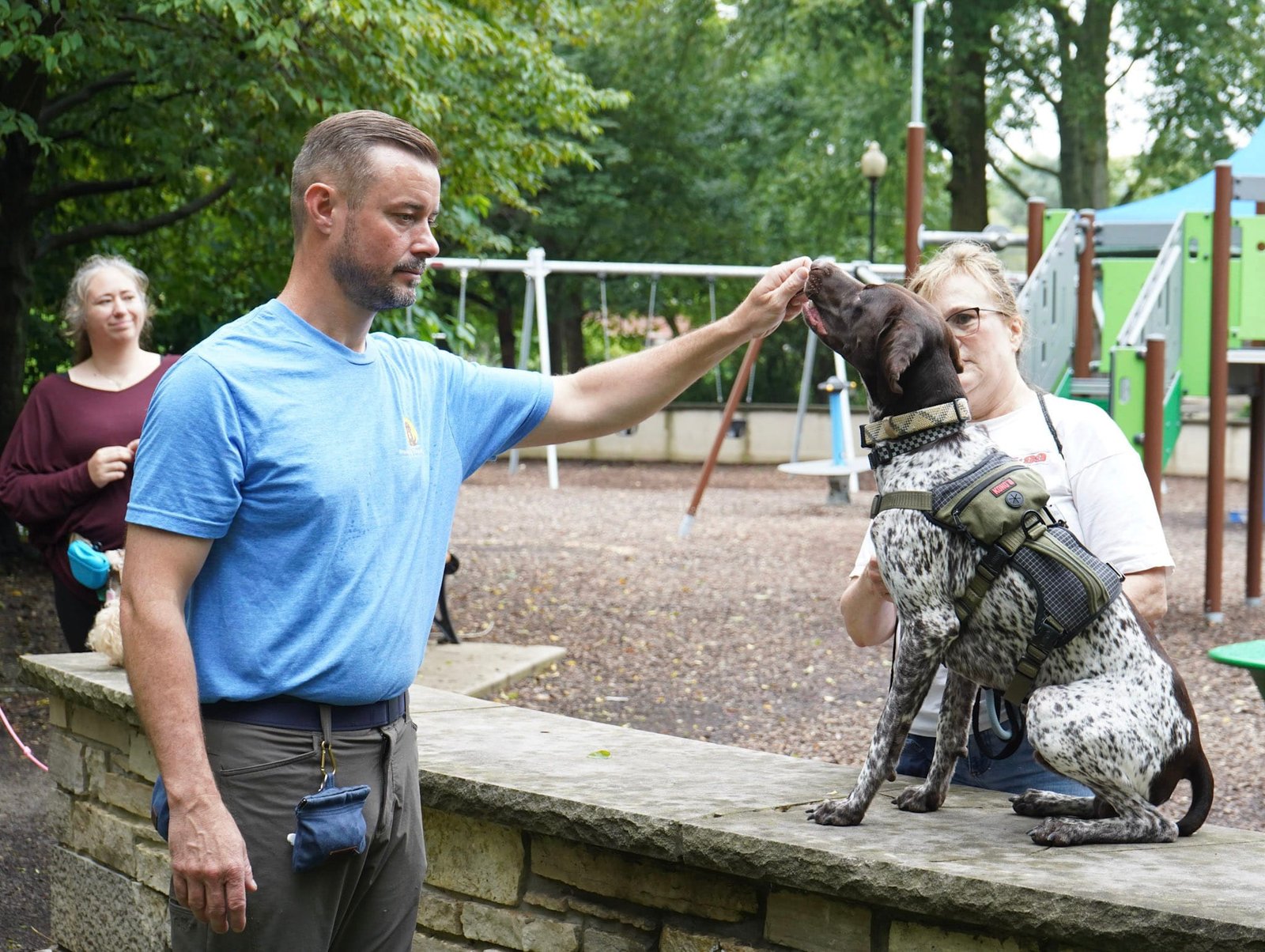
When I'm working with a dog, I want to use something that actually matters to that dog. There are plenty of commercial training treats available, and some dogs will happily work for almost anything, but I personally like using something much simpler. One of my favorites is lean muscle meat, usually top round or London broil.
There's nothing complicated about it. I know what I'm holding, I know what the primary ingredient is, and dogs tend to find it extremely valuable. That makes it useful when I'm teaching something new, working around distractions, or trying to get enough quality repetitions to help a dog understand what I'm asking.
What I Buy for Training
You don't need an expensive cut of steak to do this. Top round roast and London broil work great, and they're usually relatively inexpensive compared with premium cuts. Depending on the store and current prices, I can often find them somewhere around $6.50 to $7.50 per pound, and sometimes considerably cheaper when they're marked down.
One of my favorite things to do is check the meat section at Jewel-Osco for packages approaching their sell-by date. I've found cuts marked down 50 percent simply because the store needs to move them. If I'm going home to prepare the meat anyway, that can turn into a lot of training treats for not much money.
The other advantage is simplicity. Instead of buying a small bag of treats and trying to figure out what every ingredient is doing in there, I'm buying a piece of beef, cutting it into tiny pieces, and preparing it specifically for training. One roast can produce a surprising number of rewards when every piece only needs to be large enough for the dog to taste it and want another repetition.
How I Prepare Meat for Dog Training
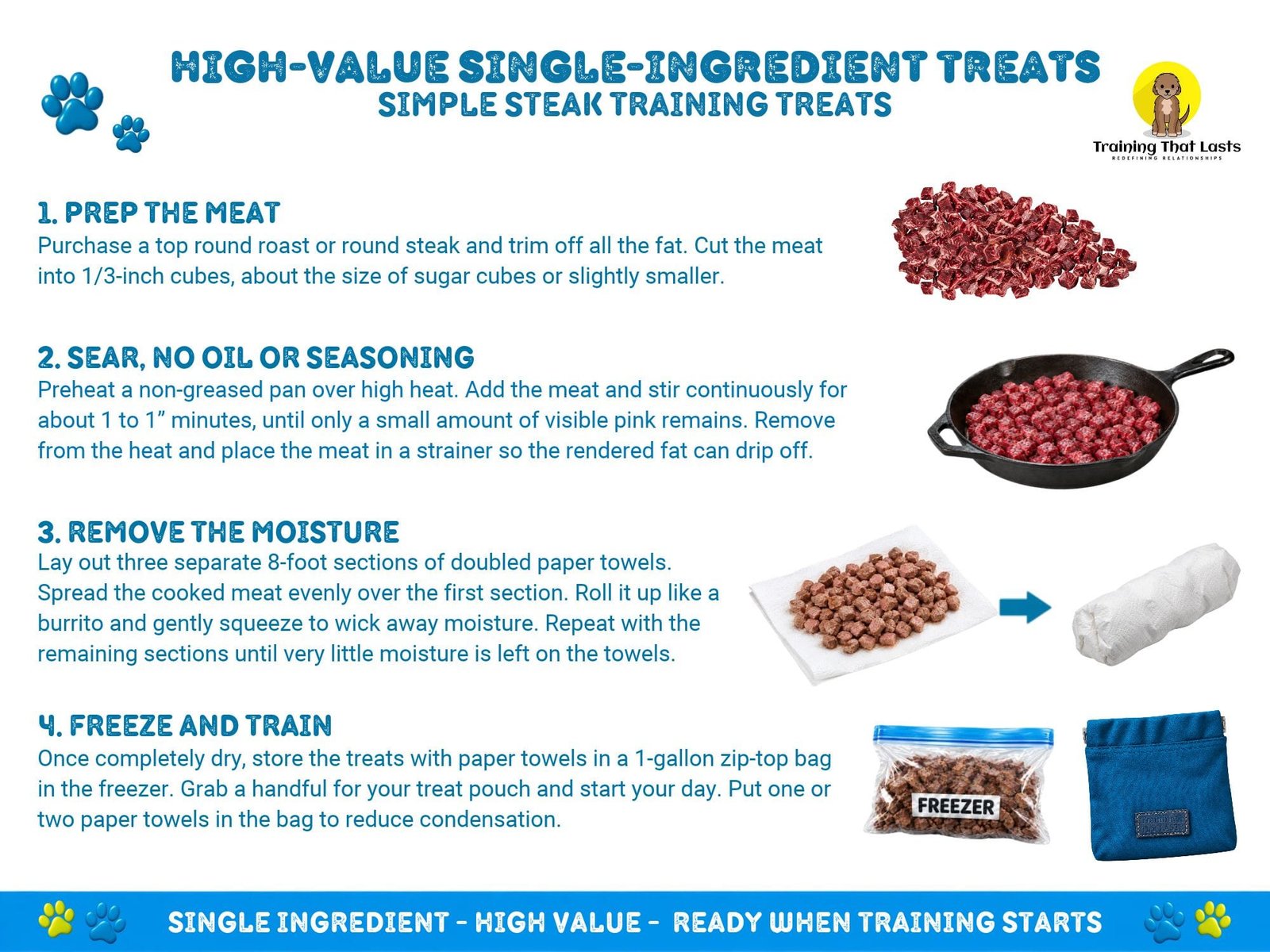
I start by cutting the meat into small, training-sized pieces. Remember that we're not serving the dog dinner every time they do something correctly. These are rewards that may be given repeatedly throughout a session, so the pieces can be small. The goal is to let the dog get the reward, swallow it quickly, and be ready to continue working.
Once everything is cut, I get a pan very hot. I don't add oil because I don't need it. The meat goes directly into the dry pan for a quick sear, usually around 25 to 45 seconds depending on the size of the pieces and how hot the pan is. Because the pieces are so small, they cook quickly, so I'm watching the meat rather than walking away and relying entirely on a timer.
After that, I dump everything into a colander and let the excess moisture drain. Then I pull out a long section of paper towel, double it up, spread the meat across it, and roll the whole thing tightly like a burrito. I gently press and squeeze the roll so the paper towels absorb the moisture on the outside of the meat.
I'll usually repeat that process with fresh paper towels a couple more times. By the third round, there should be much less moisture coming off. What I'm left with is a pile of small pieces of meat that I can portion out and use during training without having a wet, greasy mess in my hands or training pouch.