Put Your Dog Down - Stop Carrying Your Dog Everywhere | Professional Dog Training | Training That Lasts

Put Your Dog Down – Stop Carrying Your Dog Everywhere

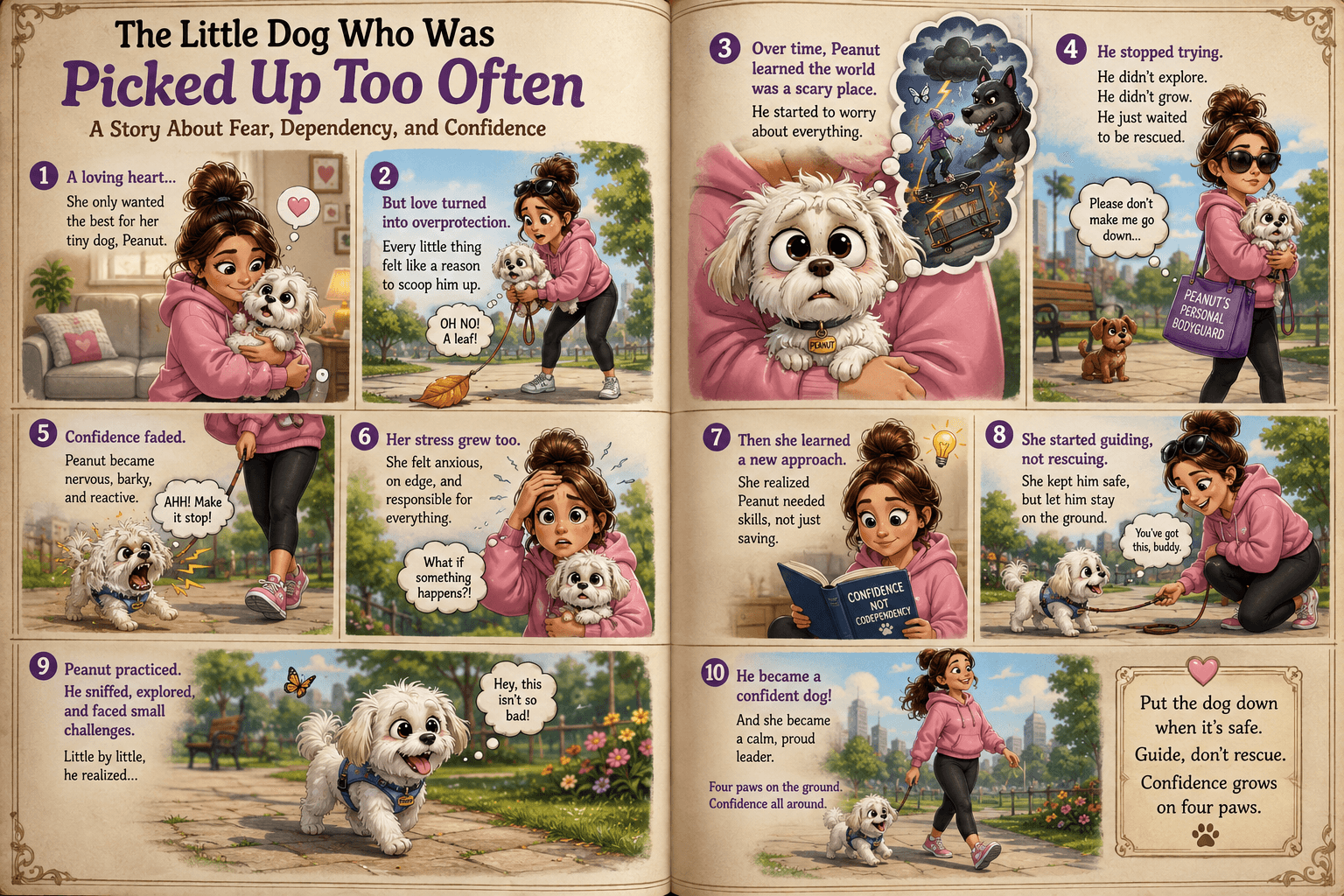
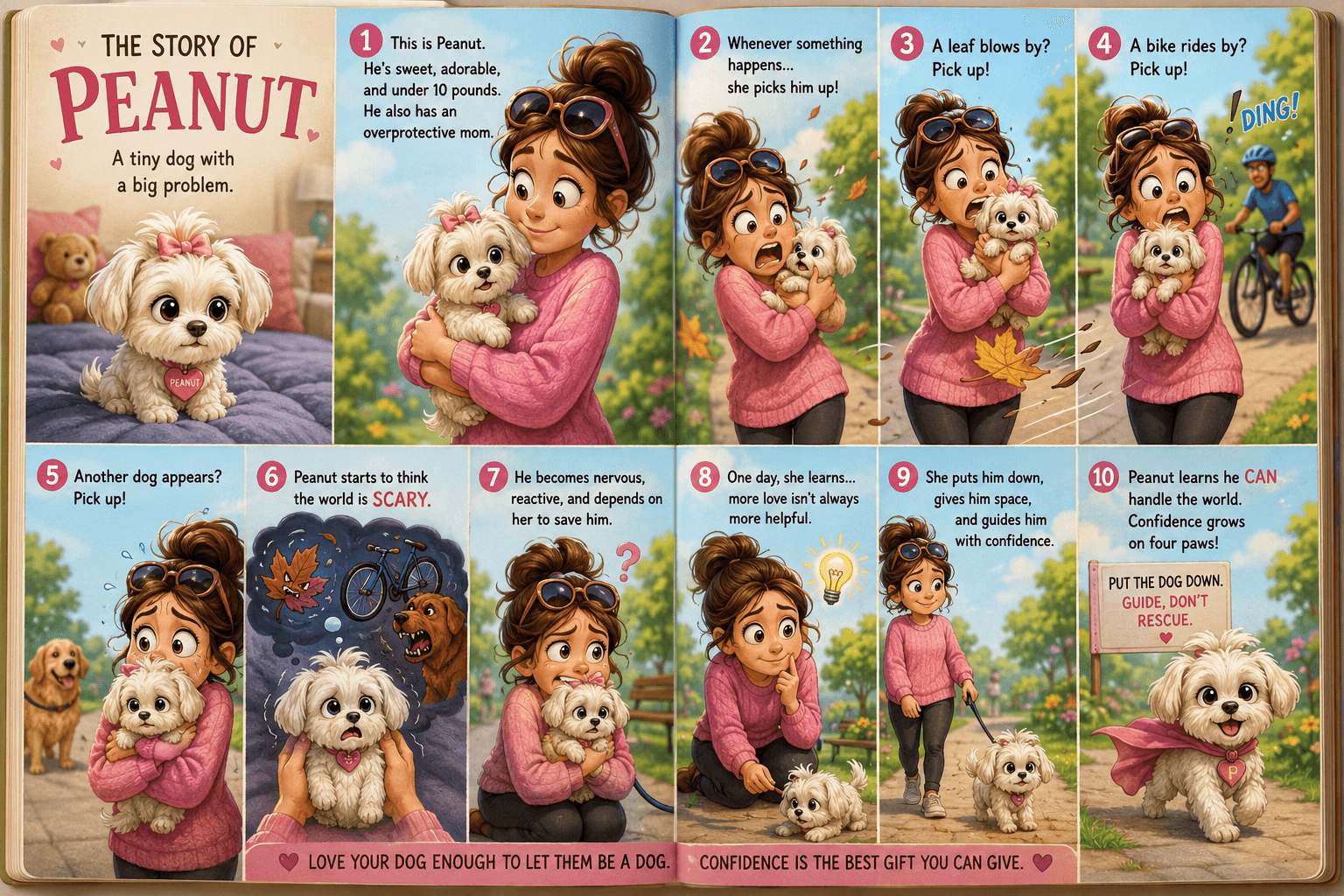
Small dogs get picked up a lot. They get picked up when they bark, when they tremble, when another dog walks by, when they hesitate, panic, growl, lunge, or act unsure. And while it may feel loving in the moment, constantly scooping up a small dog can accidentally create a much bigger problem: dependency. That is why there is one simple rule every small dog owner should remember: put that dog down!

Of course, there are exceptions. If your dog is in real danger, injured, about to be stepped on, or in a truly unsafe situation, pick them up. Safety always comes first. But in everyday life, when your small dog is nervous, barking, pulling, hiding, or reacting to the world around them, the goal should not be to rescue them from every uncomfortable moment. The goal should be to help them build confidence.

Love Should Build Confidence, Not Codependency

A lot of small dog behavior problems begin with good intentions. The dog gets scared, so the owner picks them up. The dog barks, so the owner holds them tighter. The dog panics, so the owner carries them away. The dog acts unsure, so the owner removes them from the situation completely. On the surface, this looks like comfort. But psychologically, it can create codependency.

The dog starts to believe, “I can’t handle the world unless my human rescues me.” And the human starts to
believe, “My dog can’t handle anything unless I rescue them.” That is not confidence. That is dependency.
Once that cycle begins, both the dog and the owner can get stuck in it. The dog becomes more reactive,
more fearful, and more demanding. The owner becomes more anxious, more protective, and more likely to
step in too quickly. Instead of helping the dog grow, the owner accidentally becomes the dog’s coping
mechanism.

Small Dogs Need to Learn They Are Capable

Many small dogs are treated more like fragile accessories than capable animals. They are carried from place to place, lifted away from every challenge, and protected from nearly every interaction. But confidence does not grow from being carried. Confidence grows from experience.

A dog learns confidence by walking on their own four paws, exploring the environment, sniffing, observing, making choices, recovering from uncertainty, and realizing, “I can handle this.”

When we pick the dog up every time something happens, we interrupt that process. Instead of learning how to calmly exist around people, dogs, noises, movement, and new environments, the dog learns to depend on being lifted away. Over time, this can create a dog that barks more, panics faster, and feels less capable in normal situations.

Put Your Dog Down - Stop Carrying Your Dog Everywhere | Professional Dog Training | Training That Lasts

Rescue Less. Guide More.

Putting the dog down does not mean forcing them into scary situations. It does not mean ignoring fear. It does not mean letting bigger dogs rush them. It means letting the dog experience life from the ground while you guide them calmly.

That is the key difference: rescuing creates dependency, while guiding creates confidence.

When you rescue too quickly, the dog learns, “I need you to save me.” When you guide calmly, the dog learns, “I can trust you, and I can also handle this.”

Use distance. Use your leash. Use your body as a barrier. Use calm movement. Reward the behavior you want. If your dog sees something scary, do not scoop them up automatically. Instead, create space. Move away. Let them watch from a safer distance. Reward calm behavior. Help them learn that they can stay grounded and still be safe.

Four Paws on the Floor

A small dog that is always carried never fully learns how to navigate the world. A small dog that is calmly guided, protected when necessary, and allowed to work through manageable challenges becomes more secure.

So the next time your small dog barks, hesitates, or gets unsure, pause before picking them up. Ask yourself, “Is my dog truly in danger, or am I preventing them from learning?”

If there is no real danger, put the dog down. Let them walk. Let them sniff. Let them observe. Let them recover. Let them succeed.

Because your small dog may be tiny, but they are still a dog. And dogs build confidence by standing on their own four paws.

Facebook
Threads
Pinterest
LinkedIn
X
Email

Want To Learn How To Redefine Your Relationship?

Build the bond you've always wanted. Discover how to create a calm, connected, and harmonious relationship with your dog? Trust Training That Lasts to show you the way, but it all starts with an in-home Behavioral Consultation.
Picture Of Training That Lasts

Training That Lasts

Our motto, "Redefining Relationships," is the foundation of our work. We specialize in group, obedience, and puppy training. We create balanced, happy dogs and foster deeper bonds through structured communication. Our success stories span many breeds and challenges. Join us to build a loving, respectful bond with your dog.

Related Articles