What Hand Target Means
Hand targeting teaches the dog to touch its nose to an offered hand. It creates a simple way to move, reorient, position, and reconnect without pulling or physically placing the dog.
How To Teach Hand Target
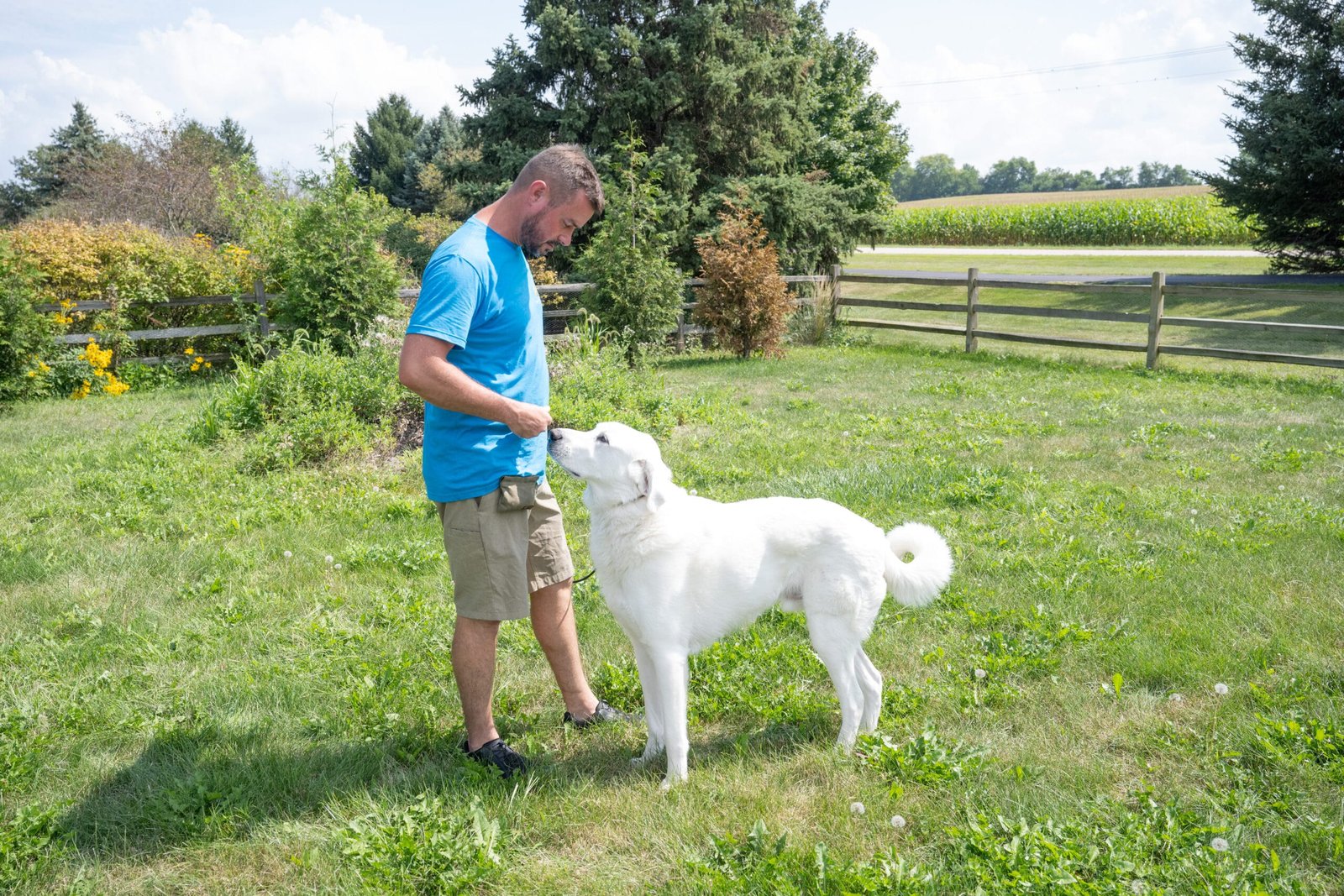
Hold an open hand a few inches from the dog's nose. Most dogs will investigate naturally. Mark the instant the nose touches the palm and reward from the other hand. Remove the target hand after each repetition, then present it again in a slightly different position.
When the dog is moving toward the hand consistently, add a cue such as “touch.” Gradually increase distance and change the height or direction of the target. Reward the dog for following the hand one or two steps, then build longer movement.
Use hand targets to turn the dog away from distractions, move onto a scale, enter a crate, change sides during leash walking, or participate in handling. Because the dog chooses to follow the target, it can be less confrontational than pulling the leash or pushing the body.
Keep the hand still enough for the dog to succeed. Do not chase the dog's nose or tap the face. If the dog is hesitant about hands, begin farther away and shape interest without reaching over the head.
Hand targeting works with engagement, marker training, reward placement, and cooperative care. It is simple enough for beginners but flexible enough to support advanced training. The final behavior should be a clear, confident nose touch that can be used as both a practical movement cue and an easy success during stressful situations.
Relatable Child Psychology Analogy
Think about offering a child a high five as a simple way to guide attention and movement. The gesture is easy to understand, creates interaction, and can help the child move toward the adult without being physically pulled. A hand target gives a dog a similar point of reference. Touching the hand can guide position, redirect attention, support recall, or move the dog through a situation while keeping the interaction clear and cooperative.