What Recall Means
Recall teaches the dog to turn away from the environment, travel to the handler, and come all the way within reach. It should be built as a highly valuable behavior and protected from repeated failure.
How To Teach Recall
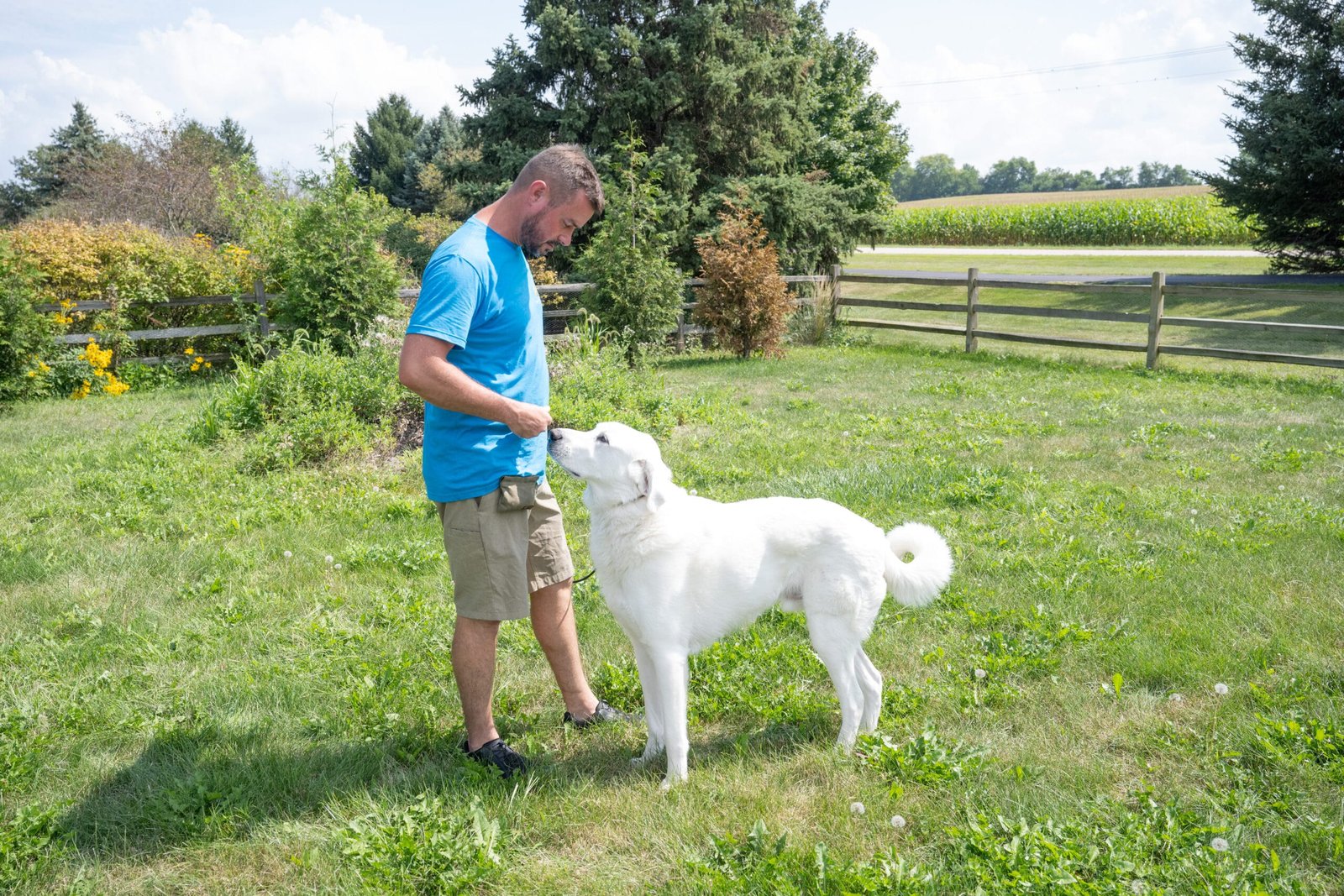
Begin indoors or in a fenced area at a short distance. Say the recall cue once, move backward, and encourage the dog toward you. Mark while the dog is moving in your direction and reward close to your body. Gently touch the collar before releasing so the dog learns that coming within reach is part of the behavior.
Use high-value reinforcement and make early repetitions easy. Call when the dog is likely to succeed, not when it is fully absorbed in a major distraction. After rewarding, release the dog back to play or sniffing frequently. This prevents recall from always predicting the end of freedom.
Progress to a long line outdoors. Increase distance and distraction separately. If the dog does not respond, use the line to prevent running away, but avoid repeating the cue or dragging the dog back. Make the next repetition easier and rebuild value.
Do not use the recall cue casually when you cannot follow through. Avoid calling the dog for punishment, forced handling, or something it consistently dislikes. Use a different approach for those situations while protecting the recall word.
Reliable recall depends on engagement, generalization, reward history, and proofing. It is never guaranteed around every distraction, so management remains important. The goal is a fast, confident turn toward the handler followed by complete return and controlled release.
Relatable Child Psychology Analogy
Think about calling a child away from play. When coming to the parent always means fun is over, medicine is coming, or the child is in trouble, returning becomes less appealing. When the child is sometimes praised and allowed to resume playing, responding remains valuable. Recall works similarly with dogs. Coming back should have a strong history of safety and reward, and it should not predict the end of every enjoyable experience.
Related Training
- Emergency RecallEmergency recall is a separate, highly reinforced cue reserved for urgent situations.
- Long-Line TrainingLong-line training uses a longer leash to practice recall, exploration, distance skills, and controlled freedom while maintaining physical safety.
- Distance TrainingTeaching a dog to respond or remain in position as the handler moves farther away.
- Distraction TrainingTeaching a dog to perform known behaviors around gradually increasing distractions.
- EngagementEngagement is the dog's willingness to notice, connect with, and participate with the handler.
Related Dog Behavior
- ChasingRapid pursuit of people, animals, vehicles, bicycles, toys, or moving objects.
- Escape AttemptsBehavior directed toward getting out of a yard, crate, room, vehicle, or other confined area.
- FixationSustained visual or physical focus that makes it difficult for a dog to disengage and respond to the handler.
- ScavengingSearching for and consuming discarded food, trash, animal remains, or other edible material.
Related Psychology
- Reinforcement HistoryThe accumulated pattern of outcomes that has strengthened or weakened a behavior over time.
- Food MotivationThe degree to which food functions as a valuable outcome for an individual dog in a specific context.
- GeneralizationApplying learning across different places, people, positions, distances, and situations.
- TimingHow closely feedback or consequences follow a behavior, affecting what the dog connects to the outcome.
- Environmental RewardsNaturally valuable opportunities in the environment, including sniffing, exploring, greeting, movement, and gaining distance.