What Heel Means
Heel teaches the dog to maintain a specific position beside the handler, usually with the shoulder near the handler's leg. It is a precise working position and should be distinguished from relaxed loose leash walking.
How To Teach Heel
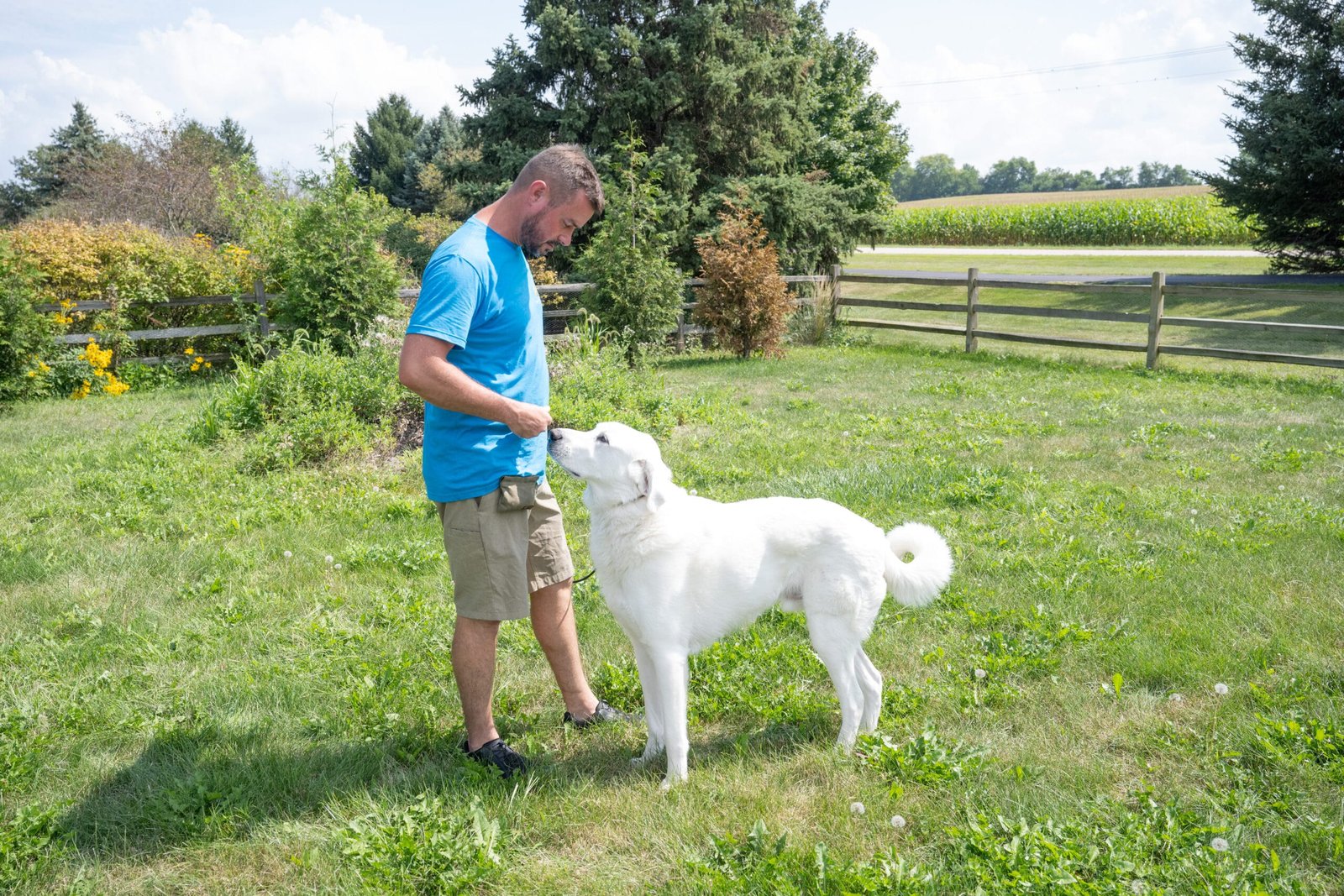
Choose the side and exact position you want. Use a lure, hand target, or platform to help the dog find that location. Mark when the shoulder aligns with your leg and reward directly in position. Several stationary repetitions help the dog understand where reinforcement appears.
Add one step, mark while the dog remains aligned, and reward. Increase to two or three steps before adding turns, pace changes, or distractions. Keep the sessions brief because heel requires concentration. Release the dog to sniff or walk casually between repetitions.
Reward placement is critical. Feeding too far forward encourages forging. Feeding behind your leg can cause lagging or crooked movement. Deliver the reward where you want the dog's head and body during the next step.
Add the verbal cue only after the dog can move into position predictably. Practice entries into heel from different angles, then proof around mild distractions. Do not use heel as the only way the dog is allowed to walk. Most dogs need opportunities to sniff and explore.
Heel is useful for crowded spaces, passing distractions, entering buildings, and focused training. It works with engagement, hand targeting, directional changes, and proofing. The finished behavior should be clear and purposeful, not created through constant leash tension.
Relatable Child Psychology Analogy
Think about asking a child to walk directly beside an adult through a crowded parking lot. That close position is useful for safety and organization, but it would be unnecessary to demand it during every relaxed walk in an open field. Heel serves a similar purpose for dogs. It is a precise working position used when needed, while loose leash walking allows more natural movement during ordinary outings.
Related Training
- Loose Leash WalkingLoose leash walking teaches the dog to move with the handler while keeping slack in the leash.
- Leash PressureLeash pressure training teaches the dog to respond to light directional tension by moving with it and restoring slack.
- Check-InsCheck-ins are voluntary moments when the dog looks toward, moves closer to, or reconnects with the handler.
- Directional ChangesDirectional changes teach the dog to notice and follow changes in the handler's movement.
- Long-Line TrainingLong-line training uses a longer leash to practice recall, exploration, distance skills, and controlled freedom while maintaining physical safety.
Related Dog Behavior
- Leash PullingForward, sideways, or backward pressure that keeps the leash tight or moves the handler.
- LungingA sudden forward movement toward a person, dog, object, sound, or other trigger.
- FixationSustained visual or physical focus that makes it difficult for a dog to disengage and respond to the handler.
- ChasingRapid pursuit of people, animals, vehicles, bicycles, toys, or moving objects.
- Greeting FrustrationBarking, pulling, whining, or lunging when a dog wants social access but cannot reach the person or dog.
Related Psychology
- Environmental RewardsNaturally valuable opportunities in the environment, including sniffing, exploring, greeting, movement, and gaining distance.
- ReinforcementAny consequence that increases the likelihood a behavior will happen again.
- Premack PrincipleUsing a more probable or preferred activity to reinforce a less probable behavior.
- ArousalThe level of nervous-system activation that influences attention, movement, emotion, and responsiveness.
- TimingHow closely feedback or consequences follow a behavior, affecting what the dog connects to the outcome.