What Alone-Time Training Means
Alone-time training teaches the dog to remain comfortable when separated from the owner for manageable periods. It is built gradually and should not require the dog to experience prolonged panic.
How To Teach Alone-Time Training
Begin while you are still at home. Give the dog a comfortable resting area with a safe chew or enrichment item. Step behind a gate or out of sight for one or two seconds, then return before distress begins. Repeat with calm departures and returns.
Increase duration in very small amounts. Vary the pattern so the dog does not learn that every repetition becomes harder. Sometimes return after five seconds, sometimes after two. Practice normal departure cues, such as picking up keys or putting on shoes, without always leaving.
Use a camera when possible to observe pacing, vocalization, inability to eat, or other signs that the dog is over threshold. Do not assume silence means comfort. The dog should be able to settle, engage with enrichment, and recover after you leave.
Meet exercise, bathroom, sleep, and social needs before practice. Crate training may support alone time for some dogs, but a crate can intensify distress for others. The two skills should be evaluated separately.
If the dog shows panic, destruction at exits, heavy drooling, self-injury, or inability to tolerate very short absences, seek qualified help. Alone-time training works best through predictable, successful repetition. Leaving the dog to cry for long periods can sensitize the dog and make future departures more difficult.
Relatable Child Psychology Analogy
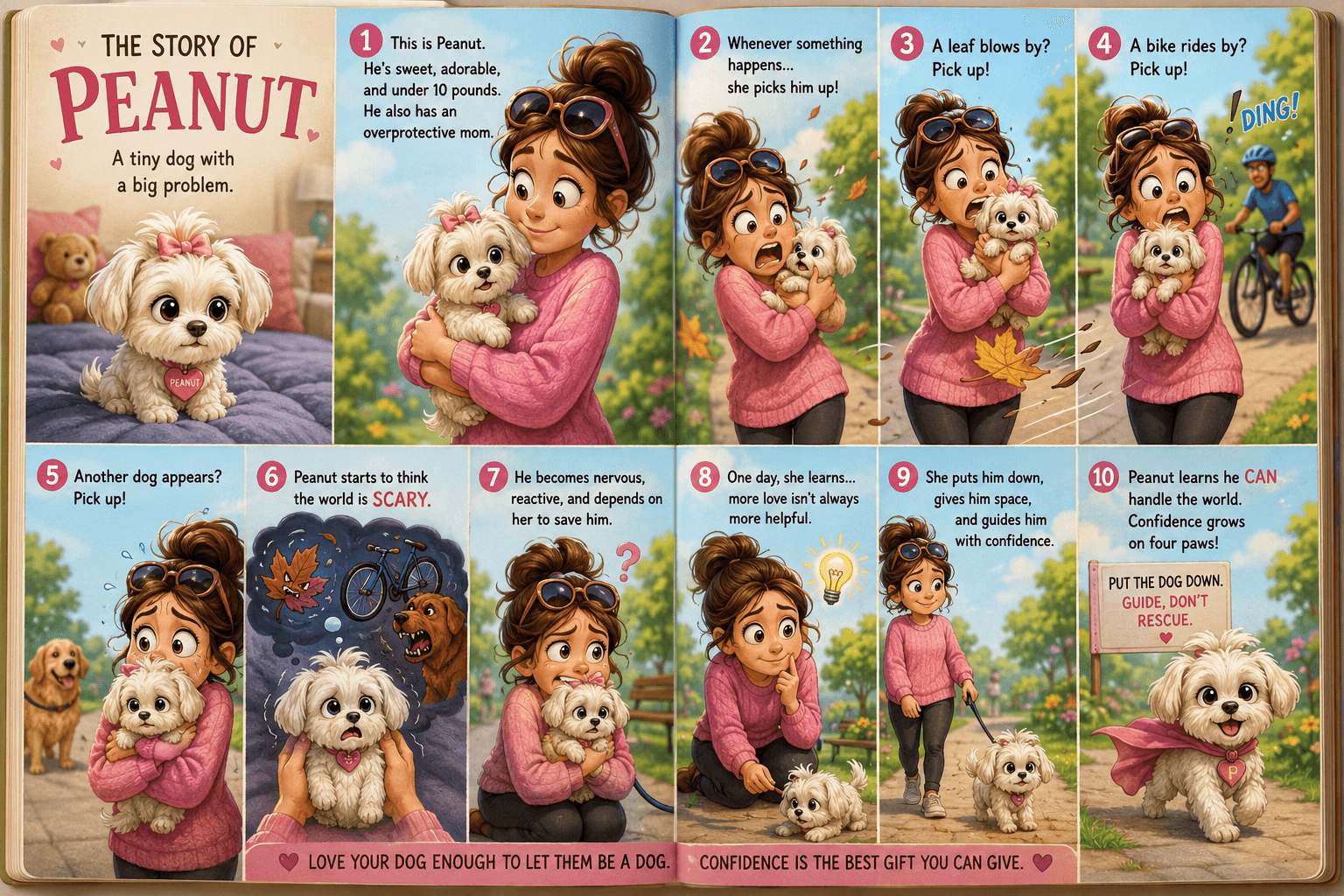
Think about a child learning to play independently while a parent remains nearby, then briefly steps into another room and returns. Independence is built in small, successful pieces rather than through a sudden, frightening separation. Alone-time training works similarly with dogs. The handler gradually teaches that distance and departure are temporary, predictable, and safe, while keeping the exercise below the point where distress takes over.
Related Training
- Crate TrainingCrate training teaches the dog to enter, remain in, and rest inside a crate comfortably.
- House TrainingHouse training teaches the dog where and when elimination is appropriate.
- Chew TrainingChew training teaches the dog which items are appropriate to chew while preventing access to unsafe or valuable objects.
- Car TrainingCar training teaches the dog to enter, ride in, and exit a vehicle safely and comfortably.
- ManagementManagement changes the environment to prevent unwanted behavior from being rehearsed while training is underway.
Related Dog Behavior
- Separation DistressDistress that appears when a dog is left alone or separated from a particular person.
- House SoilingUrination or defecation indoors when the location is inappropriate for the household.
- Destructive ChewingChewing that damages household items, doors, furniture, clothing, or personal belongings.
- WhiningA high-pitched vocal behavior that may occur with anticipation, distress, frustration, attention seeking, pain, or uncertainty.
- Escape AttemptsBehavior directed toward getting out of a yard, crate, room, vehicle, or other confined area.
Related Psychology
- PredictabilityThe degree to which a dog can anticipate what happens next based on stable patterns and signals.
- AssociationA learned connection between events, cues, places, actions, emotions, or outcomes.
- HabituationA decreased response after repeated exposure to a stimulus that proves unimportant or harmless.
- AnxietyWorry or anticipation about a possible threat, uncertain outcome, or future event.
- ReinforcementAny consequence that increases the likelihood a behavior will happen again.