What Settle Means
Settle teaches the dog to relax in a location without maintaining a rigid position. The goal is a softer emotional and physical state, not simply holding a down while remaining tense or alert.
How To Teach Settle
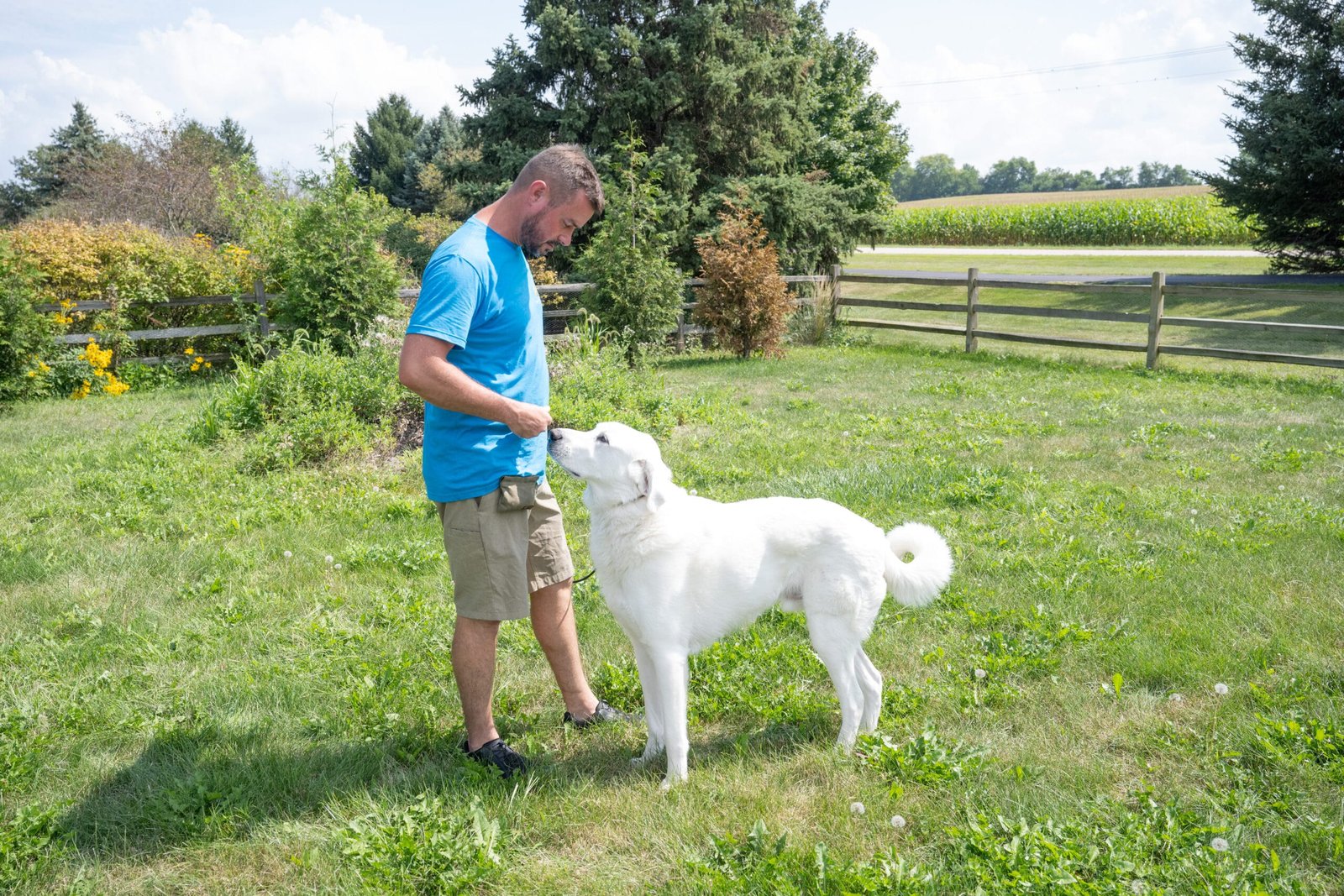
Begin when the dog's basic needs have been met and the environment is quiet. Use a mat or comfortable bed. Capture natural calm behavior by marking and rewarding lying down, shifting onto a hip, lowering the head, softening the eyes, or slowing the breath.
Deliver rewards calmly and low between the paws. Avoid rapid feeding that causes the dog to pop up or become excited. Allow pauses between rewards so the dog learns that remaining relaxed, not constantly working, is the behavior.
Add a settle cue when the dog begins relaxing predictably in that context. Practice for short periods, then release before restlessness begins. Gradually add normal household movement, meals, television, and visitors at a level the dog can handle.
Exercise alone does not teach settling. Some dogs become physically tired but remain mentally overaroused. Sniffing, decompression, predictable routines, and sufficient sleep may be necessary before the training can succeed.
Settle differs from place. Place creates a clear boundary, while settle emphasizes relaxation. The two can be combined, but the trainer should reinforce the emotional quality of the behavior, not only location. A successful settle allows the dog to remain comfortable while nothing important is happening. It becomes useful at home, patios, training classes, travel, and veterinary waiting areas.
Relatable Child Psychology Analogy
Think about helping a child transition from an exciting playground to quiet reading time. The child may need a predictable routine, lower stimulation, and a few minutes to regulate before being ready to focus. Telling the child to “calm down” does not create the skill by itself. Settle training works similarly with dogs. The handler builds a repeatable path from activity into rest and reinforces the emotional shift, not merely the absence of movement.
Related Training
- Impulse ControlImpulse control is the dog's ability to pause, wait, or choose an alternative instead of immediately acting on excitement or desire.
- Door MannersDoor manners teach the dog to approach, wait at, and move through doors without rushing, jumping, or pulling.
- Greeting MannersGreeting manners teach the dog how to approach and interact with people without jumping, mouthing, barking, or overwhelming the person.
- Four Paws on the FloorFour paws on the floor reinforces the dog for standing or moving without jumping.
- Relaxation TrainingTeaching repeatable behaviors and routines that support settling and lower physical activation.
Related Dog Behavior
- JumpingPlacing the front paws or body onto a person, object, door, or surface, often during greetings or excitement.
- Door RushingMoving quickly through an opening before being released or before the handler can safely control the transition.
- Demand BarkingBarking that has learned to produce attention, food, movement, play, access, or another desired outcome.
- Greeting FrustrationBarking, pulling, whining, or lunging when a dog wants social access but cannot reach the person or dog.
Related Psychology
- ArousalThe level of nervous-system activation that influences attention, movement, emotion, and responsiveness.
- Frustration ToleranceThe ability to remain organized when access, movement, attention, or reinforcement is delayed or unavailable.
- Inhibitory ControlThe ability to pause or suppress an immediate response in favor of another action.
- ReinforcementAny consequence that increases the likelihood a behavior will happen again.
- ConsistencyThe reliability of cues, boundaries, consequences, and reinforcement across repetitions and people.