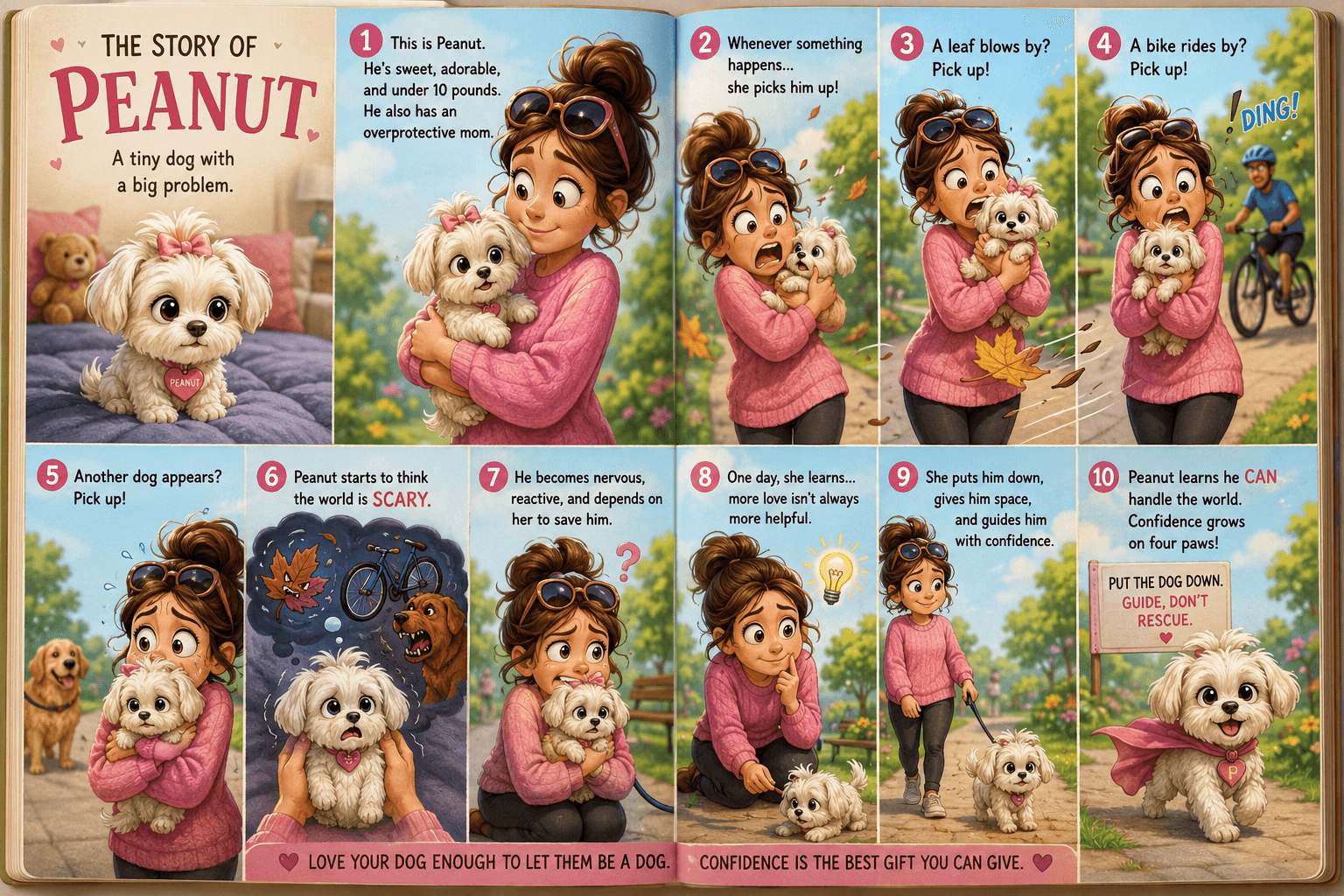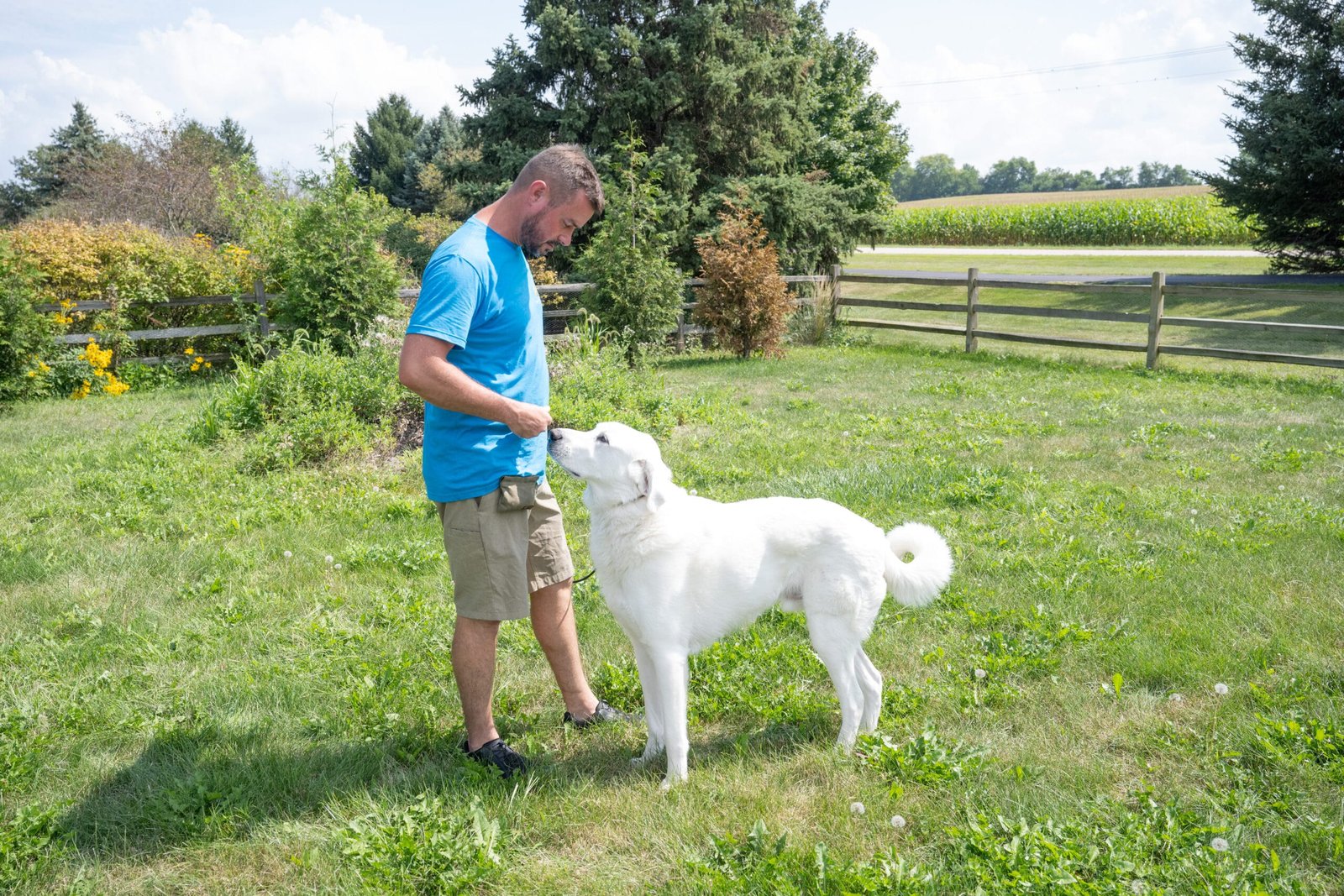
Lowering the body toward the ground, often with weight shifted backward, during fear, uncertainty, or appeasement.
Common Signs
- Lowered Body
- Bent Legs
- Tucked Tail
- Ears Back
Important Distinction
Crouching should be interpreted in context. One behavior does not reveal a dog’s intent, diagnosis, or personality, and sudden changes should be discussed with a veterinarian.
What Can Help
Observe when crouching happens, what occurs immediately before and after it, and whether distance, environment, arousal, health, or reinforcement changes the pattern. Management and appropriate training should address the cause instead of only suppressing the visible behavior.
When To Get Professional Help
Seek professional help when crouching creates safety concerns, escalates, disrupts daily life, appears suddenly, involves pain or medical changes, or is difficult to manage without increasing stress.
Related Dog Psychology
Related Training Option
Behavioral Consultation
Every dog brings a different history, environment, and reason for the behavior. This service can help identify the right next step and build a plan around the dog in front of you.
This library provides general education, not an assessment of an individual dog. Sudden behavior changes, pain-related behavior, or an immediate safety concern should be discussed with an appropriate veterinary or behavior professional.