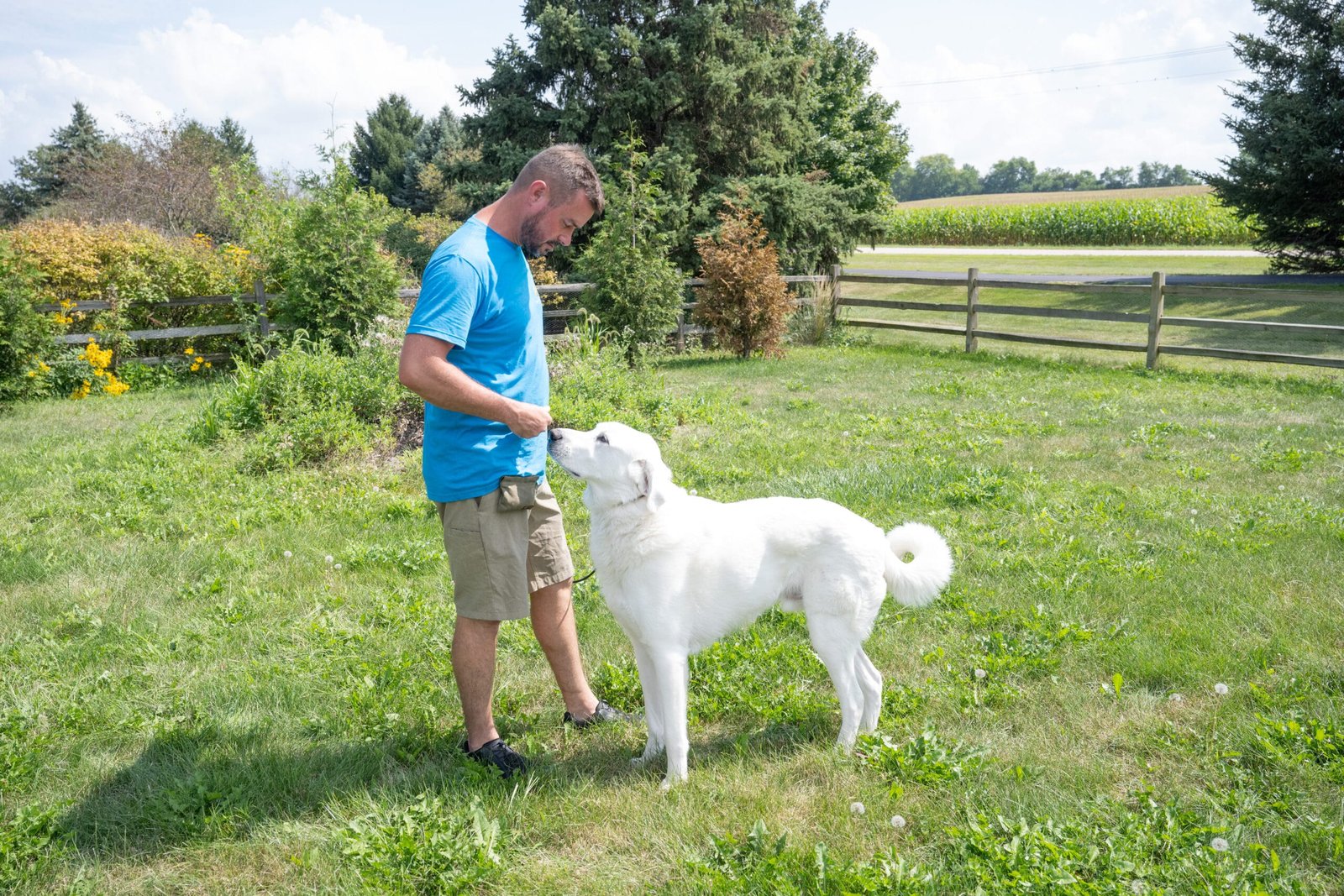
A quick tongue movement over the lips or nose that may appear with anticipation, uncertainty, stress, or social pressure.
Common Signs
- Quick Tongue Flick
- Head Turn
- Avoidance
- Tense Face
Important Distinction
One lip lick is not proof of anxiety. Frequency, timing, the surrounding body language, and what is happening in the environment determine its meaning.
What Can Help
Pause, lower pressure, give the dog room to move, and observe whether the body softens or other stress signals continue.
When To Get Professional Help
Get help when repeated lip licking appears with freezing, avoidance, handling sensitivity, appetite changes, vomiting, or other possible medical signs.
Related Dog Psychology
StressStress is the body's physical and emotional response to challenge, uncertainty, excitement, discomfort, or change. It may be brief and manageable or…AnxietyAnxiety is worry or anticipation about a possible threat or uncertain outcome. Unlike fear, which is often connected to something present, anxiety…ArousalArousal is a dog's level of mental and physical activation. It ranges from deep rest to intense excitement or stress and affects…
Related Dog Training
Cooperative CareCooperative care teaches the dog to participate voluntarily in grooming, medical handling, and body care. The dog learns predictable positions, start signals,…Handling and GroomingHandling and grooming training prepares the dog for touch, brushing, bathing, nail care, ear care, and routine body inspection. The goal is…Distance ManagementDistance management uses physical space to keep the dog within a workable emotional range. Increasing or controlling distance can prevent escalation and…ManagementManagement changes the environment to prevent unwanted behavior from being rehearsed while training is underway. It includes barriers, leashes, distance, schedules, storage,…CounterconditioningCounterconditioning changes the dog's emotional expectation by pairing a trigger with something the dog values. The goal is for the trigger to…
Related Training Option
Behavioral Consultation
Every dog brings a different history, environment, and reason for the behavior. This service can help identify the right next step and build a plan around the dog in front of you.
This library provides general education, not an assessment of an individual dog. Sudden behavior changes, pain-related behavior, or an immediate safety concern should be discussed with an appropriate veterinary or behavior professional.