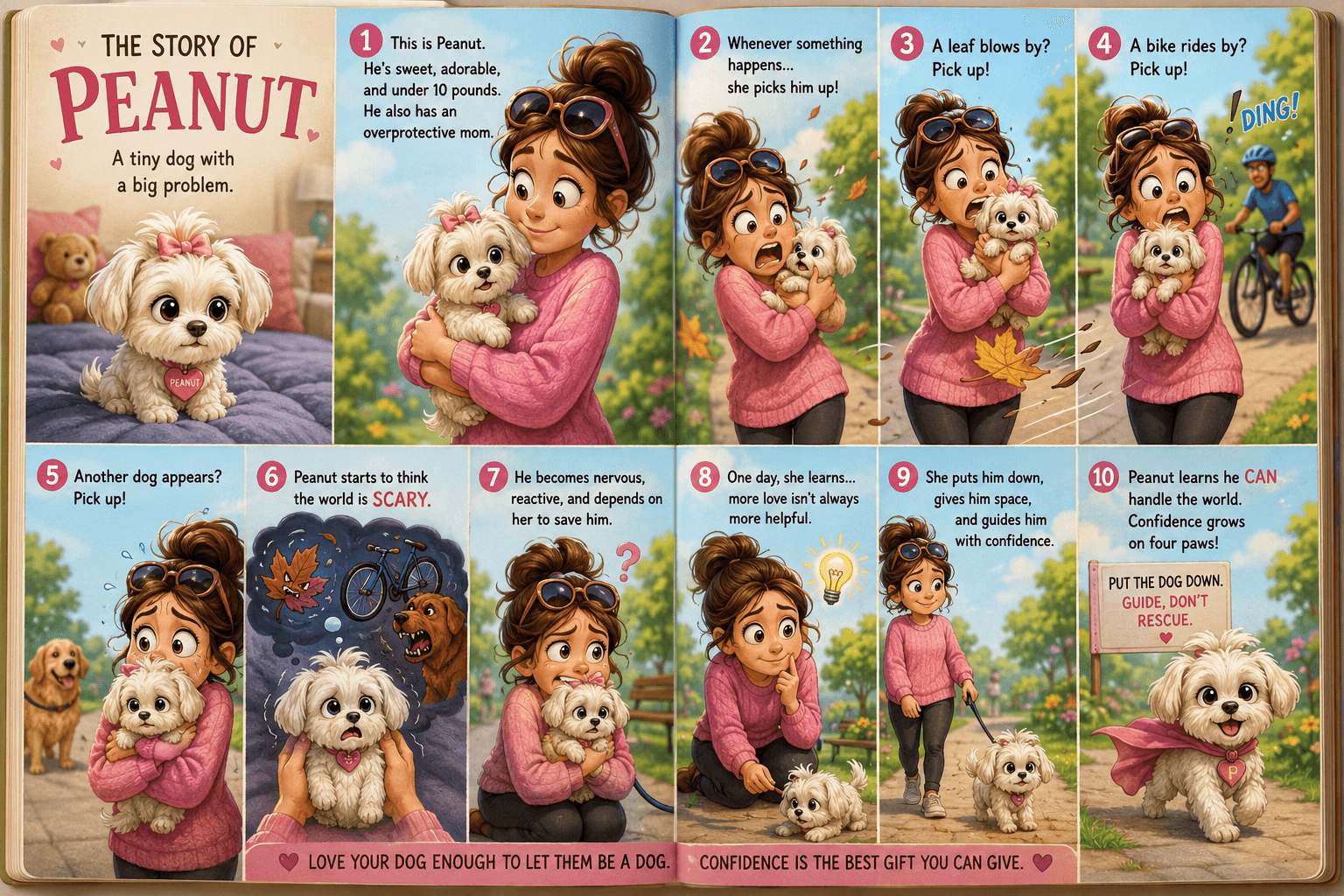
Avoidance is behavior used to increase distance from, delay, or escape a person, place, object, interaction, or task the dog finds uncomfortable or unclear.
Common Signs
Important Distinction
Avoidance is communication, not stubbornness. Forcing the dog closer may remove the visible escape attempt while increasing the emotional pressure underneath it.
What Can Help
Honor safe requests for space, identify the exact concern, lower difficulty, reinforce voluntary approach, and rule out pain when avoidance is new or situation-specific.
When To Get Professional Help
Get help when avoidance disrupts daily life, appears around touch or movement, escalates to defensive behavior, or begins suddenly.
Related Behavior Terms
Related Dog Psychology
Related Training Option
Behavioral Consultation
Every dog brings a different history, environment, and reason for the behavior. This service can help identify the right next step and build a plan around the dog in front of you.
This library provides general education, not an assessment of an individual dog. Sudden behavior changes, pain-related behavior, or an immediate safety concern should be discussed with an appropriate veterinary or behavior professional.