What Trigger Management Means
Trigger management identifies and controls the situations that reliably produce fear, frustration, excitement, or unwanted behavior. It reduces surprise exposure and allows training to occur at a manageable level.
How To Teach Trigger Management
Create a clear list of triggers, including distance, movement, sound, location, and context. “Dogs” may be too broad. The dog may react specifically to dogs running, dogs behind fences, or dogs appearing within twenty feet. Better detail creates better management.
Plan routes, times, barriers, and exits before training. Use visual blocks at home, avoid narrow paths, schedule walks during quieter hours, and communicate with visitors. Carry appropriate reinforcement and use equipment that keeps the dog secure.
Track threshold and recovery. A trigger that is manageable early in the day may become difficult after several stressful events. Adjust the plan when trigger stacking is present. Do not continue adding exposure because the dog handled the first repetition.
Trigger management should support, not replace, training. Pair it with counterconditioning, desensitization, distance management, and alternative behavior. The dog needs both fewer uncontrolled failures and more successful learning experiences.
Some triggers can eventually become easier. Others may always require space or structure. The purpose is not to force the dog into every situation. It is to reduce risk, prevent rehearsal, and help the dog navigate real life with the greatest possible stability. A well-managed dog is not avoiding training. The environment is being arranged so training can actually work.
Relatable Child Psychology Analogy
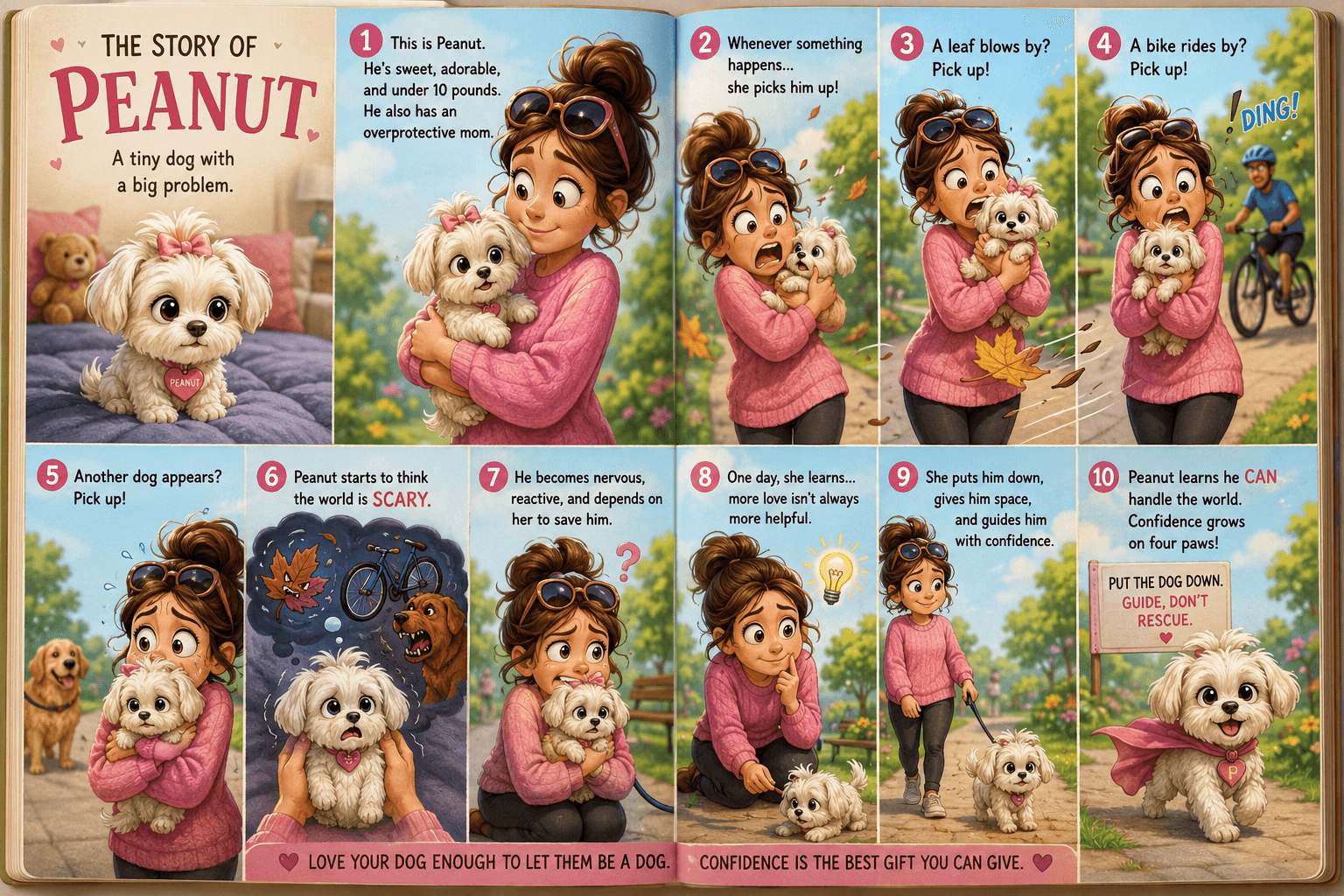
Think about an overtired child at the end of a long day. Taking that child into a crowded, noisy event and expecting perfect behavior ignores the conditions affecting self-control. Trigger management applies the same common sense to dogs. The handler considers timing, distance, accumulated stress, and the dog's current capacity before entering difficult situations. Preventing unnecessary overload protects progress and makes later training more productive.
Related Training
- ManagementManagement changes the environment to prevent unwanted behavior from being rehearsed while training is underway.
- Distance ManagementDistance management uses physical space to keep the dog within a workable emotional range.
- CounterconditioningCounterconditioning changes the dog's emotional expectation by pairing a trigger with something the dog values.
- DesensitizationDesensitization gradually exposes the dog to a trigger at an intensity low enough to remain manageable.
- Pattern TrainingPattern training uses a simple, repeatable sequence of movement and reinforcement to create predictability.
Related Dog Behavior
- ReactivityAn intense response to a trigger that may include barking, lunging, pulling, freezing, spinning, or difficulty disengaging.
- Fearful BehaviorBehavior that communicates concern about a person, animal, object, sound, place, or interaction.
- AggressionThreatening or harmful behavior that may include hard staring, growling, snapping, lunging, or biting.
- AvoidanceBehavior used to increase distance from, delay, or escape a person, place, object, interaction, or task.
- Slow RecoveryA prolonged return to normal breathing, movement, attention, and behavior after a stressful or exciting event.
Related Psychology
- FearAn emotional response to something the dog perceives as an immediate threat or danger.
- AnxietyWorry or anticipation about a possible threat, uncertain outcome, or future event.
- ThresholdThe point where emotional intensity becomes too high for effective learning or reliable responses.
- Trigger StackingThe accumulation of stressful or exciting events before the dog has fully recovered from earlier events.
- ArousalThe level of nervous-system activation that influences attention, movement, emotion, and responsiveness.