What Learned Helplessness Means
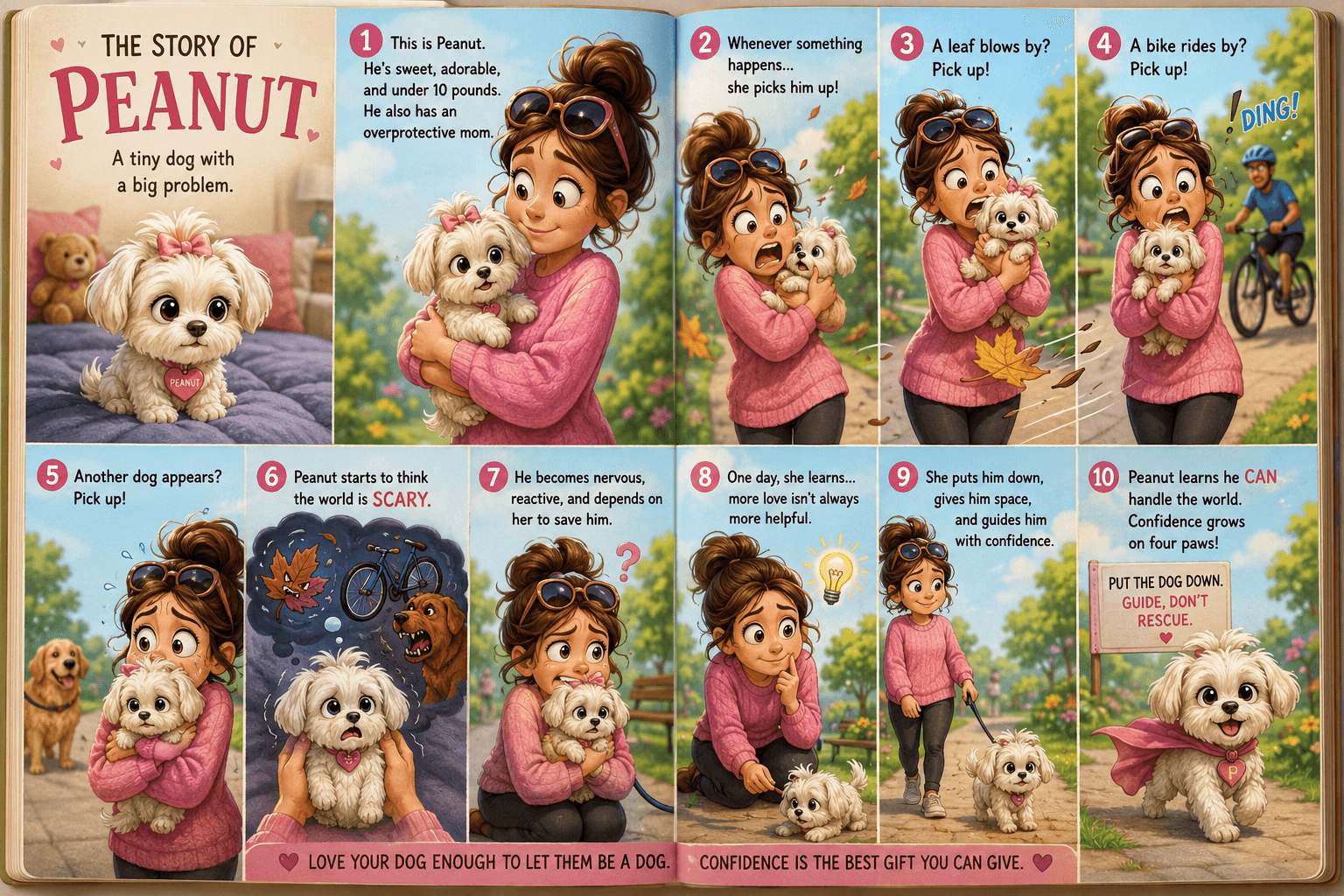
A state in which repeated lack of control can reduce attempts to act, escape, or solve problems.
How Learned Helplessness Appears in Everyday Life
A state in which repeated lack of control can reduce attempts to act, escape, or solve problems.
In everyday life, learned helplessness can be seen through changes in attention, emotion, movement, or the choices a dog repeats. A trainer looks at the full pattern rather than assuming one visible behavior has one simple cause. Context, health, learning history, environment, and the value of available outcomes all matter.
Trainers use this concept to decide what the dog is capable of learning in the moment and how to adjust difficulty, timing, reinforcement, distance, and repetition. The goal is to create conditions where the dog can process information and make useful choices instead of being pushed beyond its current capacity.
This concept should be considered alongside related psychology, observable behaviors, and practical training skills. It is an educational framework, not a diagnosis, and significant or sudden behavior changes should be discussed with a veterinarian or qualified behavior professional.
Related Psychology
- TrustConfidence that another individual will behave in a predictable, safe, and understandable way.
- AttachmentAn emotional bond that influences proximity seeking, security, exploration, and responses to separation.
- Social LearningLearning by observing or interacting with people, dogs, or other animals.
- Emotional ContagionThe transfer or alignment of emotional states between individuals through social cues and interaction.
- Choice and AgencyThe dog’s ability to make meaningful choices and influence what happens during an interaction.
Related Dog Behavior
- AvoidanceBehavior used to increase distance from, delay, or escape a person, place, object, interaction, or task.
- Separation DistressDistress that appears when a dog is left alone or separated from a particular person.
- Fearful BehaviorBehavior that communicates concern about a person, animal, object, sound, place, or interaction.
- Appeasement BehaviorBehavior intended to reduce social tension, avoid conflict, or communicate non-threat.
- HidingMoving behind furniture, people, walls, crates, or other cover to reduce exposure to something concerning.
Related Dog Training
- Cooperative CareCooperative care teaches the dog to participate voluntarily in grooming, medical handling, and body care.
- Alone-Time TrainingAlone-time training teaches the dog to remain comfortable when separated from the owner for manageable periods.
- EngagementEngagement is the dog's willingness to notice, connect with, and participate with the handler.
- Puppy SocializationPuppy socialization is the process of creating safe, positive exposure to people, animals, surfaces, sounds, handling, environments, and everyday life during.
- Handling and GroomingHandling and grooming training prepares the dog for touch, brushing, bathing, nail care, ear care, and routine body inspection.