What Sit Means
Sit teaches the dog to place its rear on the ground and remain there until released or given another cue. It is useful for greetings, doorways, handling, and creating a brief pause before access.
How To Teach Sit
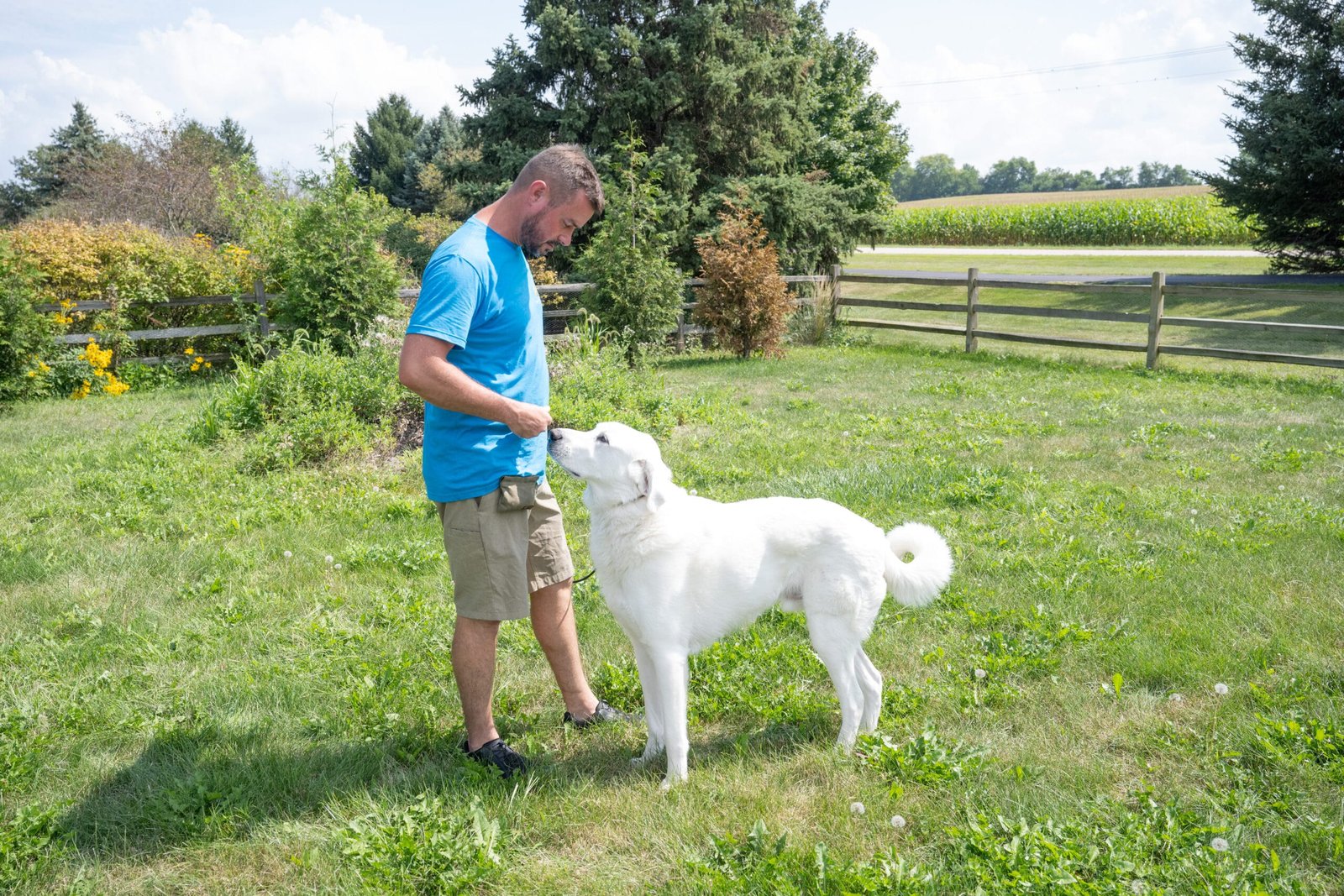
Use a lure or capture the behavior. With a lure, hold food near the dog's nose and move it slowly upward and slightly backward. As the head follows, the rear should lower. Mark the instant the dog sits and reward while the dog is still in position.
After several repetitions, use the same hand motion without visible food. Reward from the opposite hand. When the dog follows the hand signal consistently, say “sit” once, pause, and then give the signal. Gradually make the signal smaller until the verbal cue works by itself.
Add a release cue so the dog understands when sitting is finished. Begin with one or two seconds, release, and then gradually increase duration. Practice on different surfaces and in different locations. If the dog struggles on slippery floors, grass, or near distractions, reduce the difficulty.
Avoid pushing the dog's rear down. Physical pressure can create resistance and does not teach the dog how to perform the behavior independently. Also watch reward placement. Feeding too far forward may cause the dog to stand immediately.
Sit is a simple position, not a complete solution for emotional behavior. A dog can sit while remaining frightened or overaroused. Use it as a practical skill within a larger plan, not as proof that the dog is calm.
Relatable Child Psychology Analogy
Think about asking a child to sit in a chair during a stressful moment. The child may physically sit while still feeling frightened, angry, or overwhelmed. The position does not automatically change the emotion. The same is true for a dog. Sit is a useful physical skill, but it should not be mistaken for emotional calmness. The handler still needs to consider stress, arousal, distance, and whether the dog can actually process what is happening.
Related Training
- DownDown teaches the dog to place its elbows and body on the ground until released or given another cue.
- StayStay teaches the dog to maintain a specific position until the handler returns or gives a release cue.
- WaitWait asks the dog to pause temporarily until given permission to continue.
- PlacePlace teaches the dog to move onto a defined surface and remain there until released.
- Release CueA release cue tells the dog that a position, boundary, or waiting behavior has ended.
Related Dog Behavior
- Door RushingMoving quickly through an opening before being released or before the handler can safely control the transition.
- JumpingPlacing the front paws or body onto a person, object, door, or surface, often during greetings or excitement.
- Demand BarkingBarking that has learned to produce attention, food, movement, play, access, or another desired outcome.
Related Psychology
- ReinforcementAny consequence that increases the likelihood a behavior will happen again.
- Inhibitory ControlThe ability to pause or suppress an immediate response in favor of another action.
- Frustration ToleranceThe ability to remain organized when access, movement, attention, or reinforcement is delayed or unavailable.
- ConsistencyThe reliability of cues, boundaries, consequences, and reinforcement across repetitions and people.
- GeneralizationApplying learning across different places, people, positions, distances, and situations.