What Stay Means
Stay teaches the dog to maintain a specific position until the handler returns or gives a release cue. It requires clear criteria for duration, distance, distractions, and how the exercise ends.
How To Teach Stay
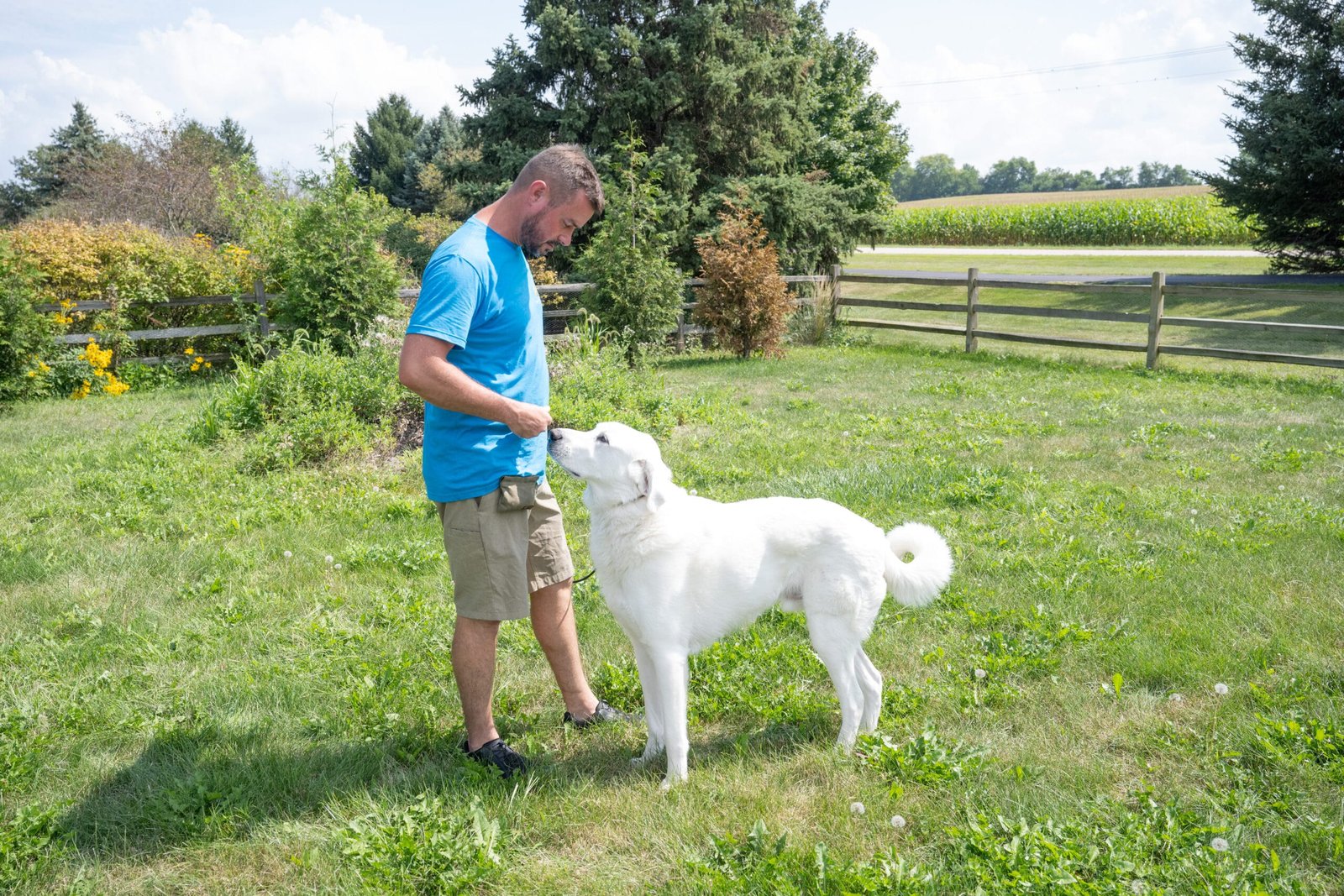
Begin with the dog in sit, down, or place. Give the stay cue once, pause for one second, mark while the dog is still holding position, reward in place, and release. The first goal is understanding, not duration.
Increase only one challenge at a time. Add a few seconds before adding distance. Take one step away and return before rewarding. Introduce mild distractions while remaining close. If the dog breaks, calmly reset and make the next repetition easier. Do not call the dog out of every stay because that can make forward movement part of the pattern. Return to the dog and release from position frequently.
Reward placement should support stillness. Deliver food where the dog is positioned instead of drawing the dog forward. Use a release cue consistently so the dog does not guess when the stay has ended.
Proof stay in realistic situations, including doors, meals, vehicle loading, and calm greetings. Keep safety in mind. A stay should not replace a leash near traffic or other hazards.
Avoid repeatedly saying “stay” while backing away. One cue should begin the behavior. The dog learns through carefully controlled success, not through being tested until it fails. Reliable stay work develops patience, clarity, and responsiveness while preserving the dog's confidence.
Relatable Child Psychology Analogy
Think about teaching a young child to remain beside a bench while a parent takes one step away. The parent would begin with a few successful seconds, return before the child feels lost, and gradually increase the challenge. Stay is taught to a dog in the same structured way. Duration, distance, and distraction are developed separately so the learner understands that remaining in place is safe, predictable, and temporary.
Related Training
- SitSit teaches the dog to place its rear on the ground and remain there until released or given another cue.
- DownDown teaches the dog to place its elbows and body on the ground until released or given another cue.
- WaitWait asks the dog to pause temporarily until given permission to continue.
- PlacePlace teaches the dog to move onto a defined surface and remain there until released.
- Release CueA release cue tells the dog that a position, boundary, or waiting behavior has ended.
Related Dog Behavior
- Door RushingMoving quickly through an opening before being released or before the handler can safely control the transition.
- JumpingPlacing the front paws or body onto a person, object, door, or surface, often during greetings or excitement.
- Demand BarkingBarking that has learned to produce attention, food, movement, play, access, or another desired outcome.
Related Psychology
- ReinforcementAny consequence that increases the likelihood a behavior will happen again.
- Inhibitory ControlThe ability to pause or suppress an immediate response in favor of another action.
- Frustration ToleranceThe ability to remain organized when access, movement, attention, or reinforcement is delayed or unavailable.
- ConsistencyThe reliability of cues, boundaries, consequences, and reinforcement across repetitions and people.
- GeneralizationApplying learning across different places, people, positions, distances, and situations.