What Long-Line Training Means
Long-line training uses a longer leash to practice recall, exploration, distance skills, and controlled freedom while maintaining physical safety. It bridges the gap between a short leash and reliable off-leash behavior.
How To Teach Long-Line Training
Use a long line in an open area away from traffic, fences, and obstacles that can snag the line. Attach it to a secure harness when appropriate and wear gloves if needed. Allow the line to remain loose rather than constantly reeling the dog in.
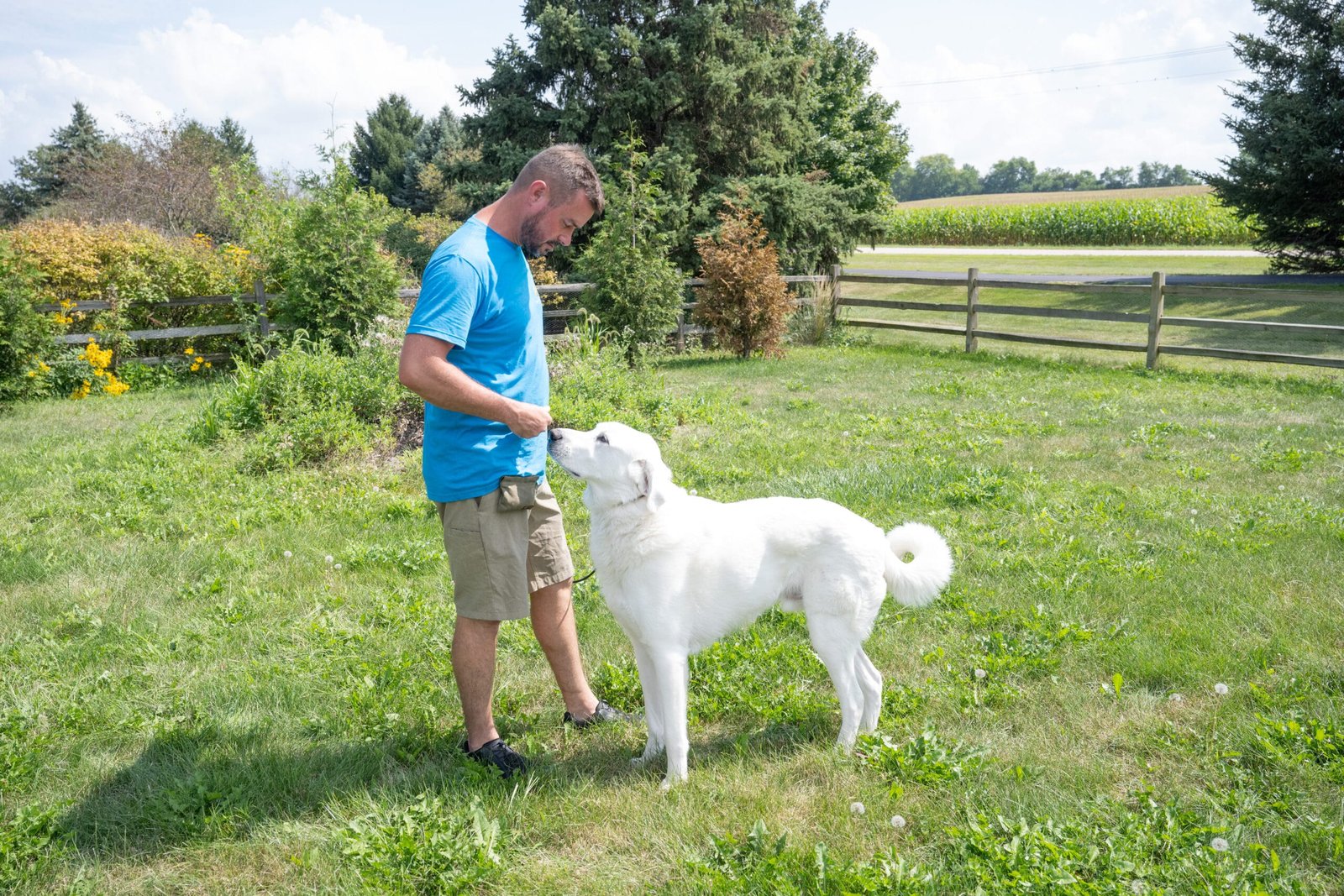
Begin with engagement and check-ins. Reinforce the dog for noticing you while exploring. Practice recall from short distances, then release the dog back to sniffing so coming to you does not always end freedom. Gradually increase distance only when the response remains reliable.
Manage the line with both hands and gather slack smoothly. Do not wrap it around your hand or allow it to tangle around legs. If the dog begins running toward the end, move, call early, or step on the line with controlled pressure rather than allowing a hard impact.
Long-line work is ideal for recall, emergency recall, directional movement, and proofing around moderate distractions. It is not permission to test the dog in unsafe environments. The line exists to prevent rehearsal of ignoring cues and to protect the dog while skills develop.
Transition toward greater freedom slowly. A dog should demonstrate reliable responses across locations, distances, and distractions before off-leash access is considered. The long line allows natural movement while the trainer still controls risk.
Relatable Child Psychology Analogy
Think about a child learning independence on a playground while a parent remains close enough to prevent a dangerous mistake. The child receives room to explore, but the adult still provides a safe boundary until judgment and responsiveness improve. A long line gives a dog similar structured freedom. It allows practice with distance, recall, and exploration without pretending the skill is already reliable enough for complete off-leash freedom.
Related Training
- Loose Leash WalkingLoose leash walking teaches the dog to move with the handler while keeping slack in the leash.
- HeelHeel teaches the dog to maintain a specific position beside the handler, usually with the shoulder near the handler's leg.
- Leash PressureLeash pressure training teaches the dog to respond to light directional tension by moving with it and restoring slack.
- Check-InsCheck-ins are voluntary moments when the dog looks toward, moves closer to, or reconnects with the handler.
- Directional ChangesDirectional changes teach the dog to notice and follow changes in the handler's movement.
Related Dog Behavior
- Leash PullingForward, sideways, or backward pressure that keeps the leash tight or moves the handler.
- LungingA sudden forward movement toward a person, dog, object, sound, or other trigger.
- FixationSustained visual or physical focus that makes it difficult for a dog to disengage and respond to the handler.
- ChasingRapid pursuit of people, animals, vehicles, bicycles, toys, or moving objects.
- Greeting FrustrationBarking, pulling, whining, or lunging when a dog wants social access but cannot reach the person or dog.
Related Psychology
- Environmental RewardsNaturally valuable opportunities in the environment, including sniffing, exploring, greeting, movement, and gaining distance.
- ReinforcementAny consequence that increases the likelihood a behavior will happen again.
- Premack PrincipleUsing a more probable or preferred activity to reinforce a less probable behavior.
- ArousalThe level of nervous-system activation that influences attention, movement, emotion, and responsiveness.
- TimingHow closely feedback or consequences follow a behavior, affecting what the dog connects to the outcome.