What Cooperative Care Means
Cooperative care teaches the dog to participate voluntarily in grooming, medical handling, and body care. The dog learns predictable positions, start signals, and ways to pause the procedure.
How To Teach Cooperative Care
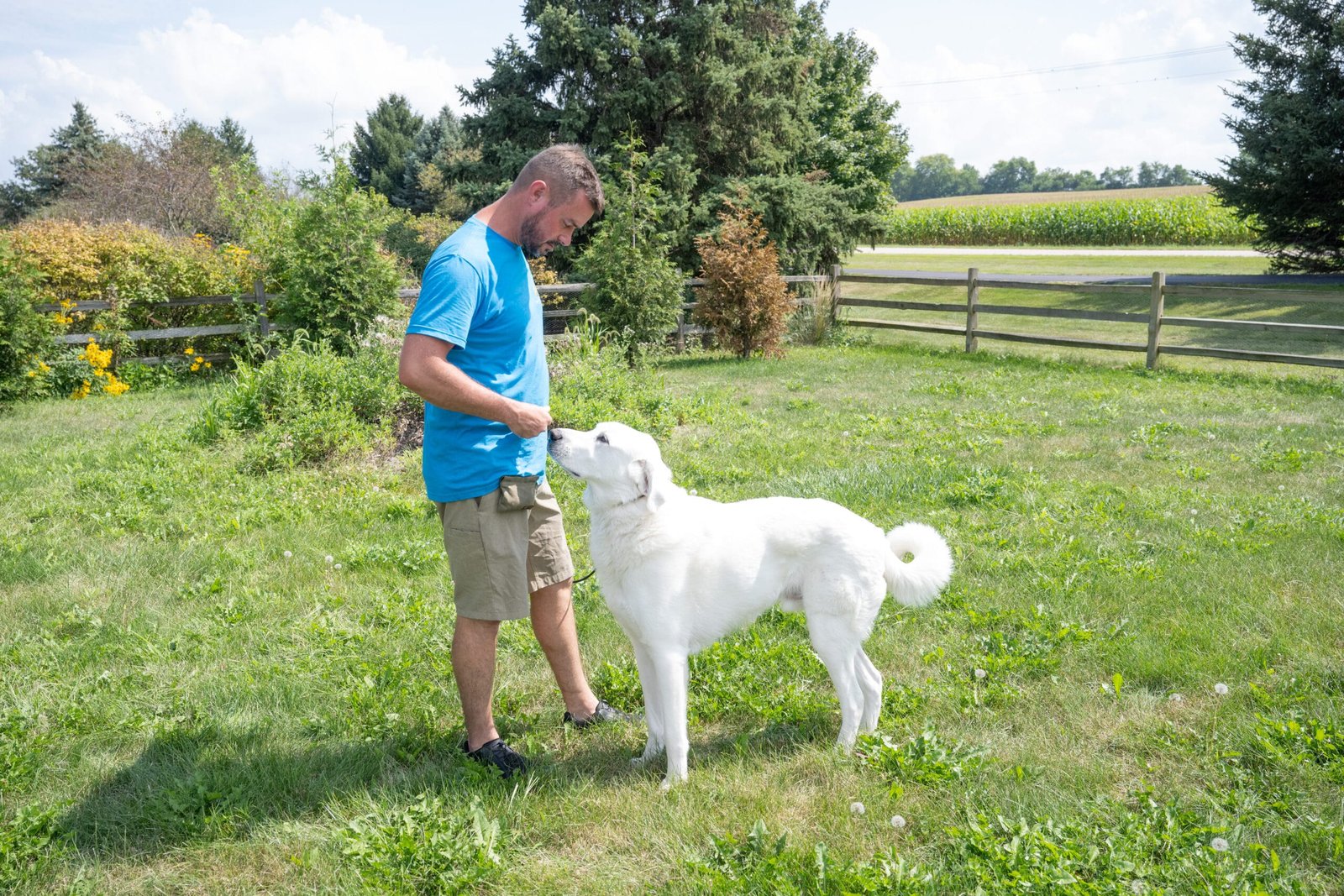
Choose one simple behavior, such as placing the chin on a towel or touching the nose to a hand. Reinforce the position heavily before adding handling. Once the dog maintains the position comfortably, add a brief touch to the shoulder, then reward and release.
Increase one piece at a time. Touch the paw, hold it for one second, handle one nail, or show the grooming tool. Stop before the dog pulls away. If the dog leaves the start position, pause the procedure and lower the difficulty. This gives the dog clear control without allowing unsafe movement during necessary care.
Pair tools and sensations with reinforcement. Clippers, brushes, ear solution, and veterinary equipment should be introduced before they are urgently needed. Keep sessions short and separate from full grooming appointments.
Cooperative care does not mean every procedure can wait. Emergency and medically necessary treatment may require restraint. Training reduces the frequency and intensity of that need by preparing the dog in advance.
The skill works with shaping, hand targeting, marker training, and desensitization. Watch for subtle stress, including stiffness, lip licking, avoidance, or refusal of food. Progress is measured by relaxed participation, not by how much handling the person can complete in one session.
Relatable Child Psychology Analogy
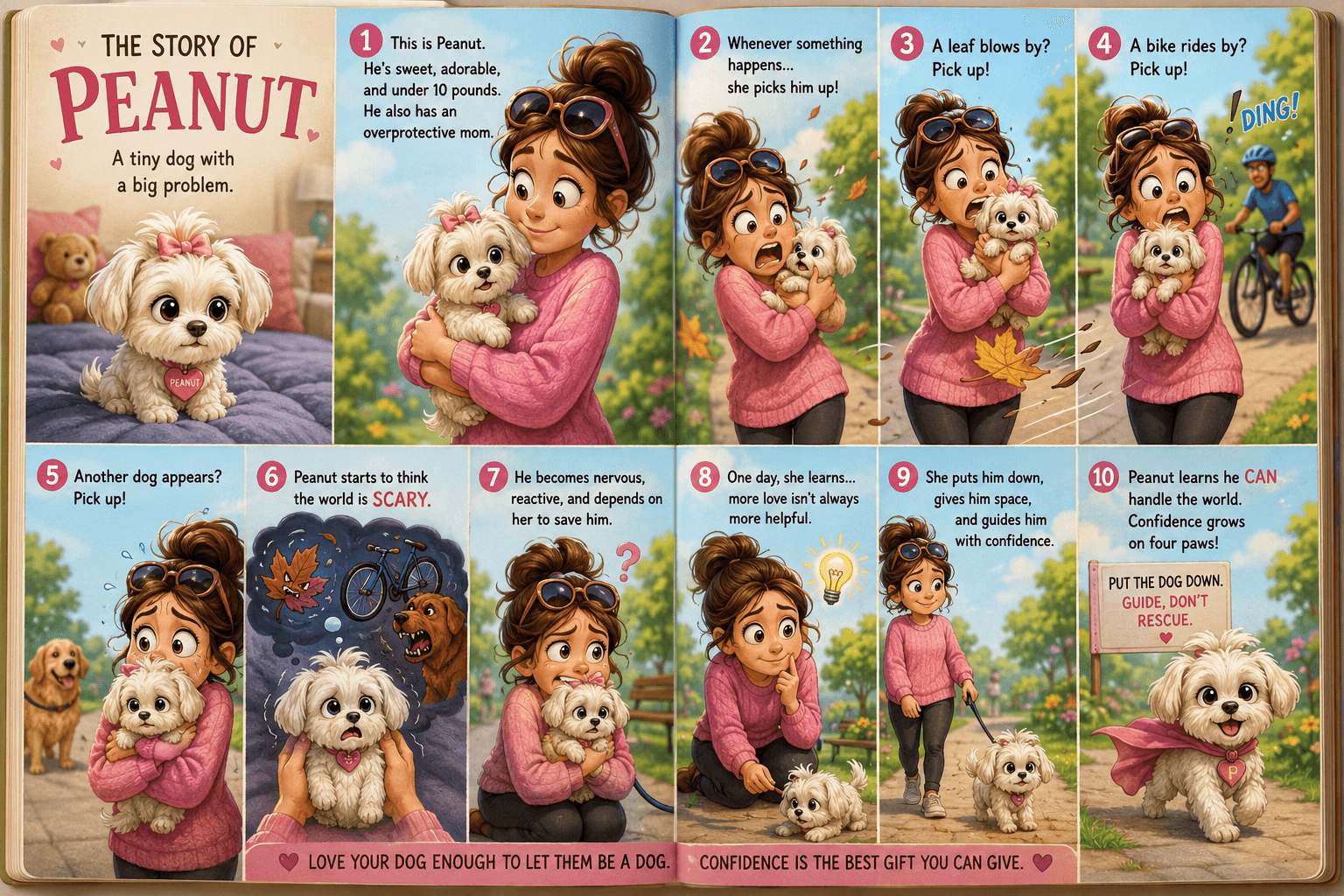
Think about helping a child through a medical exam by explaining what will happen, allowing small choices, and praising participation. The procedure may still be necessary, but cooperation improves when the child feels informed and supported instead of overpowered. Cooperative care applies a similar principle with dogs. The trainer builds predictable handling, consent signals, pauses, and reinforcement so the dog can participate in grooming and veterinary care with less fear and conflict.
Related Training
- Muzzle TrainingMuzzle training teaches the dog to place its nose into and comfortably wear a properly fitted basket muzzle.
- Handling and GroomingHandling and grooming training prepares the dog for touch, brushing, bathing, nail care, ear care, and routine body inspection.
- Stationing for CareStationing for care teaches the dog to remain on a mat, platform, or defined position during grooming, examination, medication, and other handling.
- CounterconditioningCounterconditioning changes the dog's emotional expectation by pairing a trigger with something the dog values.
Related Dog Behavior
- AvoidanceBehavior used to increase distance from, delay, or escape a person, place, object, interaction, or task.
- FreezingA sudden pause or complete stop in movement that may signal uncertainty, conflict, fear, guarding, or preparation to act.
- GrowlingA low vocal warning or communication signal that may indicate discomfort, fear, conflict, guarding, pain, or play.
- SnappingA rapid bite motion that may or may not make contact and often functions as a warning or distance-increasing behavior.
- Lip LickingA quick tongue movement over the lips or nose that may appear with anticipation, uncertainty, stress, or social pressure.
Related Psychology
- Choice and AgencyThe dog’s ability to make meaningful choices and influence what happens during an interaction.
- TrustConfidence that another individual will behave in a predictable, safe, and understandable way.
- AssociationA learned connection between events, cues, places, actions, emotions, or outcomes.
- FearAn emotional response to something the dog perceives as an immediate threat or danger.
- PredictabilityThe degree to which a dog can anticipate what happens next based on stable patterns and signals.