What Association Means
A learned connection between events, cues, places, actions, emotions, or outcomes.
How Association Appears in Everyday Life
A dog becomes excited when the owner picks up a particular pair of shoes. The shoes have repeatedly appeared before walks, so they predict outdoor activity. Another dog may hide when a medication bottle opens because that sound predicts uncomfortable handling.
A trainer looks for these learned connections when behavior appears to begin before the obvious event. Changing the behavior may require changing the association. The trainer can practice the cue or object in harmless situations, pair it with a different outcome, or create a new routine that no longer leads directly to the feared or exciting event.
Association is used side by side with classical conditioning, predictability, anxiety, habituation, and emotional contagion. Classical conditioning explains how an automatic emotional response develops. Predictability makes repeated patterns easier to recognize. Anxiety can begin when an associated cue predicts something difficult. Habituation may reduce attention to harmless cues that stop carrying importance. Emotional contagion can become part of the association when a handler repeatedly becomes tense in certain situations.
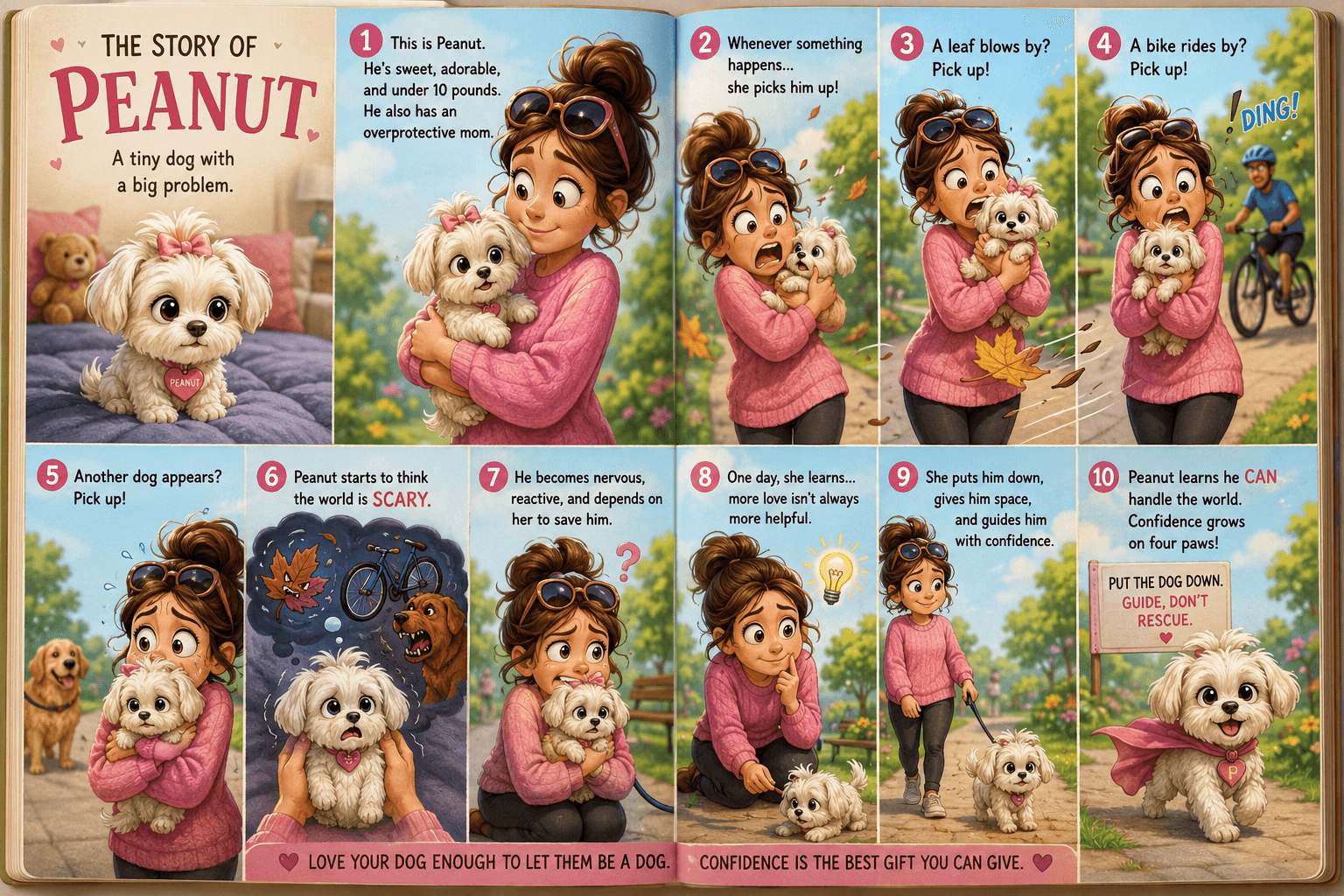
A trainer uses association to understand why dogs react to places, clothing, equipment, sounds, or routines that seem meaningless to people. The dog is not guessing randomly. It is using past patterns to predict the future. Training changes those patterns by controlling what the cue predicts and giving the dog enough successful experiences to form a different expectation.
Related Psychology
- Classical ConditioningLearning through association, when one event begins to predict another and changes the dog’s emotional response.
- HabituationA decreased response after repeated exposure to a stimulus that proves unimportant or harmless.
- SensitizationAn increased response after repeated or intense exposure, especially when the experience is stressful.
- GeneralizationApplying learning across different places, people, positions, distances, and situations.
- DiscriminationLearning to respond differently to similar cues, contexts, objects, or situations.
Related Dog Behavior
- Fearful BehaviorBehavior that communicates concern about a person, animal, object, sound, place, or interaction.
- ReactivityAn intense response to a trigger that may include barking, lunging, pulling, freezing, spinning, or difficulty disengaging.
- AvoidanceBehavior used to increase distance from, delay, or escape a person, place, object, interaction, or task.
- FixationSustained visual or physical focus that makes it difficult for a dog to disengage and respond to the handler.
- Slow RecoveryA prolonged return to normal breathing, movement, attention, and behavior after a stressful or exciting event.
Related Dog Training
- DesensitizationDesensitization gradually exposes the dog to a trigger at an intensity low enough to remain manageable.
- CounterconditioningCounterconditioning changes the dog's emotional expectation by pairing a trigger with something the dog values.
- ProofingProofing strengthens a known behavior around distractions, duration, distance, and real-life difficulty.
- Distraction TrainingTeaching a dog to perform known behaviors around gradually increasing distractions.
- Pattern TrainingPattern training uses a simple, repeatable sequence of movement and reinforcement to create predictability.