What Pattern Training Means
Pattern training uses a simple, repeatable sequence of movement and reinforcement to create predictability. Familiar patterns can help the dog reconnect, move through environments, and organize behavior around distractions.
How To Teach Pattern Training
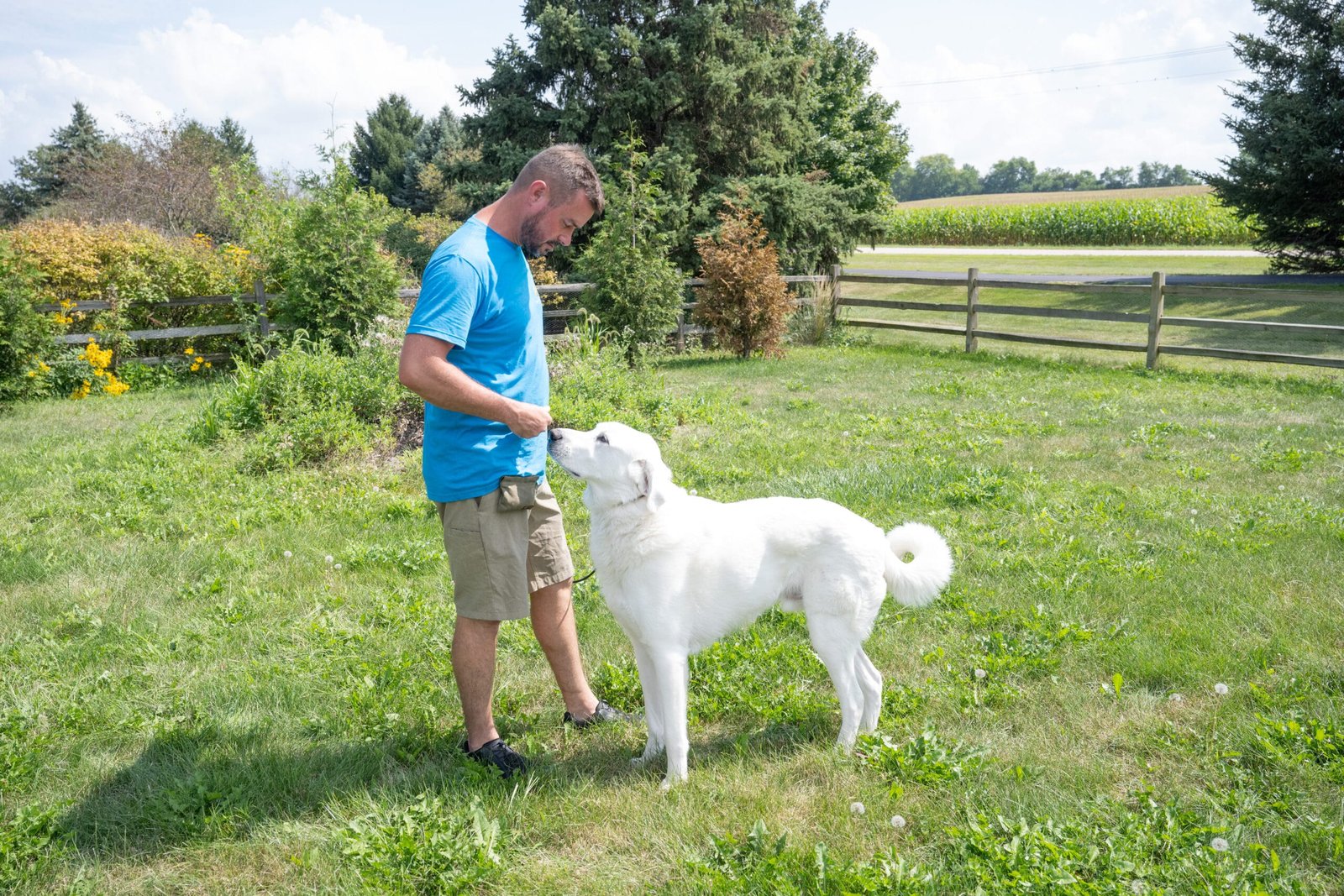
Choose a pattern that is easy to repeat, such as taking three steps and rewarding, walking in a small loop, or alternating hand targets. Teach the sequence in a quiet area until the dog recognizes what comes next.
Introduce the pattern in mildly distracting settings. Begin before the dog becomes fixed on the environment. The predictable rhythm gives the dog a familiar task while moving past or away from a trigger. Reward at consistent points in the sequence.
Keep the pattern simple. It should reduce uncertainty, not create another difficult obedience routine. If the dog cannot participate, increase distance or lower the intensity. A pattern is not meant to drag an overwhelmed dog through a situation.
Vary the pattern later so the dog does not become dependent on one exact count or route. The goal is to use predictability as support while maintaining flexible engagement.
Pattern training works with check-ins, directional changes, hand targets, counterconditioning, and distance management. It can be useful for reactive dogs, anxious dogs, transitions, veterinary environments, and busy public spaces. The pattern gives both dog and handler something clear to do before behavior escalates. It is most effective when paired with thoughtful management and enough physical space.
Relatable Child Psychology Analogy
Think about a child's bedtime routine: bath, pajamas, story, lights out. The repeated order helps the child predict what is coming and move through the transition with less uncertainty. Pattern training gives a dog a similar sequence. Familiar movements and reinforcement create structure during walks, greetings, or trigger exposure. The pattern does not erase emotion, but it gives the dog an understandable job when the environment feels difficult.
Related Training
- ManagementManagement changes the environment to prevent unwanted behavior from being rehearsed while training is underway.
- Distance ManagementDistance management uses physical space to keep the dog within a workable emotional range.
- Trigger ManagementTrigger management identifies and controls the situations that reliably produce fear, frustration, excitement, or unwanted behavior.
- CounterconditioningCounterconditioning changes the dog's emotional expectation by pairing a trigger with something the dog values.
- DesensitizationDesensitization gradually exposes the dog to a trigger at an intensity low enough to remain manageable.
Related Dog Behavior
- ReactivityAn intense response to a trigger that may include barking, lunging, pulling, freezing, spinning, or difficulty disengaging.
- Fearful BehaviorBehavior that communicates concern about a person, animal, object, sound, place, or interaction.
- AggressionThreatening or harmful behavior that may include hard staring, growling, snapping, lunging, or biting.
- AvoidanceBehavior used to increase distance from, delay, or escape a person, place, object, interaction, or task.
- Slow RecoveryA prolonged return to normal breathing, movement, attention, and behavior after a stressful or exciting event.
Related Psychology
- FearAn emotional response to something the dog perceives as an immediate threat or danger.
- AnxietyWorry or anticipation about a possible threat, uncertain outcome, or future event.
- ThresholdThe point where emotional intensity becomes too high for effective learning or reliable responses.
- Trigger StackingThe accumulation of stressful or exciting events before the dog has fully recovered from earlier events.
- ArousalThe level of nervous-system activation that influences attention, movement, emotion, and responsiveness.