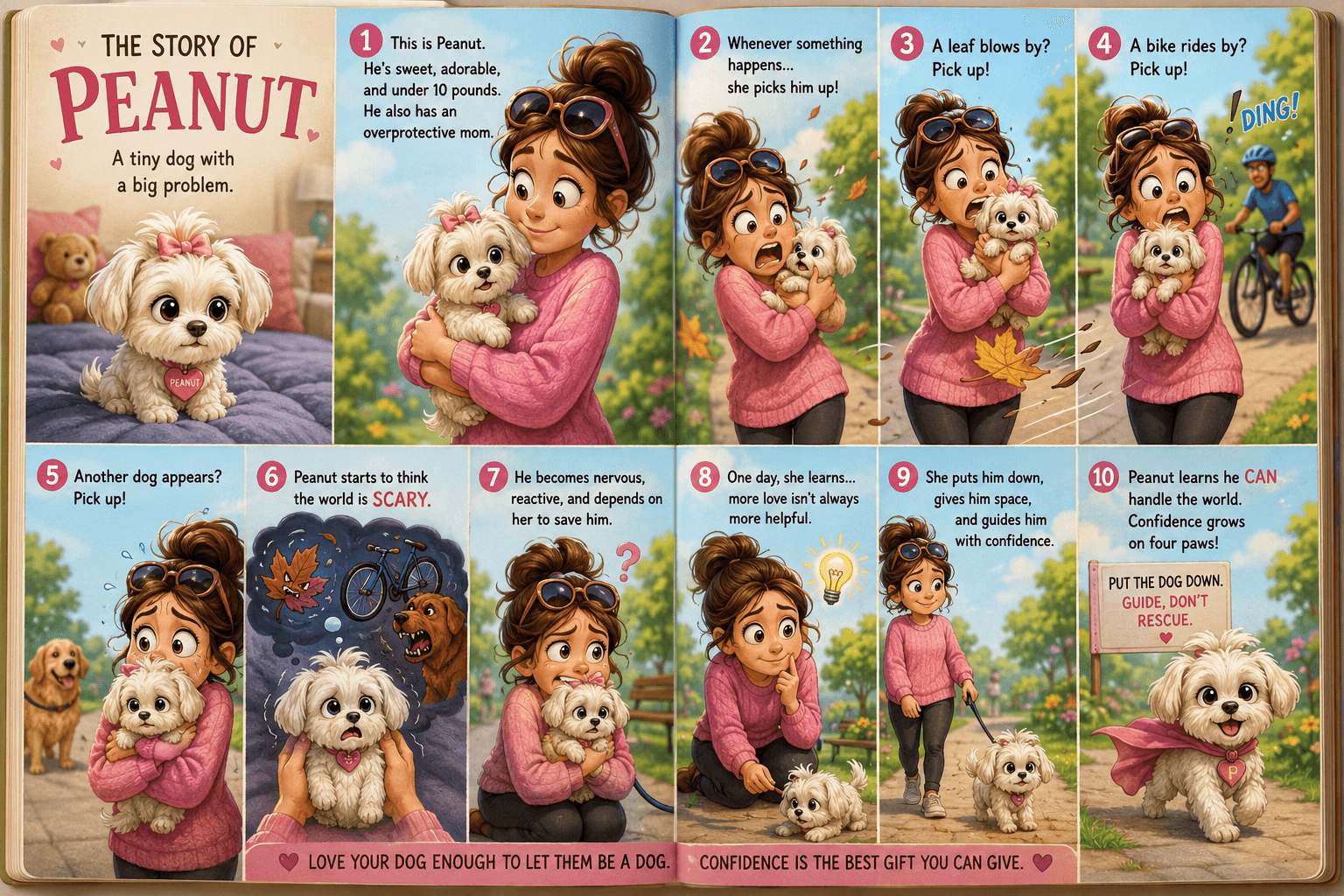
Fearfulness is an emotional response to something a dog perceives as threatening or unsafe. The dog may try to create distance, become still, hide, bark, lunge, or shut down.
Common Signs
- Hiding
- Freezing
- Trembling
- Avoidance
- Tucked Tail
- Refusing Food
- Barking
- Lunging
Important Distinction
A quiet dog is not always a comfortable dog. Freezing, shutting down, or complying without engagement can be signs that the dog is overwhelmed rather than calm.
What Can Help
Progress comes from creating safety, controlling distance and intensity, allowing recovery, reinforcing voluntary engagement, and avoiding forced exposure that pushes the dog past threshold.
When To Get Professional Help
Get help when fear limits normal life, creates bite risk, appears suddenly, worsens quickly, or may be connected to pain or a medical change.
Related Behavior Terms
Related Dog Psychology
FearAn emotional response to something the dog perceives as an immediate threat or danger.AnxietyWorry or anticipation about a possible threat, uncertain outcome, or future event.ConfidenceA dog’s ability to approach situations, make decisions, and recover from challenges without becoming overwhelmed.TrustConfidence that another individual will behave in a predictable, safe, and understandable way.
Related Dog Training
DesensitizationDesensitization gradually exposes the dog to a trigger at an intensity low enough to remain manageable. The trigger becomes stronger only as…CounterconditioningCounterconditioning changes the dog's emotional expectation by pairing a trigger with something the dog values. The goal is for the trigger to…Distance ManagementDistance management uses physical space to keep the dog within a workable emotional range. Increasing or controlling distance can prevent escalation and…Pattern TrainingPattern training uses a simple, repeatable sequence of movement and reinforcement to create predictability. Familiar patterns can help the dog reconnect, move…
Related Training Option
Behavior Modification
Every dog brings a different history, environment, and reason for the behavior. This service can help identify the right next step and build a plan around the dog in front of you.
This library provides general education, not an assessment of an individual dog. Sudden behavior changes, pain-related behavior, or an immediate safety concern should be discussed with an appropriate veterinary or behavior professional.