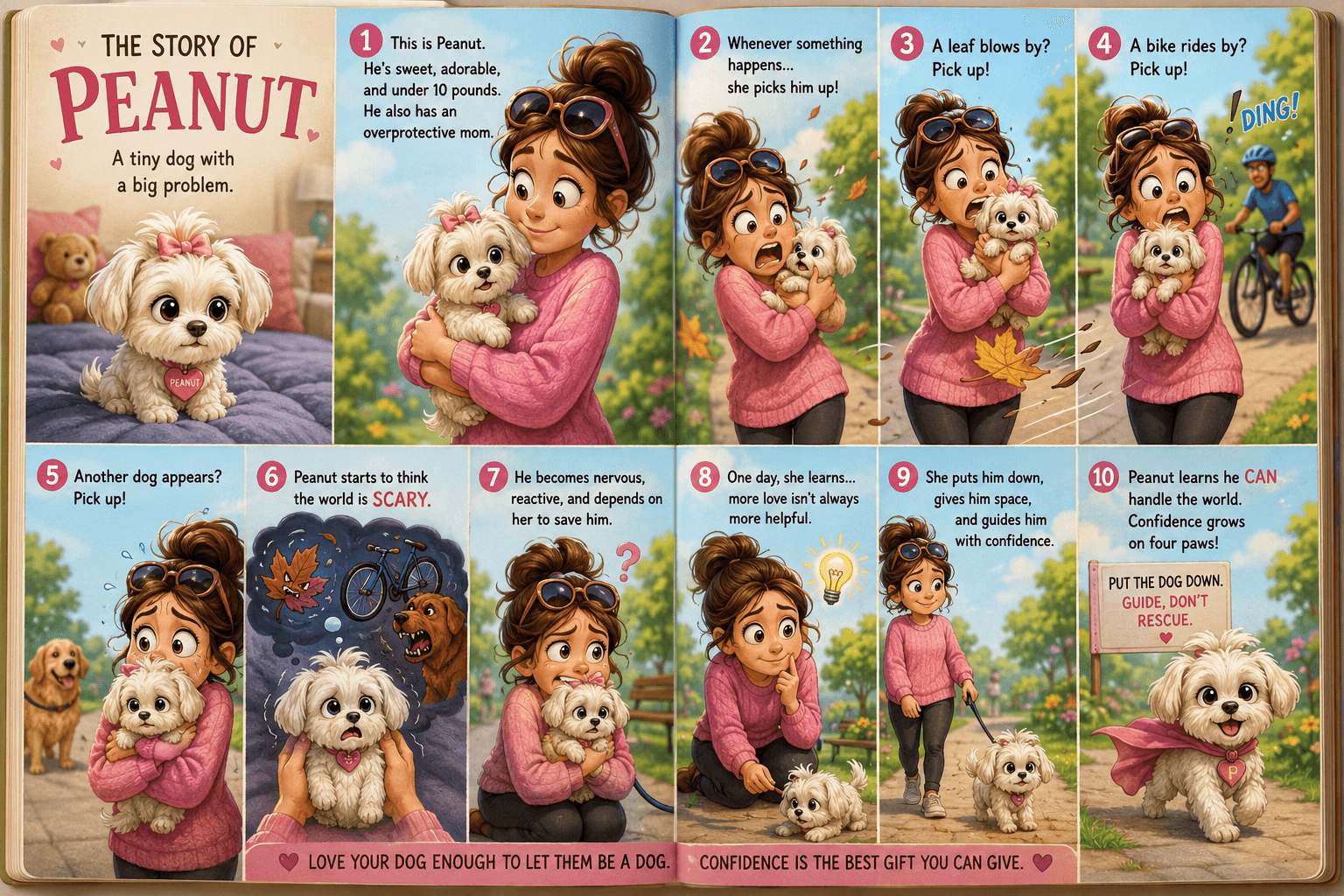
A trigger is a person, animal, object, sound, movement, place, event, or internal sensation that changes a dog’s emotional or behavioral state.
Common Signs
Important Distinction
A trigger is not automatically the cause of the entire problem. It is the thing that brings the current response into view, while the underlying reason may be fear, frustration, pain, excitement, or expectation.
What Can Help
Identify the trigger precisely, note distance and intensity, prevent repeated overwhelming exposure, and change the dog’s experience through structured training.
When To Get Professional Help
Get help when the trigger cannot be safely avoided, the dog reacts unpredictably, or the response creates risk for people, animals, or the dog itself.
Related Behavior Terms
Related Dog Psychology
AssociationA learned connection between events, cues, places, actions, emotions, or outcomes.FearAn emotional response to something the dog perceives as an immediate threat or danger.AnxietyWorry or anticipation about a possible threat, uncertain outcome, or future event.PredictabilityThe degree to which a dog can anticipate what happens next based on stable patterns and signals.
Related Dog Training
Trigger ManagementTrigger management identifies and controls the situations that reliably produce fear, frustration, excitement, or unwanted behavior. It reduces surprise exposure and allows…Distance ManagementDistance management uses physical space to keep the dog within a workable emotional range. Increasing or controlling distance can prevent escalation and…DesensitizationDesensitization gradually exposes the dog to a trigger at an intensity low enough to remain manageable. The trigger becomes stronger only as…CounterconditioningCounterconditioning changes the dog's emotional expectation by pairing a trigger with something the dog values. The goal is for the trigger to…
Related Training Option
Behavioral Consultation
Every dog brings a different history, environment, and reason for the behavior. This service can help identify the right next step and build a plan around the dog in front of you.
This library provides general education, not an assessment of an individual dog. Sudden behavior changes, pain-related behavior, or an immediate safety concern should be discussed with an appropriate veterinary or behavior professional.