What Reward Placement Means
Reward placement is the deliberate location where reinforcement is delivered. Where the reward appears influences the dog's body position, movement, focus, and expectation during the next repetition.
How To Teach Reward Placement
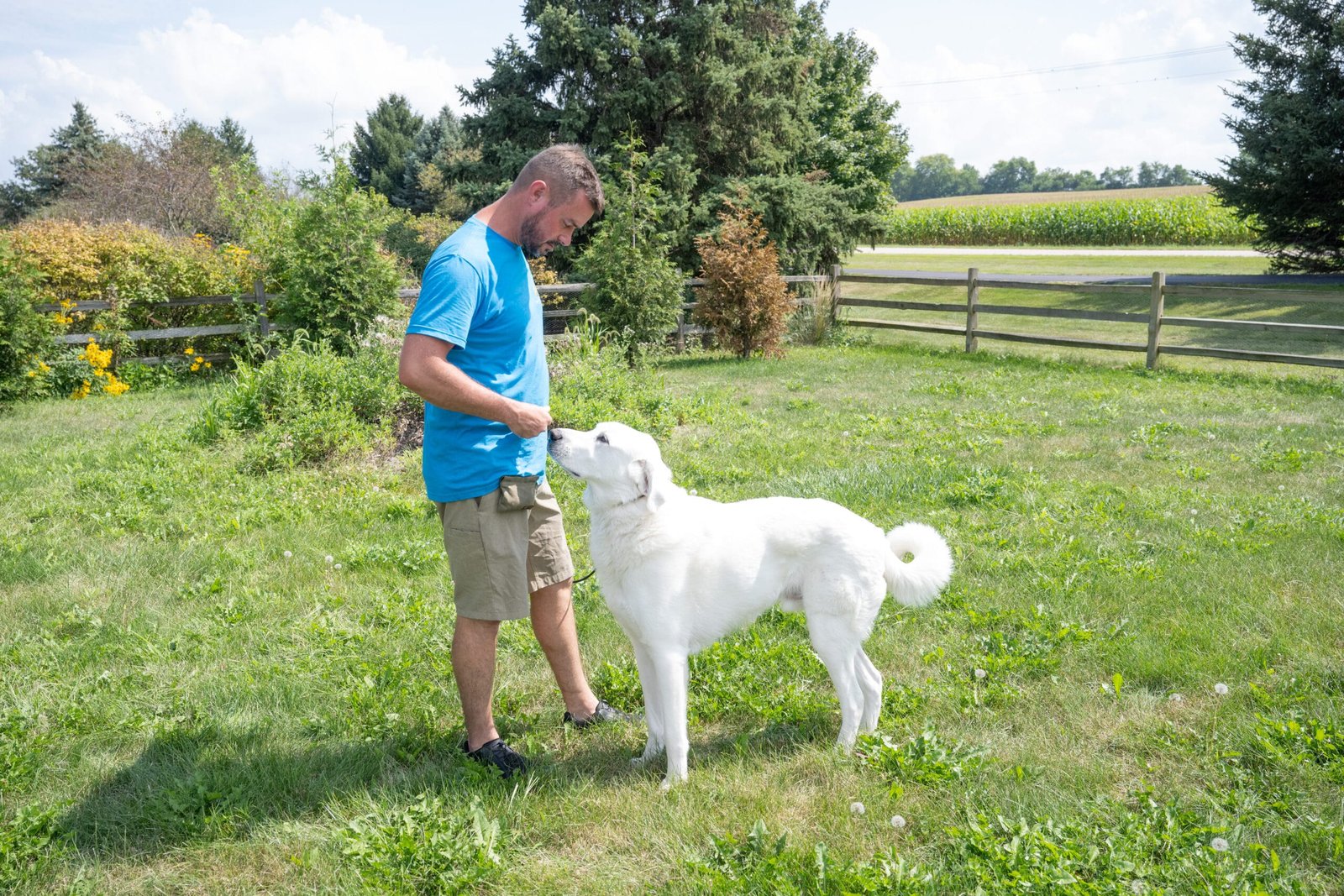
First decide what position or movement you want. If you are teaching heel, deliver the reward beside your leg rather than reaching across your body or feeding in front of the dog. If you are teaching place, deliver several rewards on the mat so the dog develops value for remaining there. If you are practicing recall, reward close to your body so returning all the way becomes part of the behavior.
Use tossed rewards when you want to reset the dog or create another repetition. For example, mark a hand target, toss food away, and wait for the dog to return for the next target. Use calm, low placement when teaching settling. Rapid overhead feeding may lift the dog's body and increase excitement.
Watch what happens after the reward. Dogs often move toward the place where reinforcement repeatedly appears. Poor placement can create crooked sits, forging during heel, leaving place early, or stopping short on recall. The dog is not being difficult. The reinforcement pattern is shaping position.
Reward placement works alongside timing and marker training. The marker identifies the correct moment, while placement prepares the next moment. It can also help manage arousal by slowing delivery, feeding close to the ground, or using a scatter away from a trigger. Thoughtful placement makes training cleaner without adding more commands. It turns the reward itself into part of the instruction.
Relatable Child Psychology Analogy
Think about teaching a child where school supplies belong. If every pencil, book, and reward is handed to the child at the desk, returning to the desk becomes part of the routine. If everything valuable is delivered across the room, the child naturally keeps leaving the work area. Reward placement affects a dog in a similar way. Where the reward appears helps teach where the dog should move, stand, return, or remain after completing the behavior.
Related Training
- EngagementEngagement is the dog's willingness to notice, connect with, and participate with the handler.
- Name RecognitionName recognition teaches the dog that hearing its name means to orient toward the handler for information.
- Marker TrainingMarker training uses a consistent word, click, or sound to identify the exact moment the dog performs the desired behavior.
- LuringLuring uses food, a toy, or another target to guide the dog into a position or movement.
- ShapingShaping teaches a behavior by reinforcing small steps that gradually move toward the finished skill.
Related Dog Behavior
- Attention-Seeking BehaviorBehavior used to gain interaction, including pawing, nudging, barking, jumping, stealing objects, or interrupting people.
- Leash PullingForward, sideways, or backward pressure that keeps the leash tight or moves the handler.
- JumpingPlacing the front paws or body onto a person, object, door, or surface, often during greetings or excitement.
- ReactivityAn intense response to a trigger that may include barking, lunging, pulling, freezing, spinning, or difficulty disengaging.
Related Psychology
- ReinforcementAny consequence that increases the likelihood a behavior will happen again.
- TimingHow closely feedback or consequences follow a behavior, affecting what the dog connects to the outcome.
- AssociationA learned connection between events, cues, places, actions, emotions, or outcomes.
- GeneralizationApplying learning across different places, people, positions, distances, and situations.
- Food MotivationThe degree to which food functions as a valuable outcome for an individual dog in a specific context.